YOGYAKARTA TRAVEL GUIDE : A JOURNEY THROUGH JAVA’S CULTURAL SOUL
Yogyakarta caught me off guard—in the best possible way. It’s one of those rare cities that welcomes you without ever feeling overrun by you: lively enough to keep things interesting, yet still unmistakably itself. There’s a balance here that you don’t always find in Indonesia —a mix of locals and travelers that feels genuinely even-handed, unlike Bali, where the crowd can start to feel more international than Indonesian. In Yogyakarta, it’s the reverse. They call it the cultural heart of Java, and it doesn’t take long to see why. The city seems to breathe creativity: student-run art exhibitions popping up around town, independent cultural centers hidden behind unmarked doors, monuments carrying centuries of prestige, and a spiritual undercurrent drawing equally from Hinduism and Buddhism. If you want to explore the surrounding countryside, Yogyakarta makes the obvious base. But it’s also, quite simply, one of the best places to sink into a more thoughtful, cultural side of Indonesia.
I’d planned on two days there -just enough time, I figured, to tick off the iconic temples. The city had other ideas. A week later, I was still wandering its streets, in no particular hurry to leave.
In this guide, I’ll walk you through my favorite spots in and around Jogja, and how to make the most of your time in the cultural heart of Java.
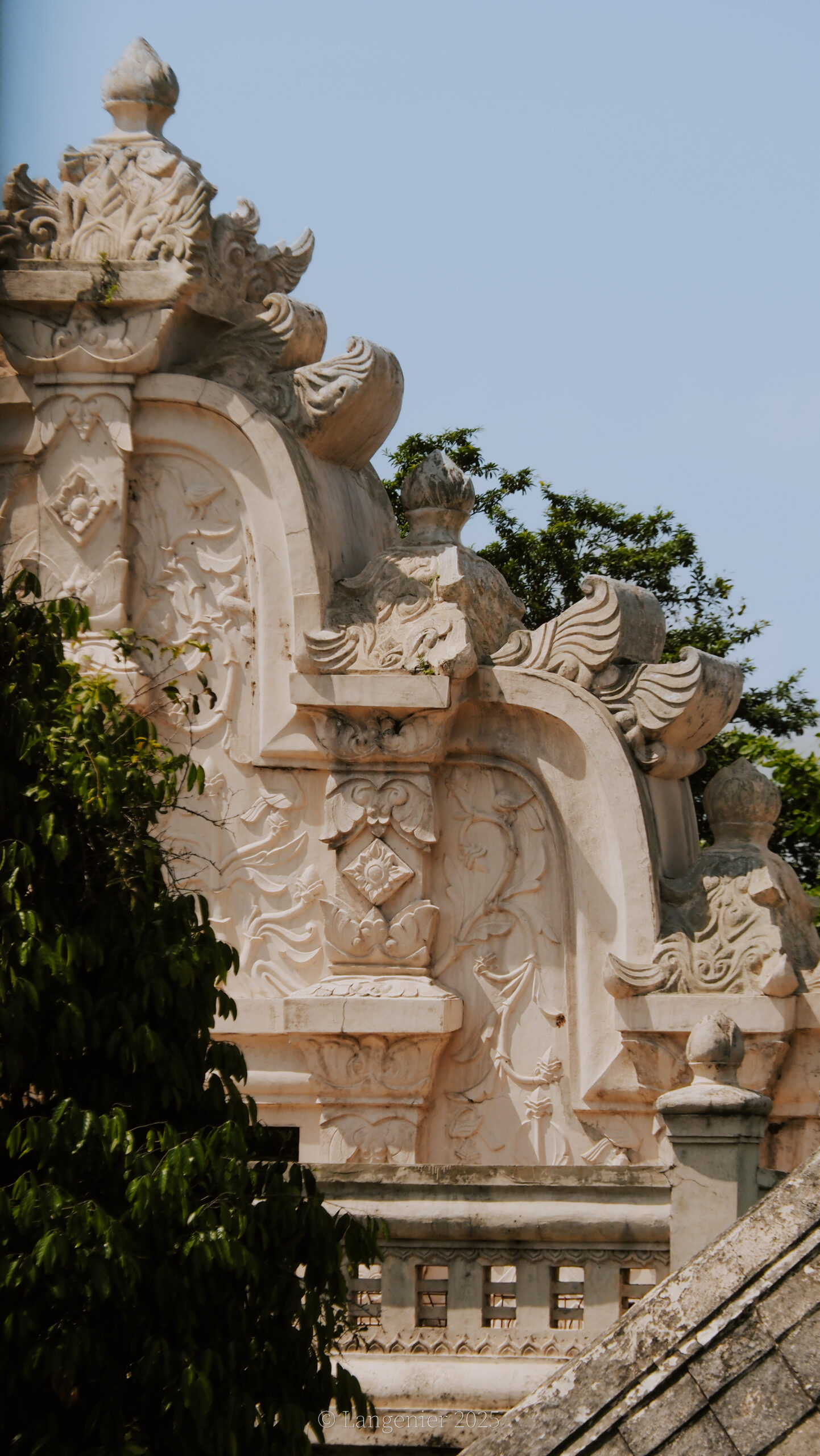
YOGYAKARTA OVERVIEW
WHERE | Yogyakarta, Java Island, Indonesia
GETTING THERE | Train, bus, international & domestic airport
GETTING AROUND | Walk, Scooter rental, bus & tour
TOP THINGS TO SEE | Kraton Royal District, Taman Sari Water Temple, Museum Affandi, Ramayana Ballet, Gunung Merapi, Prambanan & Borobudur temples.
WHAT TO EAT | Kopi Joss, Geplak, Bakpia Kathok
BEST TIME TO VISIT | Dry season May to September or Shoulder month April & October
CURRENCY | Indonesian Rupees IDR (500k IDR around 25€)
BEFORE YOU GO : WHAT TO KNOW ABOUT TRAVELING TO INDONESIA
- Visa: Most travelers need a visa to enter Indonesia. You can get one on arrival, valid for 30 days and renewable once. Or apply for an e-visa online for more convenience.
- Flights: Indonesian customs require proof of onward travel, so book your return or onward ticket in advance. Prices soar during July–August and around New Year, so plan accordingly.
- SIM Card: Stay connected with a local SIM card (cheaper outside the airport) or an eSIM. You’ll need it for apps like Grab and Gojek.
- Insurance: Don’t skip travel insurance. Between “Bali belly,” dengue, and scooter accidents, it’s a must – I learned that lesson the hard way after an accident that cost me a small fortune -.
- Health: Tap water isn’t safe to drink. Bring a filtered bottle, purification tablets, or refill from dispensers often available in hotels.
- Language: Bahasa Indonesia is spoken nationwide, but each island has its own dialect. A few polite words—hello, thank you, goodbye—never go unnoticed. Locals appreciate the effort, and it might even earn you a friend (or a better price).
GETTING TO YOGYAKARTA
- By train : Jogja is well connected by train to Jakarta (9h) Bandung and Surabaya (5h). The website and mobile app Traveloka give you all the schedule and prices of trains. You can book your ticket with it or book it at the train station. Price starts at 10 euros. During school holidays, don’t forget to book earlier your train ride.
- By bus : the main bus terminal of Jogja, Giwangan Terminal host numerous bus companies connecting other cities with Yogyakarta. This is the cheaper option but will add some hours to your travel time. From Jakarta, it takes 13h to reach Jogja and 8 hours from Surabaya.
- By plane : Yogyakarta International Airport (YIA) is located 40km from the city center. Domestic and International flights deserve the city frequently.
WHAT TO SEE IN YOGYAKARTA
Kraton Royal District, the Sultan Palace
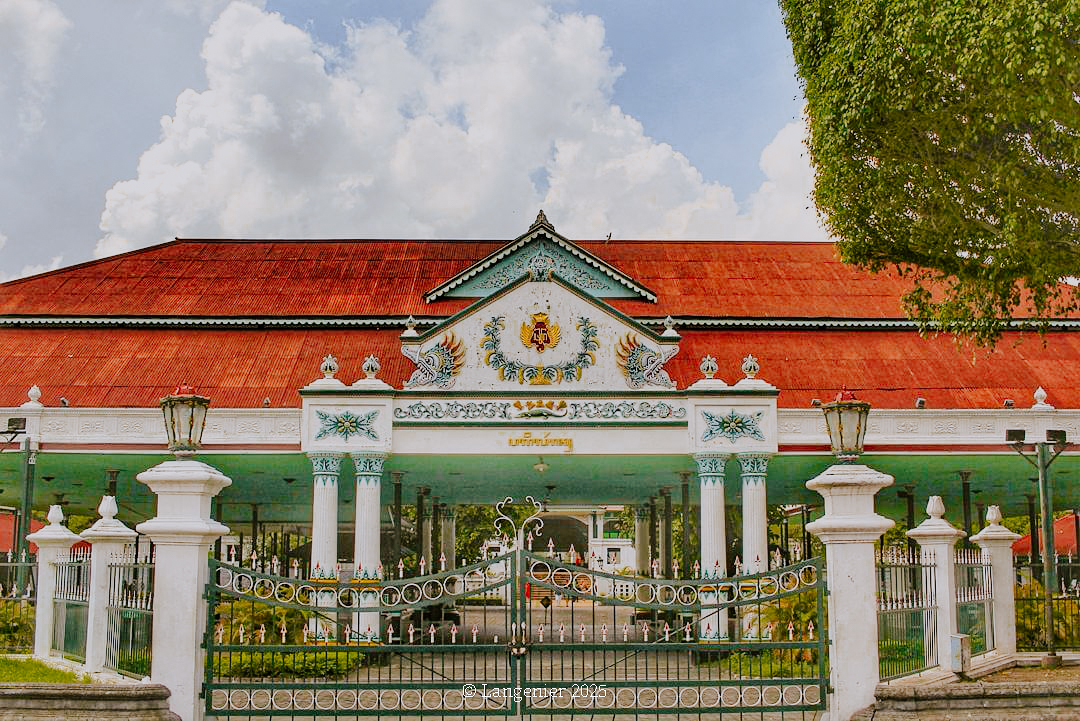
Built in the mid-18th century, the Kraton, the Sultan’s palace, remains the royal residence of the Sultan of Yogyakarta and his family to this day. Yes, you read that correctly. Yogyakarta is still a sultanate. For those familiar with Indonesia’s political situation (a democracy since 1999), this may seem contradictory. But Yogyakarta is the only region still governed by a hereditary sultanate within the republic of Indonesia. This special status dates back to 1945, when the sultan at the time supported Indonesia’s independence movement, transforming the city into a refuge and strategic base for nationalist leaders. As a sign of gratitude, the newly formed government granted Yogyakarta a certain autonomy.
The Kraton is a huge complex, protected by thick ramparts, where more than 20,000 people live. It consists of the Sultan’s palace, as well as museums – that displays royal, spiritual and ceremonial treasures, a great insight into Javanese traditions, mosques, schools, university buildings, shops of all kinds and batik factories.
Taman Sari, the Sultan’s Water Castle
Just a short walk from the Kraton lies Taman Sari, or ‘perfume garden’. It gives you a glimpse of the magnificence of the sultanate in the 18th century. Designed by a Portuguese architect from Batavia (actual Jakarta), it served as a meeting place for the sultan’s love games with it’s concubines around pools, pavilions and courtyards filled with flowers.
You can still see the two main pools, one for the women and one for the sultan, where people still throw coins – perhaps for good luck. The palace even had an underground mosque. Entry costs around €5 and guided tours are available in English for those who want to delve a little deeper into the castle’s history (always agree on a price beforehand).
Malioboro Avenue, a chaotic foodie heaven
Malioboro is Yogyakarta’s busiest avenue — a lightly chaotic place where the city’s energy is impossible to ignore. Here you’ll find the widest selection of souvenirs, and it’s the perfect place to try some of Jogja’s local specialties.
For a sweet treat, taste the Bakpia Pathok, a small, round pastry traditionally filled with mung beans but now also available with chocolate or cheese. Another sweet favorite is Geplak, a bright, coconut-based sweet made with palm sugar.
For coffee lovers, the history of this bean is intrinsically linked to the history of the region. Introduced by Dutch colonists in the 17th century, coffee trees flourished here and became one of Indonesia’s most famous exports. You must try Kopi Joss: a piece of hot charcoal is placed directly into a glass of sweet black coffee. It is said to mellow its acidity and add a unique caramelized note.
Museum Affandi an expressionist display
The museum is dedicated to one of Indonesia’s most celebrated artists, Affandi Koesoema. As an autodidact painter Affandi developed a distinctive technique : he painted directly from the tube, applying pigment with his hands rather than brushes. The result is an intensely expressive style, alive with movement and emotion, reflecting a freedom of painting movement that traditional tools could never capture.
Ramayana Ballet an Iconic Representation
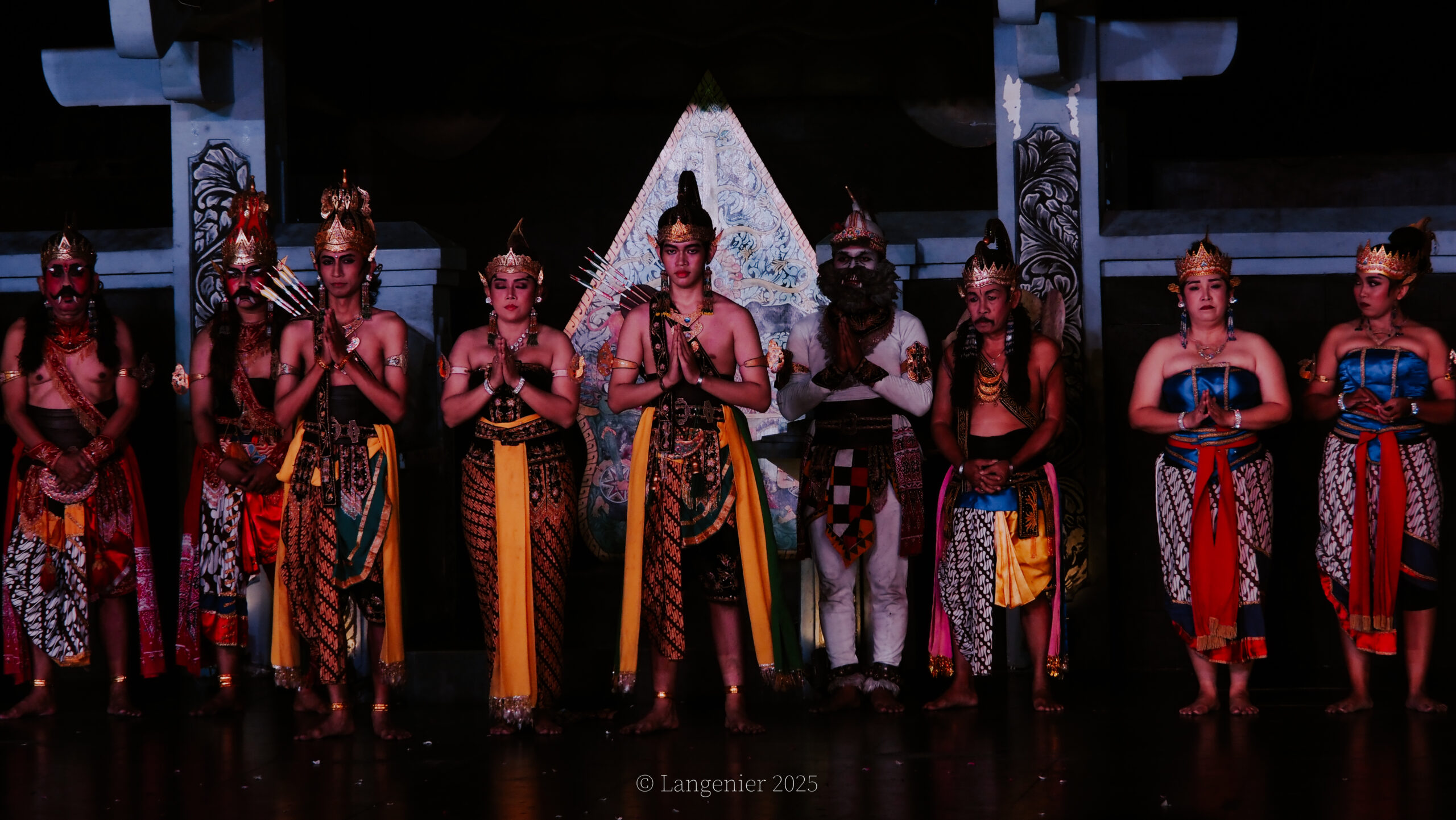
One of the most iconic places to catch a Ramayana performance is at the Prambanan Temple. Though unless you book days or even weeks in advance, securing a seat can be nearly impossible. Luckily, downtown Yogyakarta offers plenty of alternatives, and I had the chance to see the Ramayana Ballet at Purawisata, which was absolutely enchanting.
Based on the Indian epic Ramayana (literally Rama’s Journey), the story follows Prince Rama, his wife Sita, and their battle against the demon king Ravana. When Sita is kidnapped, Rama embarks on a heroic quest to rescue her. The performance is a mesmerizing blend of music, dance, storytelling and pyrotechnics, that will transport you into a mythical world of kings, gods, and demons. I was completely captivated !
WHAT TO SEE AROUND YOGYAKARTA
Gunung Merapi, Indonesia most dangerous vulcano
Merapi is Indonesia’s most active and dangerous volcano. Its power is visible at any hour — smoke constantly rises from the crater, and at night, a glowing red lava can sometimes be seen cascading down its slopes.
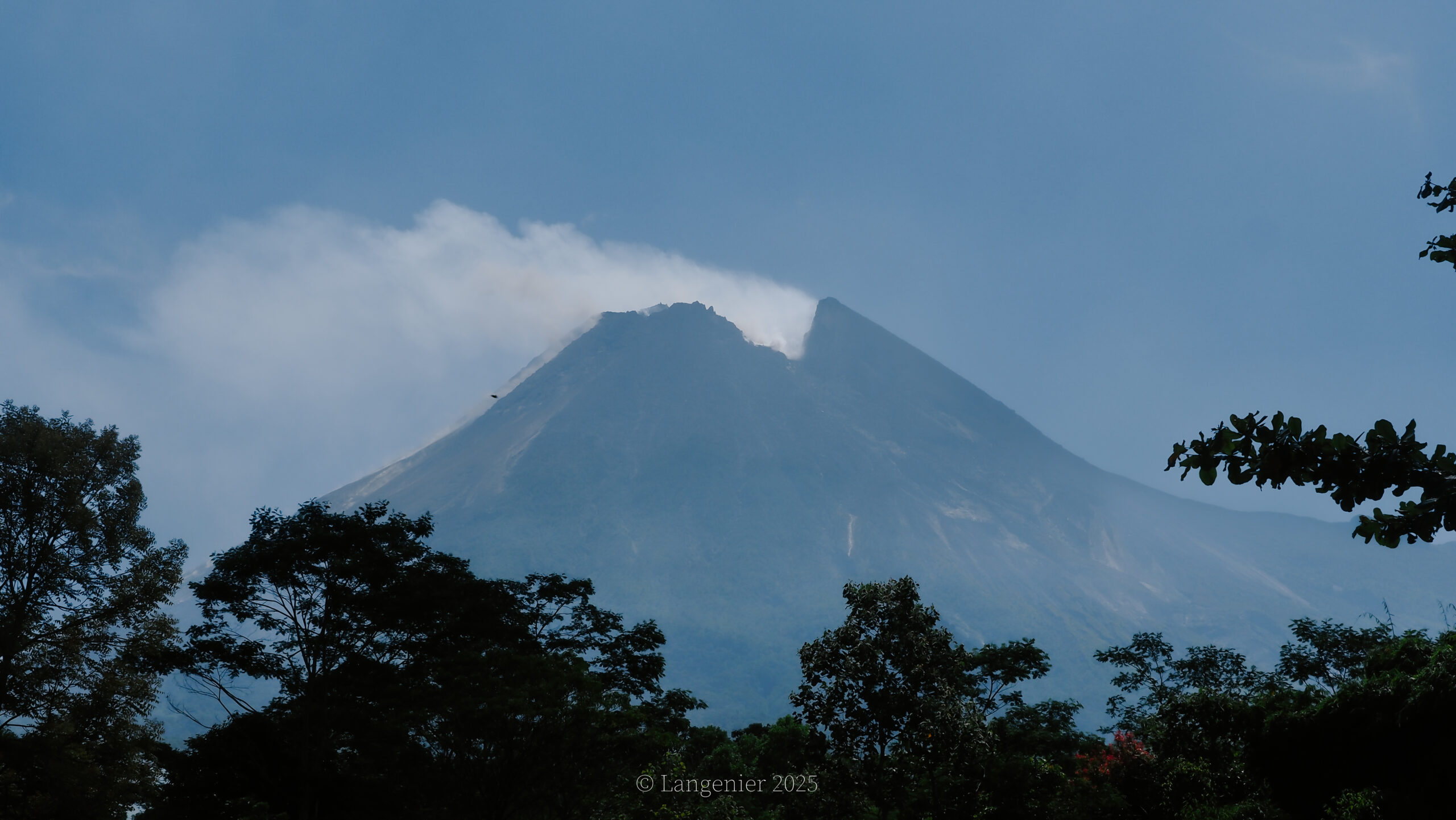
While the volcano isn’t fully visible from Yogyakarta itself, a short trip north of the city will reveals breathtaking views of its silhouette. I explored the area by scooter, which proved to be the perfect way to visit at my own pace. For those seeking fun adventure, quad biking tours are available around Merapi. Hiking trails also thread the hills nearby, though information about them can be limited (no Alltrails indications), so a local guide is advised.
Temples of Borobudur & Prambanan : the spiritual heart of Java
If you’ve ever watched a documentary about Indonesia, the silhouettes of Prambanan and Borobudur are likely familiar. These two iconic temples are among the country’s most renowned spiritual jewels. Prambanan stands as the largest Hindu temple in Indonesia, while Borobudur is recognized as the largest Buddhist temple in the world.
*
The Prambanan temples were built to celebrate the power of the Hindu Sanjaya dynasty at the height of their rule in Indonesia, between the 8th and 10th centuries. The site is actually flat and devoid of vegetation — a simplicity that highlights the impressive architecture of the Candi Prambanan. You can explore the eight main temples in the central courtyard, restored by the Dutch after their rediscovery in 1813.
A small tip : skip the official guides at the entrance. While they speak good English, many are more interested in taking your photo than sharing the history of the site. Instead, approach the students wandering the temple grounds. They’re often eager to practice their English and share their genuine passion for the temple.
The entrance fee is 50,000 IDR (with a discount for students).
*
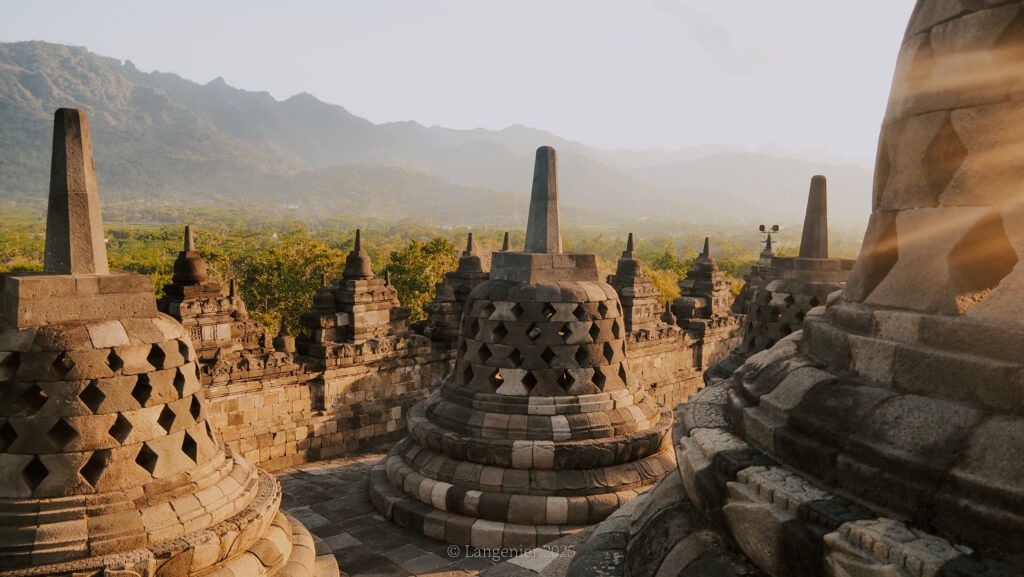
A Buddhist temple listed as a UNESCO World Heritage Site since 1991, the Borobudur sanctuary is an 8th-century treasure built by the Sailendra dynasty. It was engulfed by vegetation and volcanic ash from nearby Mount Merapi after the rulers left for East-Java in the 10th century. It took 700 years before the Dutch rediscovered it in 1815 and began its restoration.
With UNESCO’s help later, Borobudur was carefully dismantled stone by stone, treated, and rebuilt. Originally home to 502 Buddha statues — of which 43 are missing and over 300 damaged — the massive volcanic stone structure is essentially one enormous stupa, composed of smaller stupas that enclose seated Buddha figures.
A temple ground ticket cost 400K IDR. A temple structure ticket – which give you access to to the summit of the temple is 455K IDR.
One Comment