YOUR 5 DAYS GUIDE TO EXPLORE AVEYRON, FRANCE’S BEST-KEPT SECRET
We French call it la France Profonde—the deep France, the parts of the country we rarely talk about, the one that doesn’t make it onto travelers’ bucket lists. If I’m being honest, I hadn’t considered Aveyron either, until last autumn, when curiosity finally got the better of me.
The region sits inside what geographers call the “diagonal of emptiness,” a swathe of France where the population has been thinning for decades. But emptiness, it turns out, is the wrong word. What Aveyron actually offers is space—wide, generous space—along with friendly locals and a rhythm of life that feels increasingly rare. Its villages haven’t been polished for visitors, not the way so many in the southeast of France have been in recent years, turning into social media stars. Here, the villages have simply gone on being what they’ve always been: stone and slate and quiet.
Aveyron lies barely an hour from Toulouse (I wrote a weekend guide of Toulouse , if you’re tempted to discover it), and it’s reachable from Paris by day train or, better still, by night train. No TGV cuts through this corner of the country. You’re forced, instead, to slow down, to actually watch the landscape change outside the window. And it’s been that way for pilgrims, too: since the Middle Ages, walkers on the Camino de Santiago have threaded through Aveyron’s northern hills on their long road toward Spain.
For this itinerary, I’ve focused on western Aveyron: around Rodez, the heights of Capdenac, and the valleys near Najac. Let’s dive into the beauty of this remarkable region !
AVEYRON OVERVIEW
WHERE | Aveyron region, Occitanie, France
GETTING THERE | Train, bus, international & domestic airport
GETTING AROUND | Walk, Bus, Bike & Car rental
TOP THINGS TO SEE | Rodez, Najac, Millau, Belcastel, Conques, Estaing, Villefranche-de-Rouergue, Capdenac, Plateau de l’Aubrac
WHAT TO EAT | Aligot, Truffade, Roquefort cheese, Gâteau à la broche, Farçous, Estofinado, Marcillac red wine
BEST TIME TO VISIT | April to October
CURRENCY | Euros €
- Getting to Aveyron Region
- Getting around Aveyron Region
- Day One | Rodez, the Heart of Aveyron
- Day Two | Aveyron’s Castle Heritage : Espalion & Estaing
- Day Three | Conques-en-Rouergue, the spiritual heart of the South-West France
- Day Four | The Medieval treasures of Capdenac & Figeac
- Day Five | Between bastide & fortress : Villefranche de Rouergue & Najac
Getting to Aveyron Region
- By train : Rodez station is served by regional and night trains to and from Paris and Toulouse. Book your train ticket here.
- By car : Rodez is less than 2 hours from Toulouse and 7 hours from Paris.
- By plane : Rodez-Aveyron Airport offers regular flights to Paris (daily), London, Brussels, and Porto, among others. There’s no shuttle into town, but taxis and car rentals are available.
Getting around Aveyron Region
Aveyron is fairly well connected by regional trains and buses, with multiple daily departures from Toulouse to Rodez and Capdenac, as well as night trains to and from Paris serving several towns in the region.The Lio buses, operated by the Occitanie region, allow you to reach many of Aveyron’s must-see spots, especially during the high season from May to October. That said, a car is your best friend if you want complete freedom to explore at your own pace and avoid losing time on public transport— though it’s easy to get lost in the beauty of Aveyron’s valleys and gorges.
Day One | Rodez, the Heart of Aveyron
The city has several free roadside car parks outside the historic city centre. Free buses also take you to the city from the train station with multiple stops. The city is on a slope, so it’s good exercise for your legs!
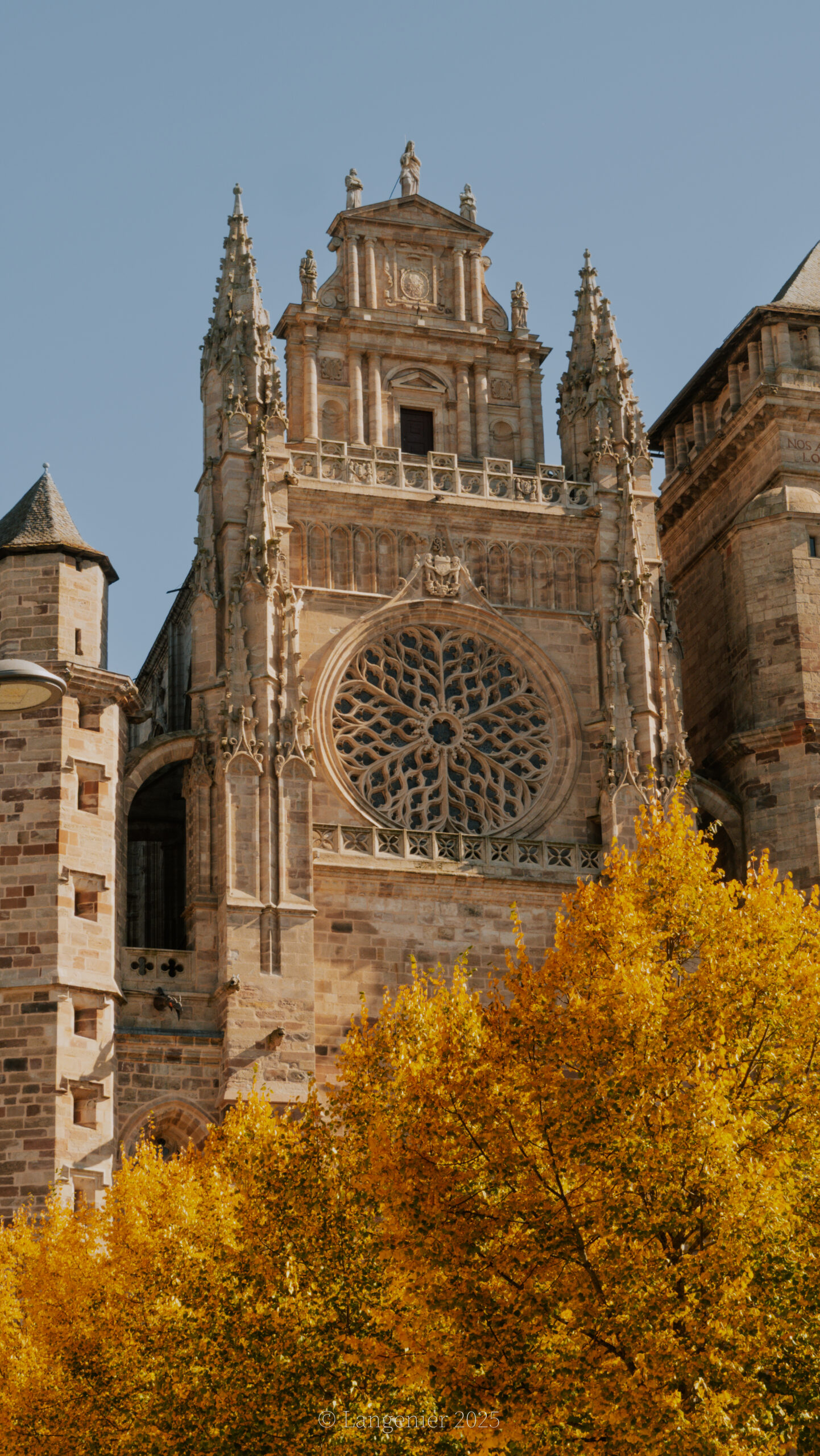
Start your day in Rodez on the Place de la Cathédrale, home to one of France’s most striking Gothic cathedrals, built in the late 13th century. Towering 87 meters high, its red sandstone bell tower dominates the skyline—especially impressive if you arrive from by car. This elegant Gothic cathedral has soaring arches and graceful naves lined with side chapels (with medieval frescoes & carved stone doors). On Saturdays, the surroundings comes alive with a local market, selling with Aveyron’s best products : farmhouse goat cheeses, homemade breads, and bold reds from the Marcillac vineyards & the delicious and comforting Aligot.
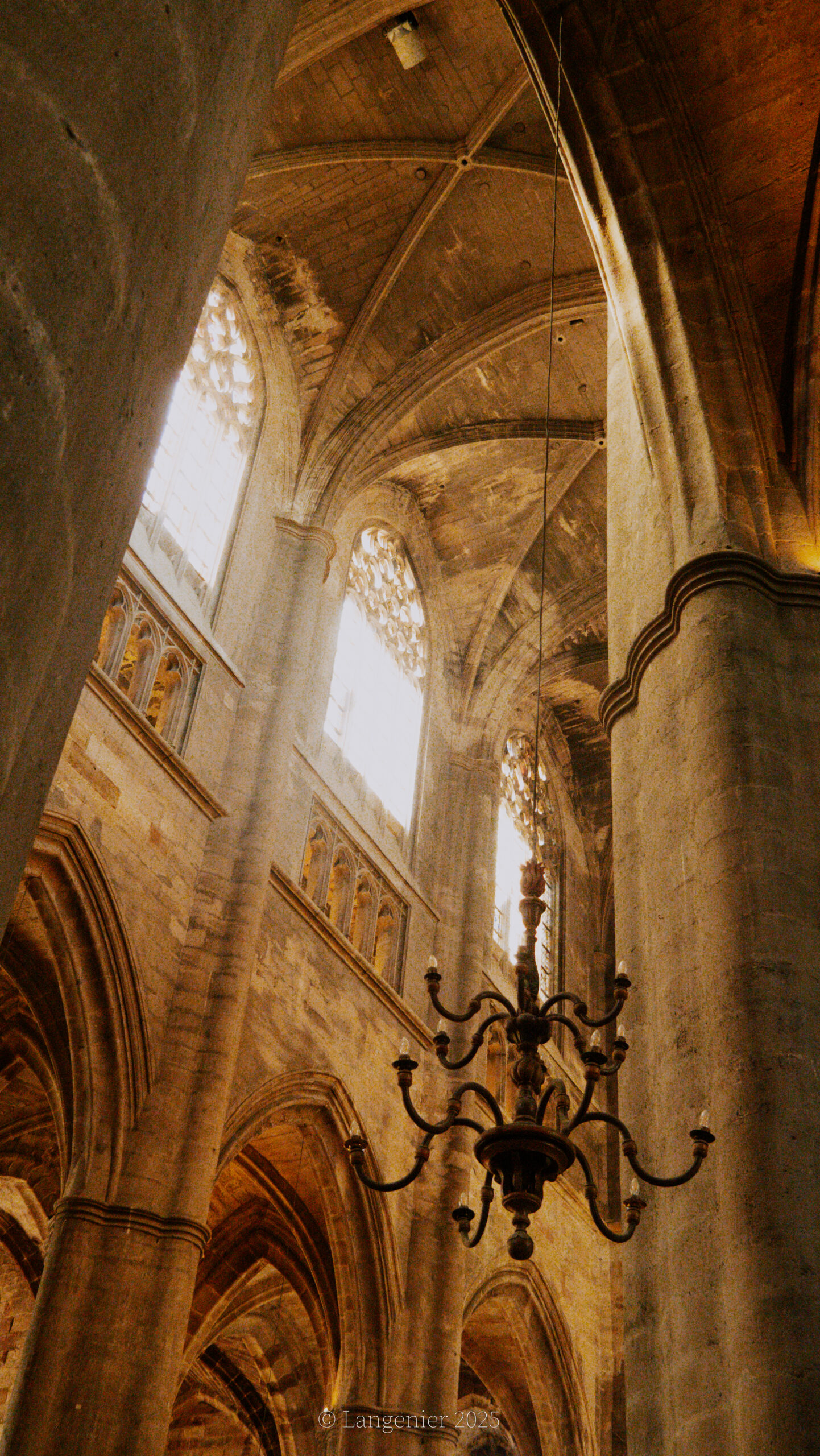
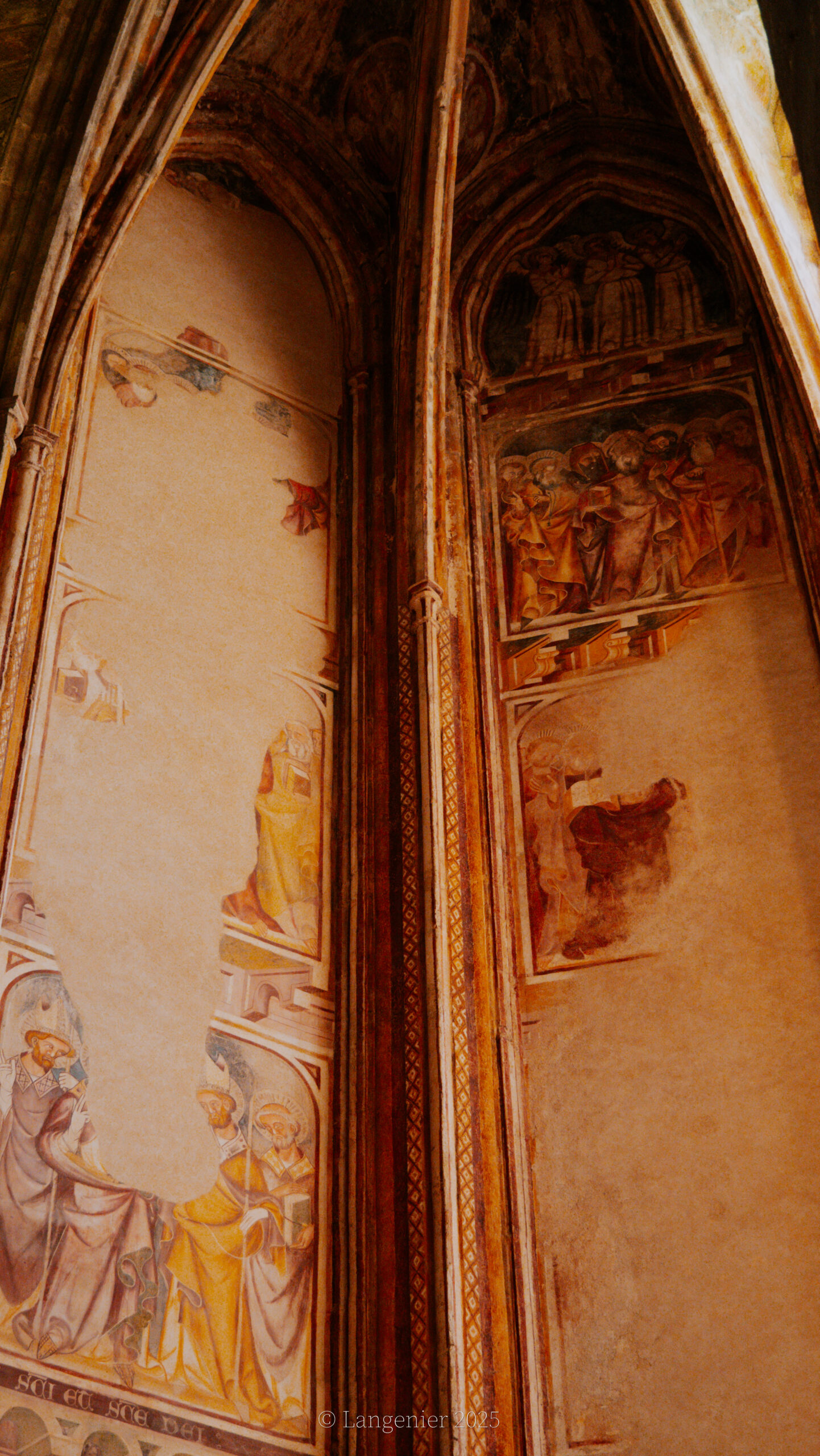
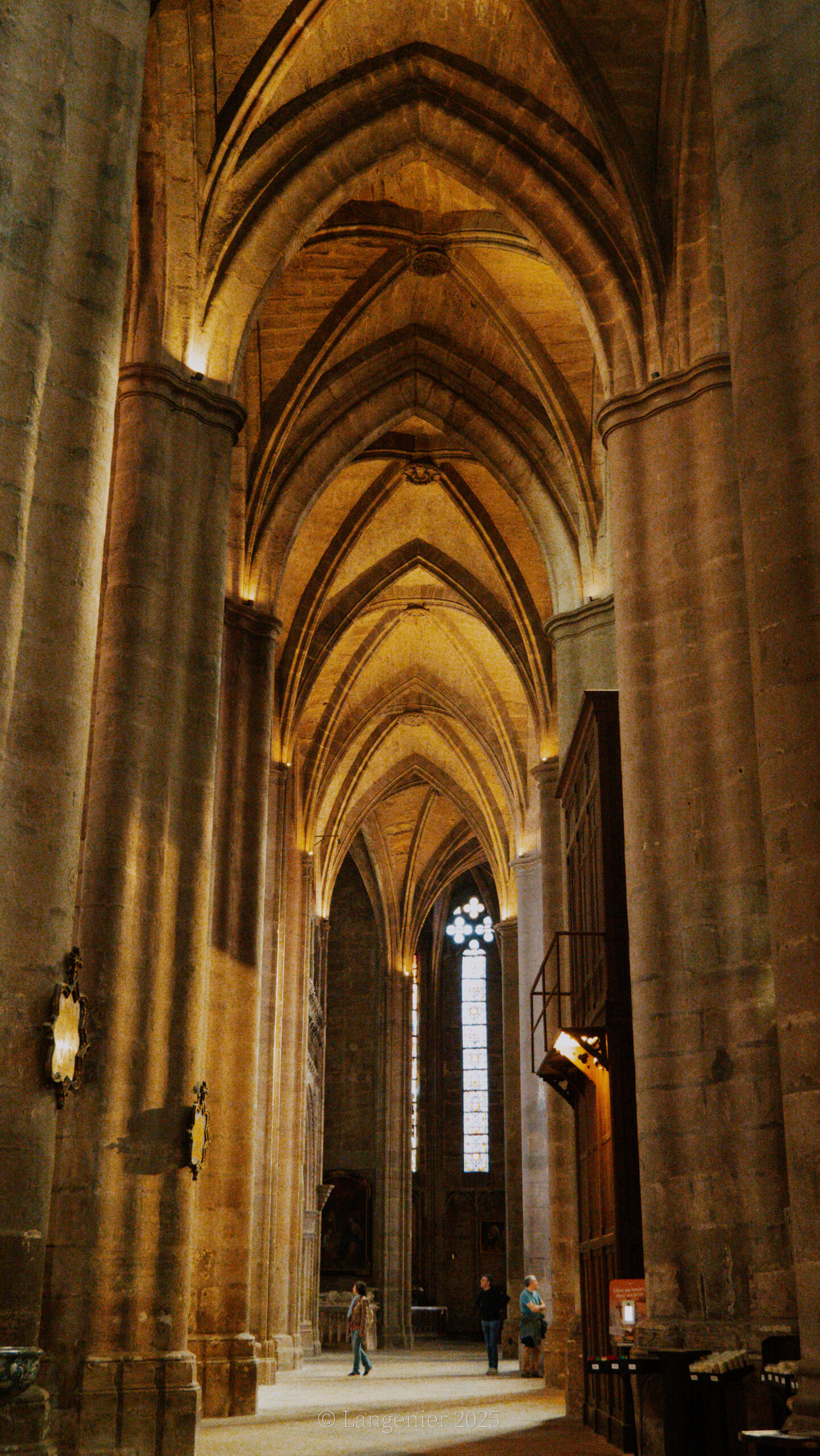
Then Wander through the old town surrounding the cathedral—its cobbled lanes are lined with historic mansions like the Hôtel Delauro and the Palais Episcopal (under renovation soon to open to the public). Pause at Place de la Cité for a sunny café terrace, then stroll down Rue du Touat to admire the Maison d’Armagnac, a 16th-century gem blending Gothic and Renaissance styles with the prettiest façade in the city.
Continue toward Place du Bourg, a merchant place since medieval times, perfect for lunch in one of its old houses. still the town’s bustling heart since medieval times, perfect for lunch in one of its timeworn houses.
The city takes pride in two museums that are well worth visiting during your stay in the capital of Aveyron : the Soulages Museum, a bold architectural statement celebrating one of the major figures of the abstract art movement and the Fenaille Museum, housed in a 14th-century mansion and tracing the region’s history from prehistory to the Renaissance.
Day Two | Aveyron’s Castle Heritage : Espalion & Estaing
Aveyron is one of France’s regions with the highest concentration of medieval castles — fortresses built in strategic locations, perched on hillsides or overlooking winding rivers. Let’s discover some on this second day.
After a slow morning in Rodez, head towards Espalion. At the gateway to the Aubrac plateau, this charming village sits along the Lot River, watched over by the feudal ruins of Château de Calmont d’Olt – great to visit for it’s medieval reenactments in summer-. The Pont Vieux, a pink sandstone bridge from the 11th century still used for herds crossings, forms a postcard-perfect scene with the Vieux Palais (host art exhibitions) and the old wooden-balconied tanneries lining the river. Don’t miss the Église de Perse, a Romanesque gem from the 11th century, also in pink sandstone, with traces of medieval frescoes still visible on its vaulted ceilings.
Just a ten-minute drive away lies Estaing, officially listed among Les Plus Beaux Villages de France — and rightfully so. The village revolves around the Château d’Estaing, originally built in the 11th century and later bought & restored by former French president Valéry Giscard d’Estaing. The château can be visited (6€ for adults) with (on summer) or without a guided tour. Just across from the château, the charming church from the 15th century and the Gothic bridge add to the village’s beauty.
Where to stay & eat in the surroudings
Day Three | Conques-en-Rouergue, the spiritual heart of the South-West France
The charming village of Conques is less than an hour’s drive from Estaing and offers several large paid car park above it. A full day is ideal to explore the village at a relaxed pace.
Nestled on the steep slopes of the surrounding gorges, Conques is a maze of winding streets and historic houses, all guarding a magnificent Romanesque church filled with extraordinary treasures. The village grew around an abbey that for centuries welcomed pilgrims on their way to Santiago de Compostela—until the Wars of Religion and a devastating fire left it largely abandoned. It was the 19th-century French writer and historian Prosper Mérimée who advocated its restoration, listing the abbey as a Historic Monument of France. Today, it is often cited by renowned travel guides as (one of) the most beautiful villages in France.
Begin your visit at the Abbaye Sainte-Foy, a Romanesque masterpiece completed in the 12th century. The west portal’s tympanum, remarkably well preserved, is a stunning work by skilled roman sculptors depicting the Last Judgment, carved in yellow limestone with exquisite detail. Inside, the spacious Romanesque interior combines austere elegance with medieval frescoes and contemporary, understated stained glass by Pierre Soulages, creating a luminous atmosphere.
Enter the Treasure Museum of Conques (6,5€ entry). It houses an extraordinary collection of religious goldsmithing, spanning the Middle Ages to the Renaissance—the most comprehensive in France. Highlights include the Reliquary of Pepin and the Statue Reliquary of Sainte Foy, the centerpiece of the collection.
After exploring the abbey and museum, wander the village streets, where the sun-warmed yellow stones are equally enchanting in rain or shine. For the best view, follow a rocky path to a hilltop where the Chapelle Saint-Roch stands, and stroll along streets that lead to the remnants of the village’s medieval fortifications.
Day Four | The Medieval treasures of Capdenac & Figeac
I’m cheating a little, because technically, the village of Capdenac-le-Haut, perched on a 110 meters rocky outcrop, overlooking the Lot River, is located in Lot —a neighboring region that shares so much with Aveyron. Below, Capdenac-la-Gare, founded in the 18th century with the rise of the railroad, belongs to Aveyron. But it’s hard to leave the region without visiting Capdenac-le-Haut (1h from Conques) and Figeac, just a few kilometers away : two charming stops of rich medieval past.
Capdenac-le-Haut, perched on a promontory overlooking the Lot valley, has been inhabited since Neolithic times and, thanks to its strategic position, played a key role from the Gallo-Roman period onwards, then during the Albigensian Crusade and the Hundred Years’ War—it was besieged eleven times. Strolling through its narrow streets is like stepping back in time: you will discover medieval corbelled houses, the remains of its ramparts, and its dungeon —a powerful reminder of the village’s military past— whose terrace offers a panoramic view of the Lot Valley. Nearby, a small museum traces the history and prehistory of the site. It can be visited with a combined ticket that also includes the famous English fountain, which once provided drinking water to the inhabitants during the long months of siege.
Just a ten-minute drive from Capdenac-le-Haut, Figeac, on the Camino de Santiago, reveals a prestigious past that is still evident in its tall mansions, merchants’ houses, and private residences dating from the 13th, 14th, and 15th centuries.
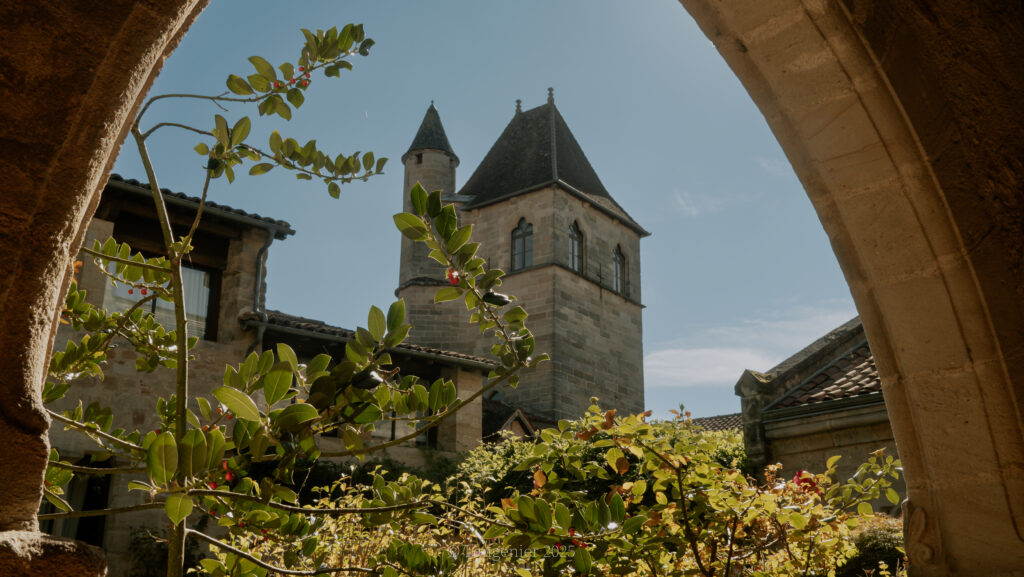
Head to the Tourist Office, located in the Hôtel de la Monnaie, a superb 13th-century building, to purchase the Clés de Figeac map for thirty cents. This two-hour itinerary allows you to discover the city’s main treasures and understand its secrets beyond its beautiful medieval facades. Don’t miss the Saint-Sauveur collegiate church, which houses the Notre-Dame de Pitié chapel with its sumptuous carved and painted woodwork. Another must-see is the Champollion Museum, located in the birthplace of the famous Egyptologist who was the first to decipher hieroglyphics. A few steps away, the Place des Écritures is covered with a huge reproduction of the Rosetta Stone. For a breathtaking view of the town, its Viguier tower (symbol of royal power established here in the 14th century) and its churches, climb up to the Notre-Dame du Puy church. Finally, to delve deeper into local history, the Espace Patrimoine, located in the town hall, traces the past of Figeac and its role during the Second World War. To end your visit, head to Place Carnot, the beating heart of the town, to have a drink in one of the many restaurants terraces.
Day Five | Between bastide & fortress : Villefranche de Rouergue & Najac
Head south towards Villefranche-de-Rouergue, less than forty minutes from Figeac.
Although Villefranche has lost some of its medieval charm, it retains the typical appeal of a bastide town: pale stone houses and geometric alleyways converging on a large central square lined with arcades where, every Thursday, the market has been bringing the town to life for centuries. Founded in 1099 by the Count of Toulouse, the city flourished in the 13th century, becoming a major commercial crossroads and an important stop on the Camino de Santiago.
The Notre-Dame collegiate church, with its 59-meter bell tower, was built to rival that of Rodez Cathedral—a symbol of local power and pride. Also not to be missed is the 17th-century Chapel of the Black Penitents, at the name of a brotherhood dedicated to the poor, who cared for the sick and buried the dead until its dissolution in the early 20th century. A little way from the center, the Chartreuse Saint-Sauveur is also worth a visit as a jewel of Gothic architecture
Get in the car and head south to the last stop on your trip: Najac, one of Les Plus Beaux Villages de France just 30 minutes from Villefranche-de-Rouergue. The village stretches out at the foot of its impressive fortress, built in the 14th century, with charming corbelled houses lining the narrow streets. The fortress, overlooking the Aveyron valley, is a masterpiece of 13th-century military architecture, once home to a large garrison and an impressive defensive system protected by wide walls. From the platform of the dungeon, the view is spectacular : the fortress, the cascading village, the valley, and the church. For hiking enthusiasts, several half-day walks around Najac allow you to enjoy the surrounding hills, vineyards, and meandering Aveyron River.
If you’re planning a trip to Occitanie, I also recommend checking out my guide to the beautiful city of Toulouse !
![WHERE TO STAY IN & AROUND SPLIT, MY BEST RECOMMANDATIONS [2026]](https://langenier.com/wp-content/uploads/2026/01/Best-Hotel-in-Split-Croatia-where-to-stay-in-Croatia-Split-region-city-guide-langenier.com-travel-blog-Hotel-Ambassador-1-1.jpg)