COMPLETE GUIDE FOR A WEEKEND IN SPLIT, CROATIA
Split … a city that’s been known since ancient times for its huge influence in the Roman Empire. Somehow, its old town has escaped both time and the wars that ravaged much of southeastern Europe over the last century. It’s hard to believe that not so long ago, the old houses here were falling apart and sold for just a few hundred euros. Now, the historic center of Split is one of the most beautiful in Europe, preserved thanks to its UNESCO title. It rivals Dubrovnik and Zagreb when it comes to history and culture—and it’s hands down my favorite city in Croatia.
In its heart, the Diocletian’s Palace, built in the 4th century, sits right next to buildings from the Venetian, Austro-Hungarian, and even briefly French periods, making the city a mix of 17 centuries of history all in one place. Walking around here, you really feel it—the past and the present living side by side.
I’ve been to Split three times (and I’m seriously thinking of going again in 2026). So if you’re planning the perfect weekend there, here’s everything you need to know: the best things to see, top beaches, where to eat and drink, and much more.
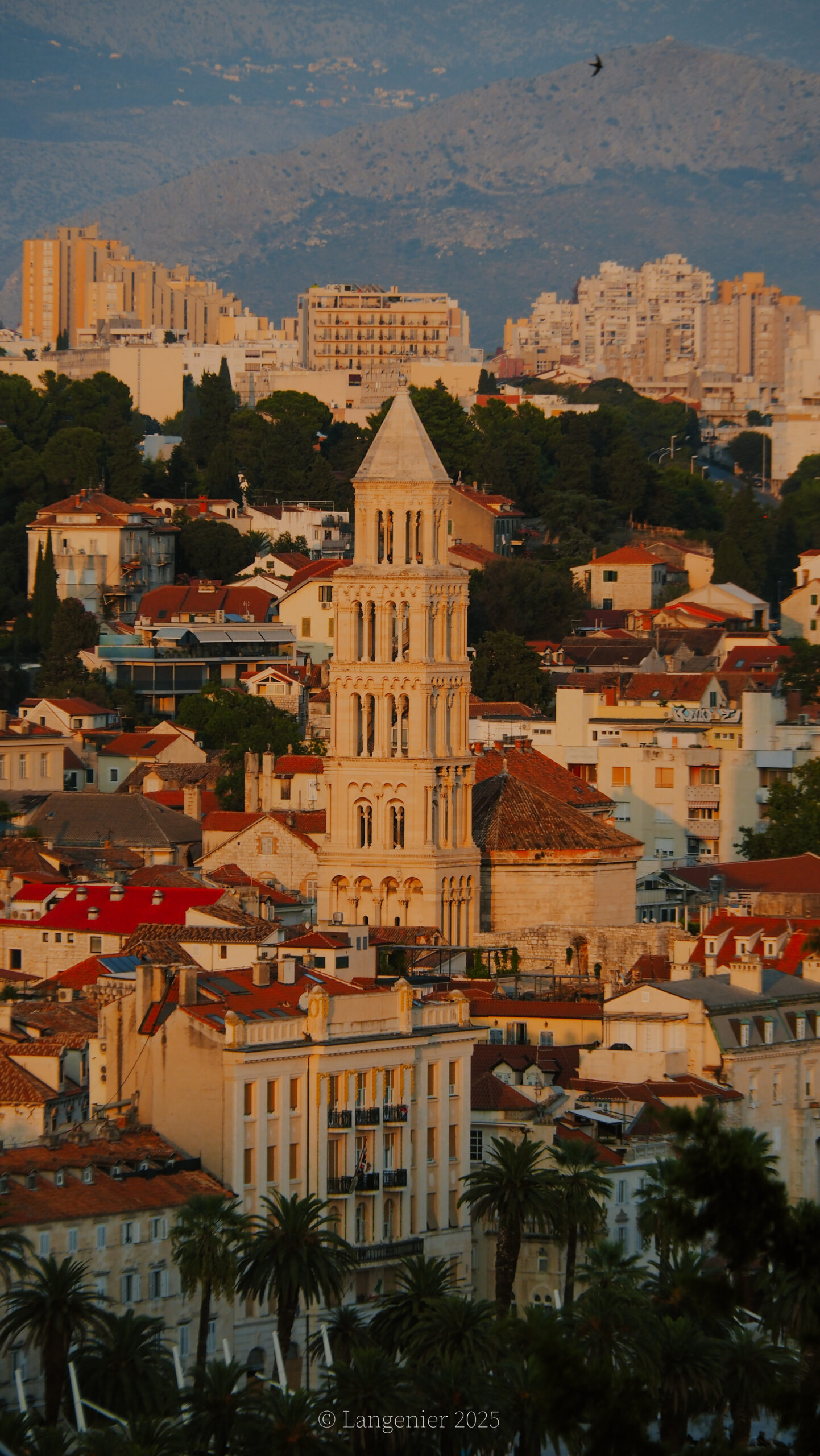
SPLIT OVERVIEW
WHERE | Split, Croatia / Hrvatska
GETTING THERE | Train from Zagreb, Bus, International airport
GETTING AROUND | Walk, Bus, Bike rental
WHAT TO SEE | Diocletian Palace, Riva of Split, Marjan Hill, Old town, Cathedral of Saint Domnius.
WHAT TO EAT | Fresh grilled fish, Crni rižot (black risotto), octopus salad, Mussels in buzara sauce, Ćevapi, Burek, Rozata (croatian pudding)
BEST TIME TO VISIT | All year around but avoid high-season (too busy). I recommend going there from April to June & from Mid-September.
CURRENCY | Euros €
1. THE DIOCLETIAN PALACE
The Diocletian’s Palace, remarkably well-preserved to this day, lies in the heart of Split. The palace was commissioned as a place of retreat by Emperor Diocletian after his retirement from the roman power, and completed in 305 CE. And more than just a palace, it served as an immense fortress, its walls encompassing the old town. Entry to the fortress is free, as it covers 40 000 m2. While parts of the original palace, along with some walls and gates, remain intact, much of the old town has been rebuilt in various styles over the centuries.
WHAT TO DISCOVER INSIDE THE OLD FORTRESS
- The Golden Gate : situated to the north, it serves as the main entrance to the palace. Its smaller counterparts, namely the Silver Gate, Iron Gate, and Bronze Gate, also grant access to various points around the city. Right in front of the gate stands an 8-meter tall statue of Gregory of Nin, a Croatian bishop from the 10th century who campaigned for the use of the Croatian language in the church. If you approach the statue, you’ll notice that its feet are a different shade from the rest of the sculpture. This discoloration is due to usage/wear, as it is believed that rubbing the statue’s big toe brings good luck, thus revealing the original bronze color.
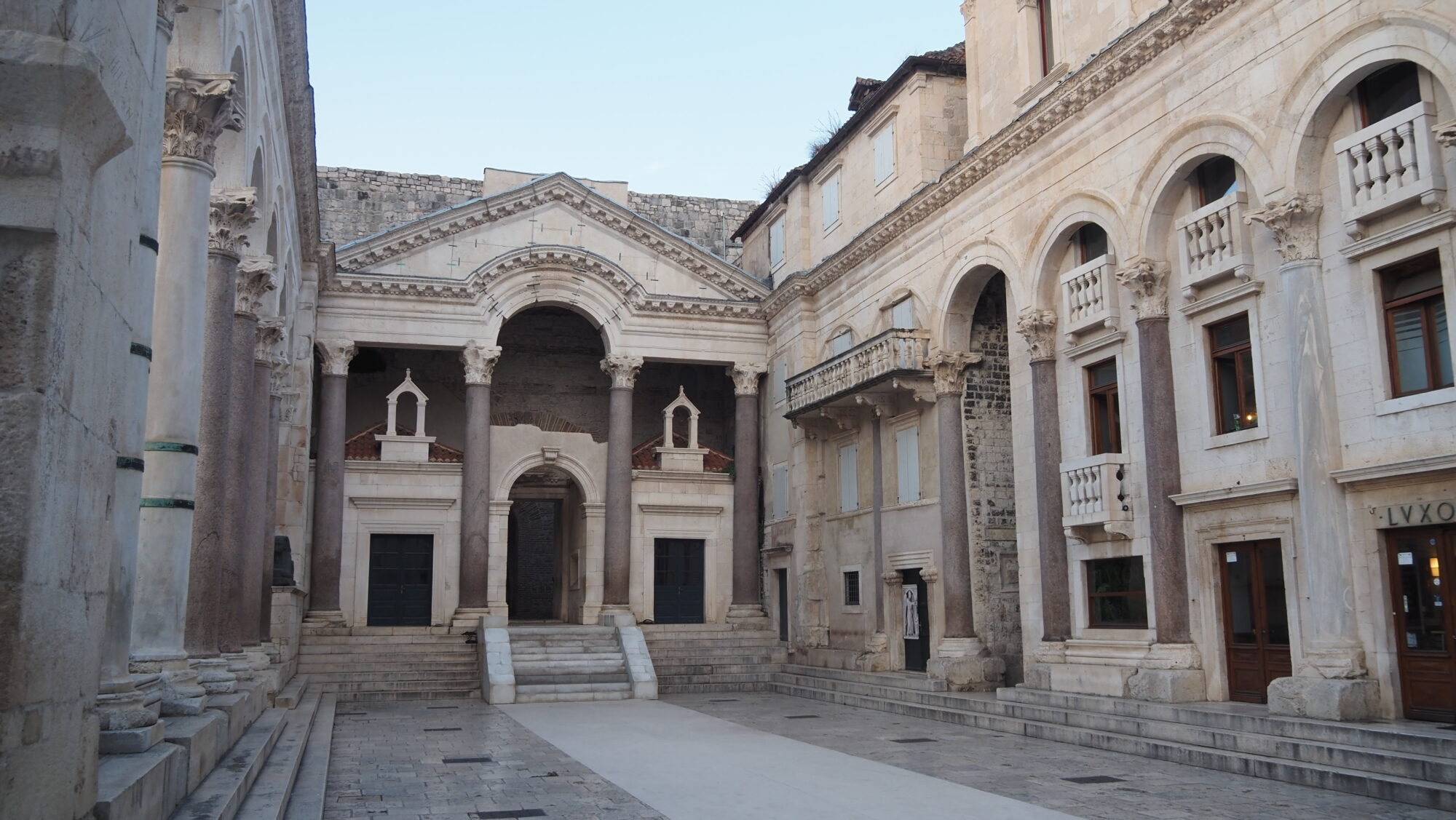
- Peristil Square : originally designed as the central courtyard of Diocletian’s Palace. It showcases the architectural grandeur of the Roman era, with monumental columns that have stood the test of time. Today, it serves as a hub of cultural events during the summer months. In the early evening, you can relax on the square’s steps, enjoy a glass of wine from the nearby Lvxor café, and enjoy an open-air concert. During my last visit, I had the chance to see a fashion show by Croatian designers who reimagined antiquity clothing with a modern twist.
- St Dominus Cathedral: originally constructed as a mausoleum for the emperor, the building took a new identity over time. The emperor instilled fear in the local Christian community, one of whom, the martyr St Dominus, gave his name to the cathedral centuries later. As well as the bell tower, added in the 14th century, featuring a Gothic architecture. (open from 8 a.m. to 8 p.m. in summer, admission charge less than 2 euros).
- The Vestibule : at the far end of Peristil Square, climb the steps and stop in the center of the room. When you look up, you’ll see a large opening in the ceiling. Though it was originally intact, part of it collapsed in the 16th century. The vestibule once served as the entrance hall to the emperor’s apartment. Although only the structural remains are left, we know the walls were once garnished with mosaics, and niches displayed statues.”
- The Basements of the Palace (cellars) : Throughout the centuries, these cellars have been utilized for a variety of functions, such as providing shelter, serving as storage rooms, and functioning as workshops. They even became a waste disposal area for those living in the homes above. The basements are also a must-see for any Game of Thrones fan, as they were used as the set for Daenerys’s dragon dungeon. You can explore part of the basements for free or opt for a more in-depth tour (7 euros full-price / 4 euros reduced – Open from 8 a.m to 8 p.m during summer)
- The Fruit Square : named for the fruit and vegetable market that was held there until World War II. The market is now located along the eastern wall of the fortress, but the name has remained. The statue in the center is of Marko Marulić, the most famous Croatian writer, who became well-known for his epic poem “Judita.”
- Pjaca Square (the People’s Square) : served as the administrative hub of the city under Venetian rule, which lasted from 1420 until 1797, when the Republic of Venice fell. This nearly 400-year period left a print on Split, leading to the adoption of Venetian Gothic architectural styles, evident in several buildings surrounding the square. Later, the architecture of the square was influenced by the Austro-Hungarian Empire after Split became part of it following the Congress of Vienna (1815). The main example of the pink-facaded building at the far end of the square which features the Art Nouveau style characteristic of Vienna.
2. RIVA OF SPLIT
Splitska Riva : lined with dozens of cafes and restaurants, it’s a lovely stroll to walk at any time of the day. The promenade was built by the French, who occupied the city in the early 19th century under Napoleon reign. They removed the medieval fortifications of the city to make way for the promenade and extend the coastline further into the water. The Gelateria Riva offers a good range of good (and pricey) ice cream. However, the restaurants in that area are decent but tend to be touristy and overpriced due to their strategic locations. Feel free to check out my recommendations for restaurants and drinks in the old town of Split at the end of the article.
Place Prokurative : by heading towards Marjan Hill, you will come across the Republic Square, which might evoke memories of a particular Italian city. Constructed in the 19th century under Austro-Hungarian rule, the square reflects Venetian influences, inspired by the mayor of the time who aimed to recreate a piece of his homeland within the city. It was only finished at the beginning of World War I. You’ll find many cafes and restaurants there (have a look at the Fish Mama Seafood & Steak), and I suggest visiting during the Golden Hour to admire the beautiful nuance radiating from the red buildings.
3. MARJAN HILL
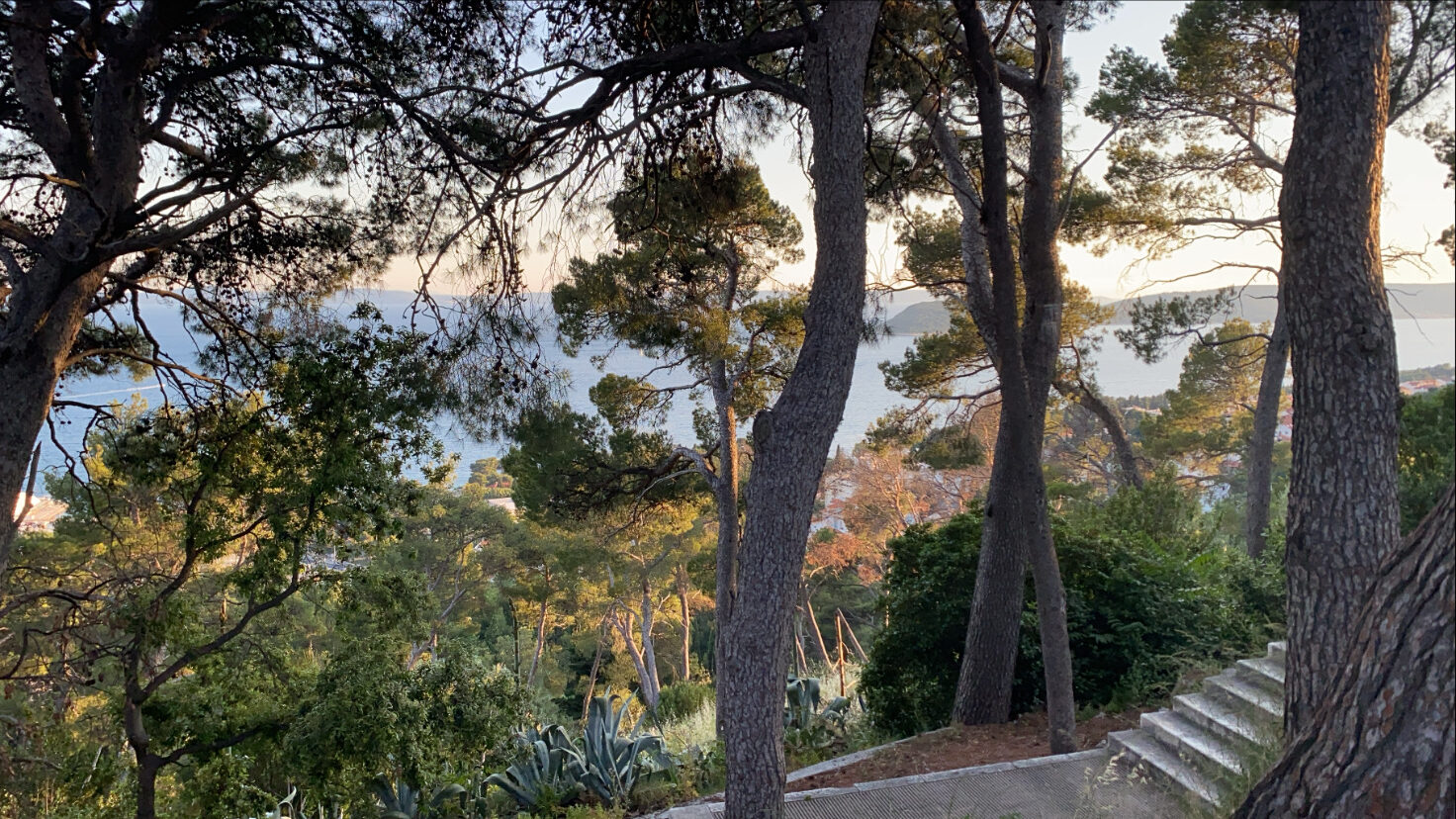
Just to the right of Procurative Square, a series of pedestrian streets will take you to the Marjan Hill area (pronounced ‘Marianna’). This vast 340-hectare park is the green pulmon of the city, offering to locals and visitors a peaceful place from the busy old town. The inhabitants of Split come here to run, walk their dog or train in combat sports (yes). Climbing to the top (Vhr Telegrin) is a bit of a workout but it’s worth every step, especially if you reach the lookout at the sunset time. You will have a panoramic view over both Split and the surroundings coastal views.
4. KASJUNI BEACH
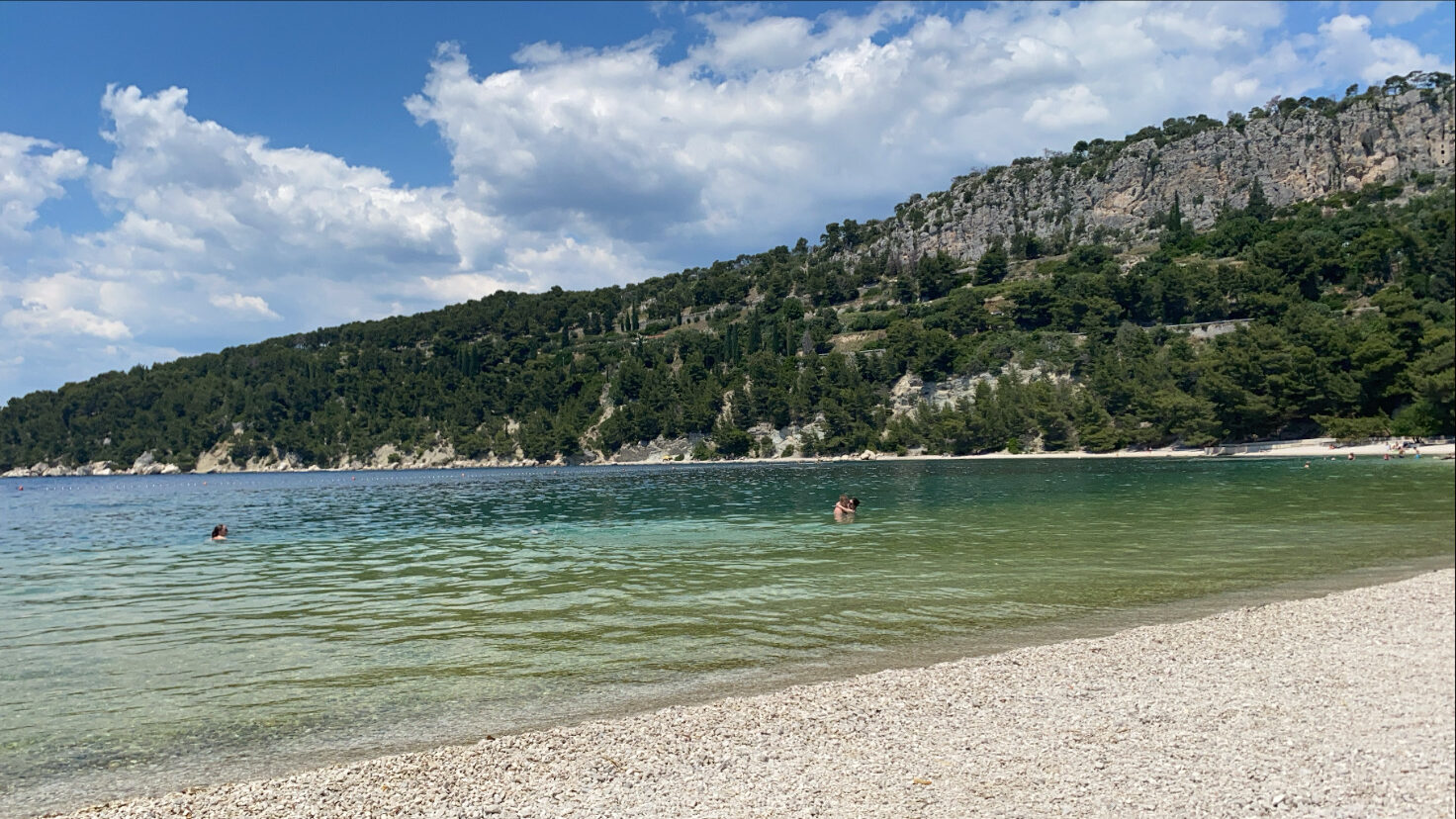
This is, for me, the most beautiful beach in Split, away from the hustle and bustle of Bacvice Beach (a 10-minute walk from the old town). tucked away from the lively Bacvice Beach (just a 10-minute stroll from the old town). To reach it, you’ll either have to walk for about an hour, or opt for a bike ride or taxi. Located at the base of Marjan Hill, the water shines with a striking turquoise colour. If you plan to swim, remember to bring water shoes, as the beach is made up of tiny rocks.
5. WHERE TO EAT AND DRINK IN SPLIT
EAT : during my three visits to Split, I had the pleasure of exploring (and revisiting) several places that I highly recommend. Pandora Greenbox offers a variety of nice crafted fresh drinks (lemonades and cocktails) as well as a good range of vegan dishes and desserts. Fig Split is in a similar style. For those craving seafood, Portofino specializes in Mediterranean-inspired specialties. If you’re looking for Cevapi, this renowned Balkan delicacy, the best options are at Den-Si (slightly outside the city but excellent value) or at Kantun Paulina in the old town (cash only).
DRINK: The best bar for backpackers is Charlie Bar. It has cheap drink prices and a great variety of beers and cocktails. As mentioned earlier, Lvxor provides the perfect setting for an outdoor concert. Academia Club Ghetto is a ‘secret’ underground bar. And saving the best for the end, Crozzies Open Bar hosts one of the best nightlife experiences for young tourists in the city.
6. WHERE TO SLEEP IN SPLIT
I’ve made a complete post about my favorite places to stay in Split & it’s surroundings. You can find it here.
☆
If you’re considering to stay in Split for a few days, there are nice day-trips to take from the city. The region is rich in cultural and fortified towns, National parks, and the islands are easily reachable (with almost 700 across Croatia) ! Here you can check out the 5 best day trips from Split (coming soon).
![WHERE TO STAY IN & AROUND PARIS [BEST AREAS]](https://langenier.com/wp-content/uploads/2026/02/Airelles-Chateau-de-Versailles-Le-Grand-Controle-where-to-stay-around-Paris-what-to-see-around-Paris-best-day-trips-from-Paris-langenier.com-travel-blog-4.png)
One Comment