48H IN FRANKFURT: THINGS TO DO, EAT & MORE
Known to locals and admirers as “Mainhattan,” Frankfurt-on-the-Main is unlike any other German city. It is a high-powered hub home to one of the world’s largest stock exchanges, the headquarters of the European Central Bank, and the stage for some of the planet’s most significant trade fairs. On paper, it sounds very corporate. So you might think that Frankfurt is not the kind of city worth — unless you work at the European Central Bank, have business with a financial institution, or happen to be passing through its airport. That was, as well, my firm belief before I spent a weekend there.
It took 24 hours to change my mind completely.
Behind the towers, the medieval Altstadt tells a completely different story: colourful half-timbered houses line narrow streets as if the 21st century never arrived. Traditional taverns nearby have been pouring apple wine and dishing out hearty local food for generations. Beyond that, relaxed neighbourhoods with parks and streets lined with independent shops spill down toward the river. If you love culture, you’ll be served: Frankfurt’s museums are among the finest in the country, and its student life injects a restless creative energy into its bars, galleries and stages after dark.
Modern and rooted at once — Frankfurt was one of those rare surprises — a city I arrived at with no expectations and left genuinely charmed by. If you have a weekend (or a full day) in Frankfurt & want to get the same feeling, here’s what not to miss.
FRANKFURT-AM-MAIN OVERVIEW
WHERE | Frankfurt-on-the-Main , Germany
GETTING THERE | Train, bus, international & domestic airport
GETTING AROUND | Walk, Bus, Tramway, Metro, Bike rental
TOP THINGS TO SEE | Römerberg, Städel Museum, Palmengarten, Sachsenhausen, Main Tower, Kleinmarkthalle, Museum Embankment, Frankfurt Cathedral, Goethe House, Eiserner Steg Bridge
WHAT TO EAT | Handkäse mit Musik (sour cheese), Frankfurter Würstchen (Frankfurt sausage, served with mustard), Apfelwein (local apple cider), Bethmännchen (small marzipan cakes), Frankfurter Kranz (buttercream cake with praline), Fischbrötchen (fresh fish sandwiches)
BEST TIME TO VISIT | April to October
CURRENCY | Euros €
GETTING TO FRANKFURT
- By train — Germany’s high-speed ICE network makes Frankfurt one of the best-connected cities in Europe. Munich is just 3h away, Berlin around 4h, and international routes bring you in directly from Amsterdam and Paris. Frankfurt’s main station, the Hauptbahnhof, is one of the busiest in the country and sits right in the heart of the city’s business district.
- By plane — Frankfurt Airport is the third busiest in Europe and a major international gateway, served by carriers from every corner of the world. Getting into the city couldn’t be easier: a direct S-Bahn train runs from the airport terminals to the city centre in around 15 minutes.
- By bus — Flixbus connects Frankfurt to a wide network of German and European cities at very affordable prices. The main bus station is just a short walk from the Hauptbahnhof.
GETTING AROUND FRANKFURT
Frankfurt is an easy city to navigate. The city is served by an extensive and efficient public transport network combining U-Bahn (metro), S-Bahn (suburban rail), trams and buses. A single journey ticket costs around €3.50, while a day pass comes in at roughly €8 for the inner city zones. Most of Frankfurt’s main attractions are clustered within a fairly compact area, meaning you can reach everything from the Hauptbahnhof within 30 minutes or less.
A BIT OF HISTORY ABOUT FRANKFURT
Frankfurt’s story stretches back roughly two thousand years, when the area was first home to Celtic and Germanic peoples before becoming a Roman garrison outpost. It grew steadily in importance through the medieval period, emerging as a significant centre of power within the Holy Roman Empire. By the 12th century, the city was already hosting international trade fairs that drew merchants from as far as the Mediterranean coast to the Baltic Sea. In 1372, Frankfurt was granted the status of a free imperial city, a privilege it held for nearly five centuries until Prussia absorbed it in 1866. The city’s relationship with money is nothing new either. The stock exchange has been open for business since 1585, and it was here, on these very streets, that the Rothschild family laid the foundations of what would become one of the most powerful banking dynasties in history — all the way back in the 1760s.
Frankfurt also has a rich and deeply significant Jewish history. By 1933, its Jewish community numbered around 30,000 — the second largest in Germany at the time. Walking through the city today, you may notice small brass plaques set into the pavement at street level. These are Stolpersteine, meaning stumbling blocks, a Europe-wide memorial project that marks the last known address of Jewish residents deported during the Nazi era. The Second World War left devastating marks on Frankfurt. Allied bombing raids in March 1944 destroyed around 80% of the medieval city centre and claimed more than a thousand lives. Therefore, much of what you see around the historic Römerberg square today is a careful postwar reconstruction.
DAY 1 | ALTSTADT, CATHEDRAL & MEDIEVAL SQUARE
Morning on the Kaiserdom, Römerberg & Hidden Gems
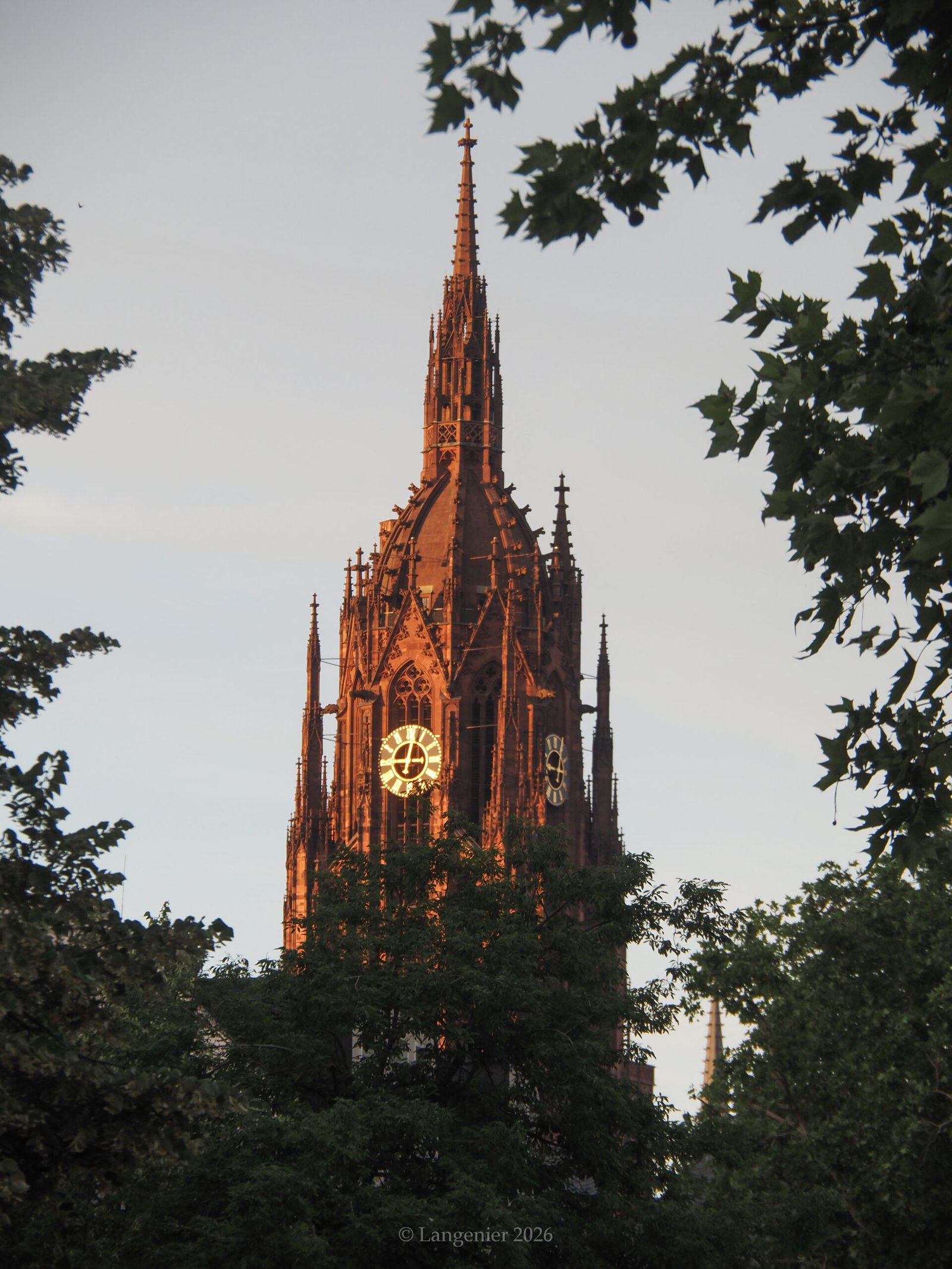
Start your day at the Kaiserdom, Frankfurt’s striking red-sandstone cathedral. Its Gothic tower rises 95 metres above the city and can be climbed via 328 steps — well worth the effort for the views at the top. Construction began in the 13th century, and for more than four centuries the cathedral served as the electoral and coronation site of the Holy Roman Emperors. Reduced to a shell by the 1944 bombings, it has been carefully rebuilt since. Don’t miss the small museum before you leave.
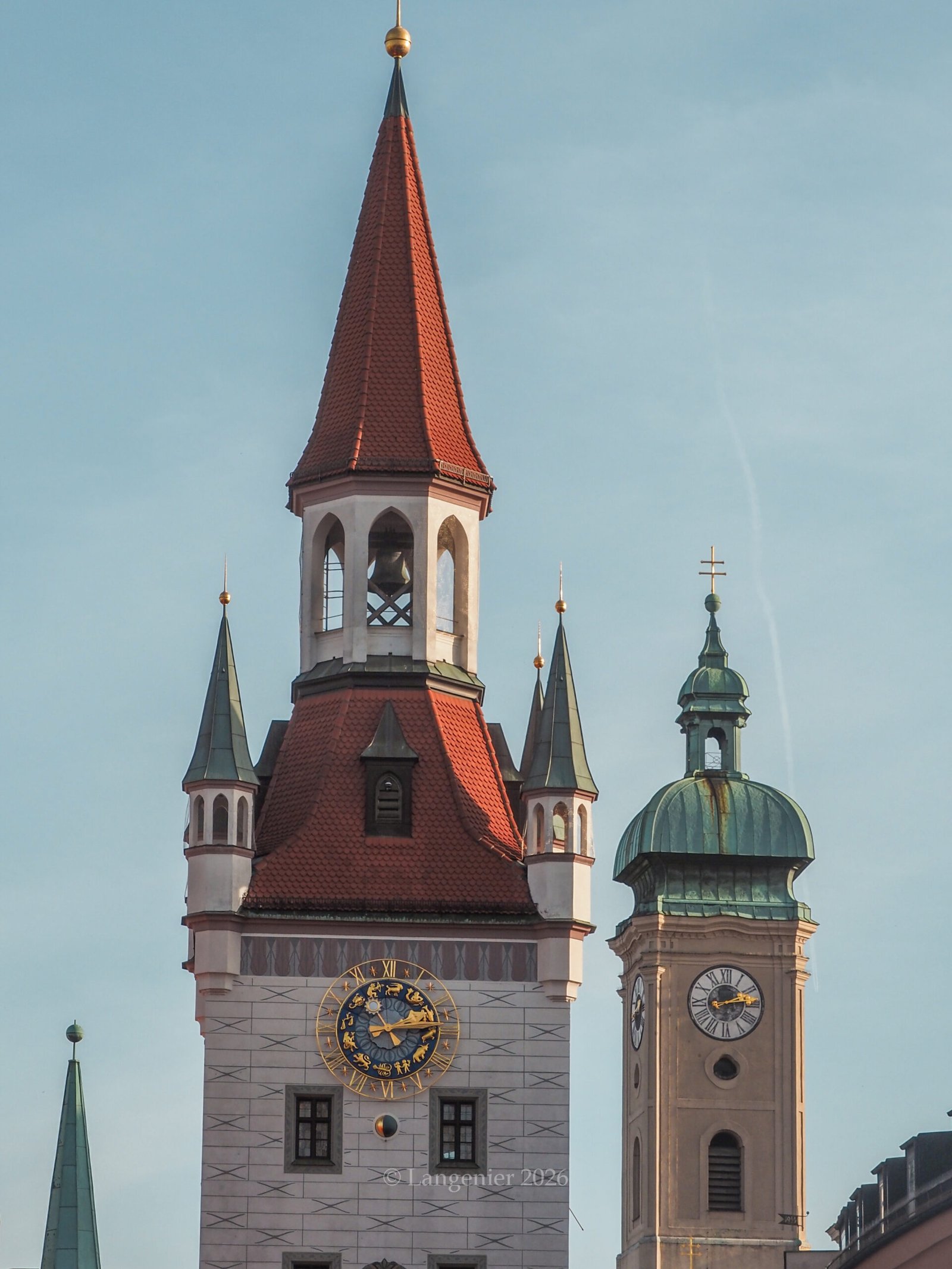
From the cathedral, it’s a short walk to the Römerberg, Frankfurt’s historic central square. Ringed by ornately gabled half-timbered houses — reconstructed after wartime destruction — it gives a sense of how beautiful the medieval city once was. If you happen to visit in December, the square transforms into one of Germany’s most lovely Christmas markets. If you’re looking for the perfect gift to bring back from Frankfurt, make your way to Handwerkskunst am Römer. The shop carries a great selection of regional crafts, including the iconic Black Forest cuckoo clocks. And we need to talk about the staff. On my visit, a passionate young woman welcomed me in, brought the clocks to life, and shared the story behind it. That was so interesting !
For a lunch that’s anything but average, do as the locals do and make it to the Kleinmarkthalle. This lively covered market is a food lover’s paradise — stall after stall of vendors serving everything from Italian classics and authentic Japanese bites to the city’s most iconic street food, the Frankfurt sausage. Graze your way through & try a little of everything.
Afternoon at Historic Museums & Golden Hour on the Main
Then delve deeper into the city’s rich history at the Historisches Museum Frankfurt, well worth an hour or two of your time. Housed in an impressive five-building complex completed in 2017, it takes you on a journey through the city’s long and layered past. The main permanent exhibition, Frankfurt Once ?, covers everything from daily life and trade to fashion, music, science and childhood — arranged thematically rather than chronologically.
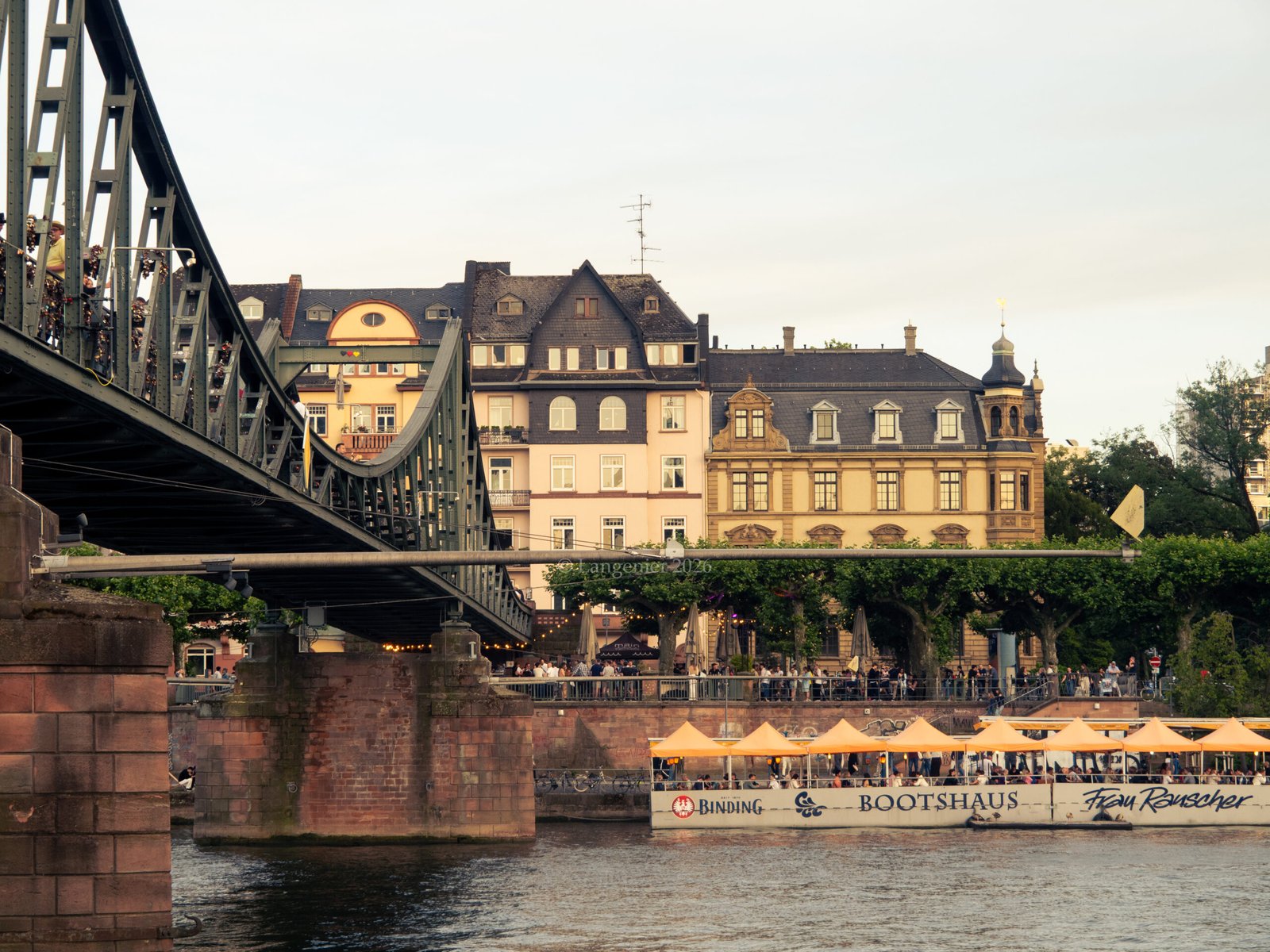
As the afternoon light begins to soften, slow down and take a stroll along the banks of the Main. The Eiserner Steg, the city’s iconic iron footbridge, is the classic sightseeing point for taking in the skyline, particularly during the golden hour before sunset. If you’d rather let the city drift past you, hop on one of the river shuttle boats for a lovely one-hour cruise. For the more energetic, renting a bike and following the quays is highly recommended — the paths along the Main stretch for kilometres in both directions, taking in the Museumsufer on the south bank and the historic Altstadt on the north. And if all you want is to sit and watch the world go by, pull up a chair at one of the riverside bars, order a glass of Apfelwein, and let the late afternoon do the rest.
DAY 2 | MUSEUMSUFER, GOETHE & INNENSTADT
Morning exploring the Museumsufer & Sachsenhausen
Begin your second day on the southern bank of the Main, where the Museumsufer — Frankfurt’s celebrated museum embankment — lines the riverside with an impressive row of 13 institutions covering everything from fine art and film to architecture and world cultures. It’s one of the most concentrated museum strips in Europe and easily enough to fill an entire day on its own. My personal favourite is the Städel Museum (a world-class gallery founded in 1815 with an extraordinary collection spanning the Middle Ages to today, from Dürer and Rembrandt to Picasso and Gerhard Richter) & next door, the Liebieghaus (with its sculpture collection covering everything from ancient Egypt to the Baroque). This later, have a lovely cross-vaulted café with outdoor tables — the perfect excuse to sit down with an Apfelschorle and linger a little longer.
Good to know: on the last Saturday of every month, admission is free at many of Frankfurt’s museums, Museumsufer — well worth timing your visit around if you can. If you’re planning to visit multiple museums across your stay, the MuseumsuferTicket offers free entrance to 39 museums for two full days and costs 21€. Get it here.
The Museum embankment sits at the edge of Sachsenhausen, one of Frankfurt’s most characterful neighbourhoods. Venture beyond the museum and you’ll find cobbled streets lined with timber-framed houses, particularly in the historic Alt-Sachsenhausen quarter. The chic boutiques of Schweizer Straße draw the eye, while elegant period buildings and grand villas stretch all the way to the city forest. But it’s the lively backstreets that truly define the area — packed with traditional apple-wine taverns, local restaurants & bars. That’s exactly where I’d send you for lunch. For hearty, comforting German fare, head to Apfelweinwirtschaft Atschel or Zum Gemalten Haus, one of the city’s oldest cider houses — and on a sunny day, don’t miss the hidden beer garden tucked away at the back.
Afternoon at the Goethe-Haus, Innenstadt & Skyline Views
In the afternoon, make your way to the Goethe-Haus, the birthplace of Johann Wolfgang von Goethe, one of Germany’s greatest writers, philosophers and statesmen. Almost entirely rebuilt after being gutted in the 1944 bombings — only the cellar survived — the house has been meticulously restored to reflect the refined bourgeois interiors of Goethe’s era, based on a detailed inventory made when his family sold the property.
Wander further into the Innenstadt — Frankfurt’s financial and commercial core, ringed by a graceful arc of parks that follow the route of the city’s medieval walls, torn down in the early 19th century. Don’t leave without heading up the Main Tower. At 200 metres, it is one of the tallest buildings in the city and the only skyscraper with a public observation deck — reached by lift in just 45 seconds. Pre-book your tickets online to skip the queue. Bear in mind the platform closes in bad weather, so keep an eye on the forecast before you go.
For dinner, I can’t recommend Bar Shuka enough. Housed inside the 25hours Hotel just a short walk from the Hauptbahnhof – a perfect last stop if you’re heading home on a late train -. The menu draws its inspiration from the Middle East, with sharing plates, bold flavours and an atmosphere of rare balance between lively and relaxed, drawing locals who know the city well and visitors discovering it for the first time. And if you’ve ever eaten at a 25hours hotel restaurant before, you’ll already know they always deliver, and Bar Shuka is no exception.
MY OTHER PICKS FOR FRANKFURT
If time is on your side, Frankfurt has plenty more to reward your curiosity
Visit Frankfurt Jewish Heritage
Frankfurt was once home to one of the most significant Jewish communities in Europe. The city’s Jewish history stretches back nearly 900 years, and at its peak during the 17th and 18th centuries, the community was among the largest and most influential on the continent. Jewish merchants and financiers played a central role in Frankfurt’s economic rise. The Rothschild family — perhaps the most famous name in European banking — were Frankfurters, born and raised in the Jewish quarter. Their former home, the Rothschild Palais, today houses the city’s Jewish Museum (Museum Judengasse) which traces the community’s relationships with Frankfurt’s Christian population, the city council and the emperor.
Nearby stands the Old Jewish Cemetery, where roughly a third of the original tombstones — some dating back to the 13th century — survived the Nazi era. Along the cemetery’s western wall stretches the Wand der Namen, the Wall of Names: a devastating memorial studded with metal cubes bearing the names of the 11,000 Frankfurt Jews who perished in the Holocaust.
Enjoy the afternoon at the PalmenGarten
Founded in 1871, the Palmengarten is one of Frankfurt’s most beloved green escapes — and Germany’s largest botanical garden. Spanning around 20 hectares, it takes you on a journey around the world through its plants, from lush tropical rainforests to japanese serene gardens. The centrepiece is the Palm House, an elegant iron-and-glass structure surrounded by galleries that host temporary exhibitions of both plants and contemporary art.
Don’t miss the butterfly house, where hundreds of free-flying butterflies drift around you. There is also a Goethe Garden, dedicated to Frankfurt’s most famous son, who was himself an avid gardener. And if you’re with kids, there are playgrounds, a mini train and, from May to September, rowing boats on the pond. In summer, the garden also doubles as a cultural venue, hosting concerts, theatrical performances and open-air exhibitions.
Also for the best stays in the city, I’ll be back in Frankfurt soon, and a carefully curated guide to the city’s best addresses is already in the works !