+15 THINGS TO DO & SEE IN PERUGIA, THE MOST ‘ITALIAN’ CITY OF ITALY
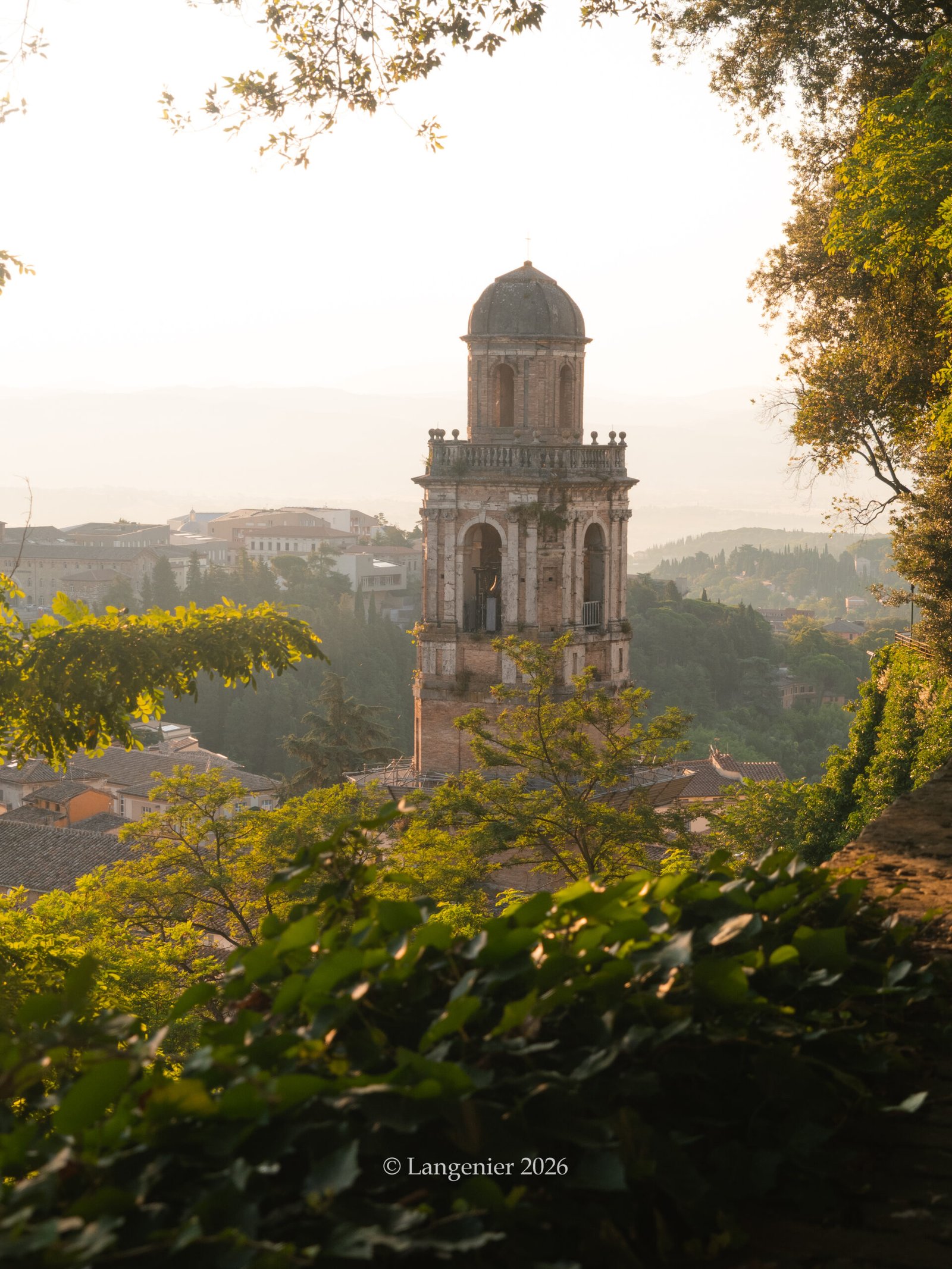
The first time my mother visited Perugia, she said something that struck me: this is Italy without the performance. Not the Rome of postcards, thick with tour groups and Roman ruins. Neither the Milan of business suits and impressive Duomo. This is something else — the Italy you conjure when you picture the Middle Ages, or the Renaissance before it became a museum piece. A rougher, more honest place, where the view from nearly anywhere spills out over sheep-dotted hills and olive groves that seem to run on forever.
Perugia is the capital of Umbria, a city students flock to for a semester abroad, an easy train ride from almost anywhere — and yet somehow still manages to sit just outside the tourist trail. Which is, of course, half the appeal. It belongs to a region, Umbria, that rarely gets mentioned in the same breath as its glamorous neighbour, Tuscany. Which might be exactly why it deserves the attention — or perhaps it shouldn’t get any at all, because part of the magic is walking its streets on the evening and thinking: this is what Italy feels like without an audience. By evening, the bars fill with a hum of Italian — no English drifting in from the next table.
I first saw Perugia on a day trip from Rome four years ago — just for a few hours — and as the train pulled away, the Umbrian mountains rolling past the window, I remember thinking with total certainty that I’d be back. Not for another couple of hours. For longer. Because this city pulls at me, and so does the region around it.
So here’s a list of more than 15 things to do in Perugia — whether you’re here for a weekend, a week, or you already call it home and want to uncover a little more of this beautiful city.
PERUGIA OVERVIEW
WHERE | Perugia, Umbria, Italy
GETTING THERE | Train, bus, international & domestic airport
GETTING AROUND | Walk, Bus, MiniMetro, Tours & Bike rental
TOP THINGS TO SEE | Fontana Maggiore, Palazzo dei Priori, Duomo di San Lorenzo, Rocca Paolina, Galleria Nazionale dell’Umbria, Corso Vannucci.
WHAT TO EAT | Torta al testo (flatbread), Norcineria specialities (pork products), Truffles from Umbria, Strangozzi/umbricelli (pasta), lentis, Torcolo di San Costanzo (cake), Chocolate from Umbria.
BEST TIME TO VISIT | Spring to Autumn
CURRENCY | Euros €
- GETTING TO & AROUND PERUGIA
- A BIT OF HISTORY OF PERUGIA
- 1. Piazza IV Novembre & its Monumental Fountain
- 2. Cathedral of San Lorenzo
- 3. Palazzo dei Priori & the Galleria Nazionale dell' Umbria
- 4. Perugia Medieval Acqueduct
- 5. Rocca Paolina & its Underground Maze
- 6. Hopping on the Minimetro
- 7. Basilica di San Domenico
- 10. Church of San Michele Arcangelo
- 8. MANU National Archaeological Museum of Perugia
- 9. Palazzone Necropolis & Volumni Hypogeum
- 11. Tasting Perugian Chocolate
- 12. Oratory San Bernardino
- 13. Etruscan Heritage of Perugia
- 14. Attending the Umbria Jazz Festival
- 15. Cappella di San Severo
- BEST DAY TRIPS FROM PERUGIA
GETTING TO & AROUND PERUGIA
- By plane: San Francesco d’Assisi airport (PEG) sits in the valley below the city, with a handful of routes to other countries, mostly on budget carriers like Ryanair. The Umbria Airlink shuttle — a combined train-and-bus ticket — gets you from the airport to Perugia’s or Assisi’s railway station in about 20 minutes, timed to line up with flight arrivals.
- By train: From Rome, it’s about 2 to 3h by train from Termini to Perugia’s main station, or roughly 3h by bus from Tiburtina. From Florence, the train takes about 2 hours. The train station sits down in the valley, so you’ll need to catch a local bus up to Piazza Italia to reach the old town or the Minimetro (more reliable).
Once you’re there the centro storico is largely pedestrianized, all cobblestones and staircases. But the hills are real, so the city has built an ingenious workaround: a network of escalators and elevators, some of them cutting straight through the underground tunnels of the Rocca Paolina, plus the driverless Minimetrò gliding overhead.
A BIT OF HISTORY OF PERUGIA
Perugia has very ancient origins, with traces of settlement dating back to the 9th century BC, but it was from the 7th-6th centuries BC that the city rose to become one of the most important centers of the Etruscan world, holding a dominant role over the surrounding territory. Across the centuries of its dominance, the Etruscan Phersna (old name of Perugia) saw substantial development of its buildings, as still visible today in its powerful walls and monumental gates. Rome took the city in 40 BC after the bloody “War of Perugia,” and Augustus rebuilt it under the name Augusta Perusia — an inscription still legible on the Etruscan Arch.
After Rome’s fall, Perugia weathered the barbarian invasions and Byzantine and Lombard rule before becoming a free commune in the 12th century — the start of its medieval golden age. The city grew wealthy, founded its university in 1308, and produced masters like Pietro Vannucci, known as Perugino, who later trained the young Raphael. It was also a city torn by rivalry between noble families, above all the Baglioni, who held political and cultural sway through the 15th century.
In 1540, Perugia lost its independence in the “Salt War,” fought over a papal tax. The defeated city fell under permanent papal rule, and the Church built the Rocca Paolina, a fortress meant to enforce that power, razing an entire neighborhood in the process. Papal control lasted until the 19th century, when Perugia joined the push for Italian unification and was annexed to the Kingdom of Italy in 1860 — residents tearing down part of the Rocca Paolina themselves as a mark of liberation.
Through the 20th century, the city modernized while keeping its medieval core intact, growing into a university town, bolstered by the University for Foreigners, founded in 1921. Today, Perugia still wears each of these eras openly — Etruscan, Roman, medieval, modern — layered like strata of its own history.
1. Piazza IV Novembre & its Monumental Fountain
Let’s start with the most obvious one. When you tap ‘Perugia’ on the internet, high chances are that you’ll see a bunch of pictures of the Piazza del 4 novembre. It’s easy to see why. The square sits at the very heart of the city, framed by the cathedral, the imposing Palazzo dei Priori, and the Fontana Maggiore — while Corso Vannucci, Perugia’s grand main artery, spills out from here down toward Piazza Italia and the Garden Carducci.
At the centre of it all is the Fontana Maggiore, one of Italy’s most recognisable fountains — its distinctive circular shape has become an emblem for the city. It was built around 1275, designed by the father-and-son sculptors Nicola and Giovanni Pisano, originally meant to channel water arriving via the Monte Pacciano aqueduct. That plan never quite worked as intended — the aqueduct simply couldn’t generate enough pressure to keep the fountain running & it wasn’t until the introduction of modern water pumps that the fountain finally started working properly, and it still runs today.
2. Cathedral of San Lorenzo
Just behind the Fontana Maggiore rises the Cathedral of San Lorenzo, its Baroque façade — added in 1792 — offering little hint of what awaits inside. Cross the threshold, however, and the mood shifts entirely: the interior reveals itself as distinctly late-Gothic, its three naves divided by a solemn procession of pillars, with a handful of 18th-century treasures tucked throughout for those who care to look. The adjoining cloister, too, rewards a detour — home to the Capitolare Museum and its remarkable collection. Among the cathedral’s more curious holdings is a replica of the so-called wedding ring of the Virgin Mary, first mentioned as far back as the 8th century amid the Crusades in Jerusalem — the original itself is kept locked away, unveiled to the public just two days a year, in July and January in the same cathedral.
3. Palazzo dei Priori & the Galleria Nazionale dell’ Umbria
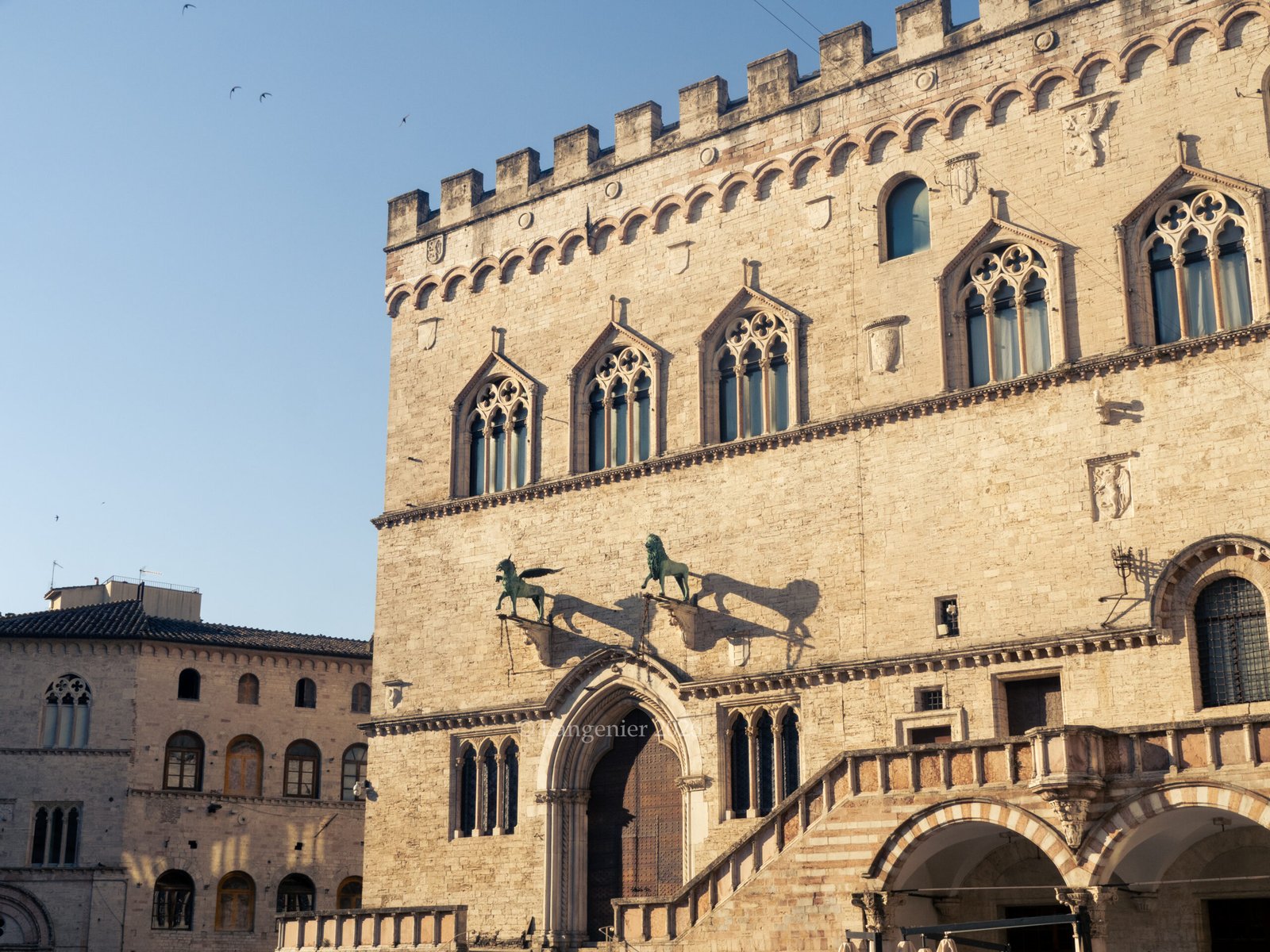
Head south toward Corso Vannucci and step inside the Palazzo dei Priori — home to the city’s local government offices, as well as the Sala dei Notari, reached via a sweeping historic staircase. Today, this grand hall plays host to civil weddings and public speeches, its entrance positioned directly opposite the cathedral’s — a placement that makes sense, given that one represents the city’s secular life and the other its spiritual one.
Deeper inside the palazzo lies the Galleria Nazionale dell’Umbria, one of the region’s most significant museums since it opened its doors in 1878. Its collection unfolds chronologically, spanning the 13th to the 19th century, and moves through Florentine political works, Renaissance masterpieces, jewellery, textiles, and thematic collections — culminating in works by Piero della Francesca, Fra Angelico, Pinturicchio, Perugino – native to the region – and Duccio di Buoninsegna.
4. Perugia Medieval Acqueduct
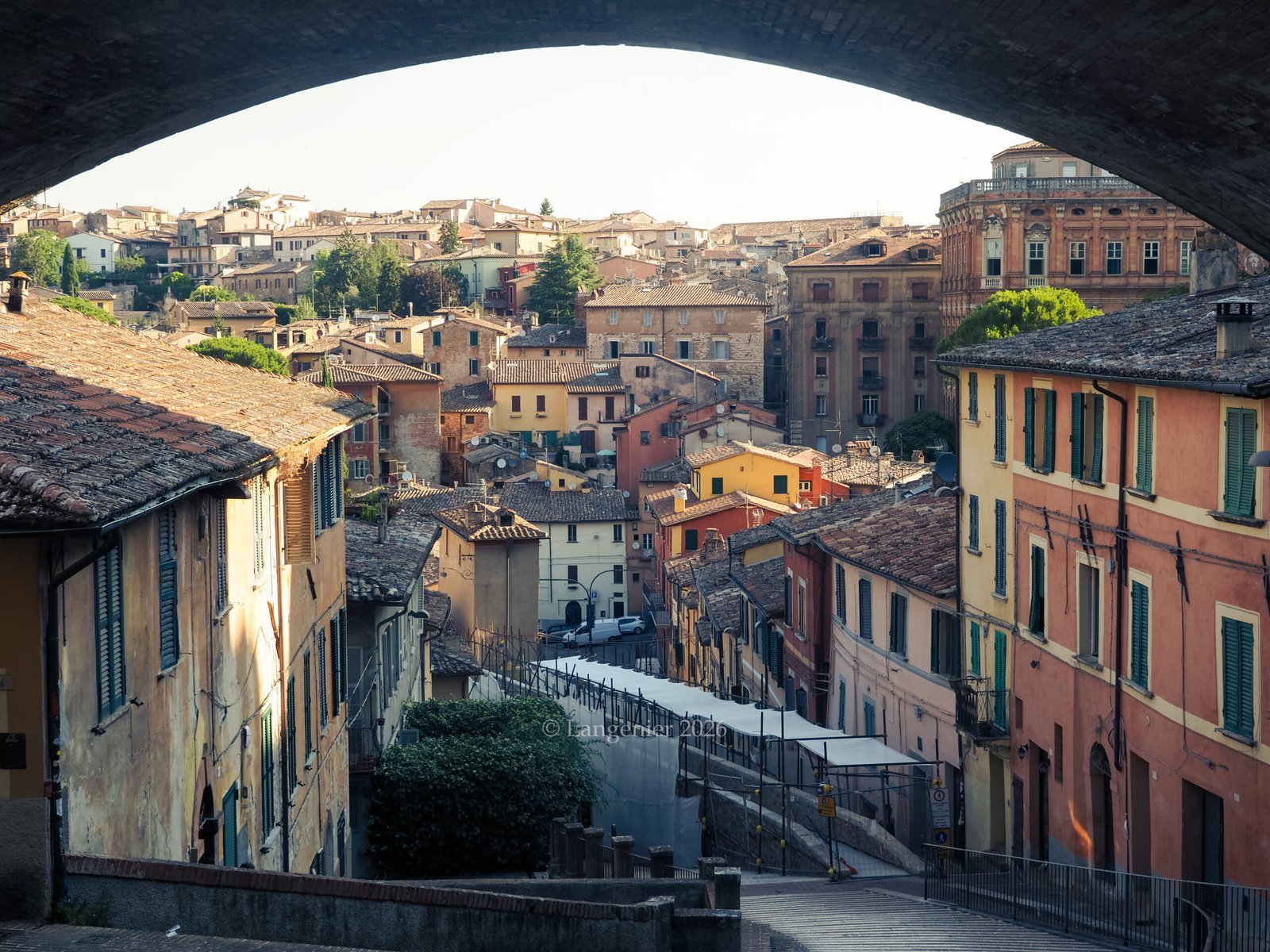
Perugia’s medieval aqueduct stretches 4km across the countryside, though the most celebrated viewpoints along its route sit conveniently close to the Duomo, just a short walk away. Originally Roman in origin, the aqueduct underwent extensive restoration in the Middle Ages, driven by the demands of a rapidly growing population, and set out to link the water-rich springs of Monte Pacciano to the city centre via a four-kilometre path. The city’s elevated position made this a formidable challenge — moving water uphill was difficult — but after years of study and the eventual use of a static pressure duct, water finally reached the Fontana Maggiore in Piazza IV Novembre in 1278.
The aqueduct remained in service until the late 19th century, when it was gradually replaced by a modern system and fell out of use. Today, its final stretch into the city has been transformed into a picturesque pedestrian walkway — home to the beautiful bridge-covered passage so often used to represent Perugia in photographs — while the sections stretching north into the countryside have been left to ruin.
5. Rocca Paolina & its Underground Maze
Who could have thought that Perugia conceals, beneath its streets, several hundred metres of underground passageways? Their origin traces back to the Rocca Paolina, a fortress commissioned by Pope Paul III in the 15th century as a secure stronghold to retreat to whenever he visited the city — notably, a city where he wasn’t particularly welcome.
That tension came at a considerable price. Construction demanded the demolition of over a hundred houses, monasteries, and churches, many belonging to the Baglioni family, a dynasty the Pope despised. And once the fortress was complete, its true purpose revealed itself in rather telling fashion: following the Salt War, its defensive cannons weren’t trained outward against potential invaders, but inward — toward Borgo XX Giugno and the residents living within the city walls.
The fortress itself no longer stands; the Palazzo della Provincia now occupies the site. But its underground levels remain open to everyone, functioning almost like a monument perpetually under construction. As excavation work continues, new passageways and rooms keep emerging, some given over to temporary exhibitions, others to permanent ones. And its so fresh inside that you should definitely go during heatwaves.
6. Hopping on the Minimetro
This is something unique in Italy — and if you’re arriving by train at the main station, chances are you’ll spot it, or even ride it: the Minimetro. Pis an automated public transport line that opened in 2008 as a way to curb car use between the city’s lower and upper districts — no small task, given that Umbria’s capital sees over 220,000 daily commuters passing through. Fully automated and super cute, the Minimetro sends its cabins gliding by every five minutes, connecting the lower town to the upper city in just around ten minutes. Tickets cost a modest €1.50 & its such a cool way of going to the upper city !
7. Basilica di San Domenico
It’s hard to miss the Basilica di San Domenico — its imposing bulk, crowned by a towering bell tower, looms into view from almost anywhere in the city. Built in a recognisably Gothic style, the basilica has weathered several rounds of restoration over the centuries, and its treasures have, at various points, fallen victim to plunder. And yet it endures as one of the city’s most important landmarks, still safeguarding frescoes, stained glass, and funerary monuments of remarkable beauty — chief among them, the tomb of Pope Benedict XI.
Just across the way, in the heart of Borgo Bello, sits a recently restored fountain. Reaching the basilica’s main entrance means climbing a particularly romantic flight of steps — reason enough, it seems, for the spot to have become something of an unofficial stage for marriage proposals.
10. Church of San Michele Arcangelo
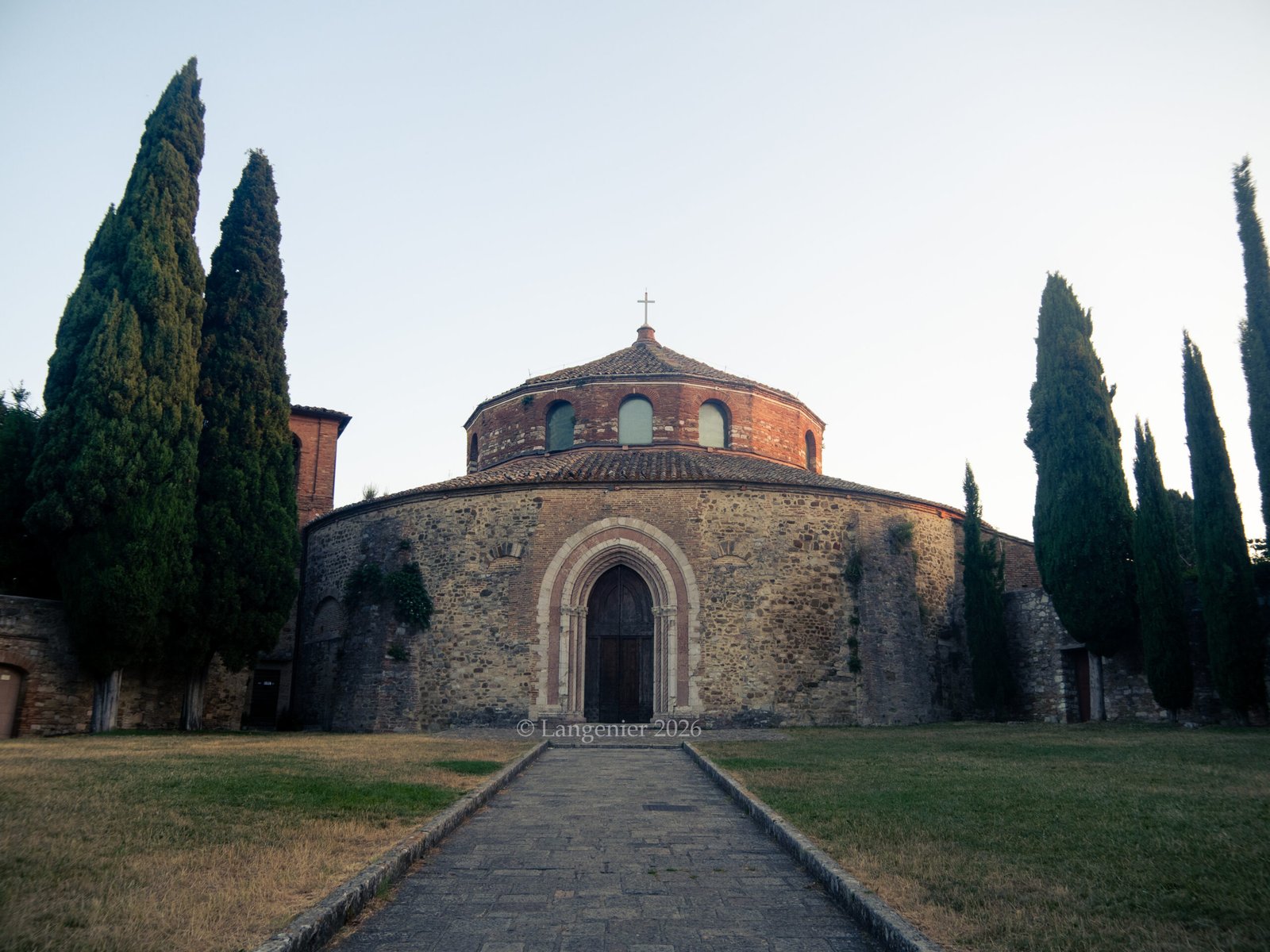
Tucked on a hillside just outside the city walls, the Tempio di Sant’Angelo (officially the Church of San Michele Arcangelo) is one of Italy’s oldest paleo-Christian churches built in the 5th century — round in plan, with Gothic touches added later. Its sixteen Corinthian-capped Roman columns, dividing the interior into two concentric rings around four cross-shaped chapels, were salvaged from pagan temples once dedicated to Vulcan and Flora. Twelve windows in the drum above cast soft light across the unadorned space, giving it an almost mystical calm — no surprise it’s become a favorite wedding venue. Once the only place locals could worship Christianity in an otherwise pagan city, it now shares its hilltop with the Cassero di Porta Sant’Angelo, the city’s largest medieval gate, home to a museum of musical instruments and a rooftop terrace with beautiful views.
8. MANU National Archaeological Museum of Perugia
The National Archaeological Museum of Umbria occupies the former convent of San Domenico, on Corso Cavour, just outside Perugia’s Etruscan walls. The cloister, one of the largest and finest in the city serves a backdrop for an Etruscan-Roman lapidarium, all funerary urns and Latin-inscribed stelae. But the real draw is inside: the museum holds one of Italy’s richest Etruscan collections, gathered from the surrounding necropolises starting in the 19th century, most notably the Ipogeo dei Volumni. Highlights include the Cai Cutu sarcophagus, an exceptional set of archaic bronzes from Castel San Mariano, and a reconstruction of the Cai Cutu hypogeum in the basement.
Upstairs, the prehistoric and protohistoric collections — drawn largely from the Bellucci and Calzoni holdings — trace the parallel development of Umbrian and Etruscan civilization on either side of the Tiber. Through its bilingual Latin-Etruscan cippi, you can piece together how Rome eventually absorbed the world that came before it.
9. Palazzone Necropolis & Volumni Hypogeum
To reach the Palazzone Necropolis, hop on the bus E006 to the modern suburb of Ponte San Giovanni. The cemetery, a sprawling burial complex made up of more than 200 tombs,once served a settlement that oversaw a stretch of the Tiber Valley below, and while most of its tombs date to the Hellenistic Age — between the 3rd and 1st centuries BC — a small nucleus of five, spread across two areas, reaches back even further, to the Archaic Age of the late 6th and early 5th centuries BC.
Its centrepiece is the Ipogeo dei Volumni, Perugia’s oldest Etruscan funerary monument, dating to the 3rd century BC and built to house the remains of the Volumni family. The hypogeum unfolds like a traditional Roman house, with an entrance hall leading into seven rooms arranged around a central chamber. A steep corridor descends to the burial chamber of Arunte and Lars Volumnius, where cinerary urns — carved from travertine, terracotta, marble, and sandstone all quarried from the necropolis itself — hold the family’s remains, each one adorned with a portrait of the deceased.
11. Tasting Perugian Chocolate
Perugia owes its status as Italy’s chocolate capital to a company: Perugina. Founded in the city in 1907, it hit its stride in 1922 with the invention of Baci — those little chocolate “kisses” wrapping a hazelnut heart, now as recognizable a local emblem as the city itself. Bought out by Nestlé in the 1990s, the brand still feels rooted in Perugia and the city wears its nickname well: the City of Chocolate. Every October, that reputation comes alive at Eurochocolate, one of the largest festivals of its kind in Europe, where artisans and chocolate lovers cross paths for a few days of tasting & learning.
But the city isn’t just a once-a-year festival. At the Casa del Cioccolato — the factory-museum devoted to the history of chocolate — you can trace the story of cacao from its Mayan origins to its arrival in Europe in the 1500s, with cooking classes on offer for the more hands-on curious. Book ahead.
12. Oratory San Bernardino
Tucked in the heart of Perugia, next to the church of San Francesco al Prato, the Oratorio di San Bernardino is considered the city’s finest example of Renaissance architecture. Its construction began in 1451 to honor Saint Bernardino of Siena, canonized just a year earlier, on the square where he used to preach. The main structure was finished by 1452, but it’s the façade that made the building’s name: created between 1457 and 1461 by Florentine sculptor Agostino di Duccio, it took him four years to complete. Covered in bas-reliefs depicting scenes from the saint’s life, its polychrome effect comes from the mix of materials used — terracotta, limestone, & white, red, and black marble.
The interior, by contrast, is surprisingly plain, almost austere next to the façade. But don’t stop there: a door behind the altar leads through to the neighboring Oratory of Saints Andrew and Bernardino, a far grander space. The visit is free and quick, and offers one of those glimpses of past meeting present that come up so often when exploring Italy.
13. Etruscan Heritage of Perugia
Perugia’s Etruscan heritage lives on in numerous ruins across the city, most notably the Etruscan Well and the Etruscan Arch. Beneath the paving stones of Piazza Danti lies an engineering marvel more than 2,000 years old. Dug in the 3rd century BC, this Etruscan well plunges 37 meters deep, with an impressive 5.6-meter diameter. Its roof rests on massive 8-ton travertine beams, fitted together without mortar, a technical feat that speaks to the Etruscans’ remarkable skill. A modern glass-and-steel walkway now lets visitors admire the ancient engineering up close. The Etruscan Arch — Also known as Arco Etrusco or Arch of Augustus, was one of seven original monumental entrances through Perugia’s Etruscan walls & a gateway into the layers of history that define Perugia. Carved from massive travertine blocks and standing 11 meters tall, it was later restructured under Emperor Augustus in 40 BC, who added the inscription “Augusta Perusia” after his victory in the Perusine War. It remains the best-preserved of the city’s ancient gates, opening onto what is now Via Ulisse Rocchi, and today leads into Corso Garibaldi.
14. Attending the Umbria Jazz Festival
Every July, Umbria Jazz takes over Perugia, as one of Europe’s biggest jazz festivals. Founded in 1973 by Carlo Pagnotta, a clothing merchant with a serious passion for jazz, the event found its signature move early on: never stick to just one stage. For ten days, the entire city turns into an open-air venue — big-name evening concerts, ticketed, fill the Arena Santa Giuliana, while spots around town, from the Giardini Carducci to Piazza IV Novembre, host free shows, afternoon sets, and late-night performances that run until dawn. The lineup pulls in international big names year after year — Sting has played here more than once — alongside jazz legends of every era. The 2026 edition marks the birth centenary of two genre giants, Miles Davis and John Coltrane.
One thing to keep in mind: hotels book up months in advance during the festival, so plan your stay early.
15. Cappella di San Severo
At the top of Perugia, in the Porta Sole district, Piazza Raffaello opens onto the 18th-century Church of San Severo and the adjoining Camaldolese monastery — home to the only work by Raphael left in the city. The young painter from Urbino had first arrived here to train in the workshop of Pietro Vannucci, known as Perugino, and the fresco inside offers a rare, close-up encounter between master and pupil, two artists who would each leave a deep mark on Italian art.
Raphael began the upper section around 1505, depicting the Trinity flanked by saints, angels, and cherubim — by then a mature painter who’d already left Perugia for Florence, and whose style here shows him breaking from Perugino’s influence in favor of ideas drawn from Leonardo and Michelangelo. He never finished it: summoned to Rome by Pope Julius II to work on the Vatican Rooms, he died there in 1520 at the height of his fame. The monks then turned to his aging former teacher to complete the lower half, finished in 1521 — Perugino’s final work in the city before his own death two years later.
The chapel itself is a survivor: when the monks demolished the original 15th-century church in the mid-1700s to enlarge the monastery, they preserved only the wall bearing the fresco, encasing it in a purpose-built chapel with its own separate entrance.
BEST DAY TRIPS FROM PERUGIA
Umbria has no shortage of magnificent places: the largest lake of central Italy, home some of the country’s most beautiful villages, hilltop towns that draw millions of visitors every year for their sacred character, and others that have held onto their medieval soul completely intact. Umbria, as I’ve said before, feels a little frozen in time — thoroughly modern, sure, but with an authenticity you don’t always find elsewhere in Italy anymore.
So I’ve put together a guide to the best places to visit and discover in Umbria, right here — all reachable from Perugia in under two hours, by train and/or bus.
![PICK YOUR STAY IN MUNICH [2026]](https://langenier.com/wp-content/uploads/2025/10/Best-Hotel-in-Munich-Germany-langenier.com-travel-blog-Rosewood-Munich-3.jpg)