3 PLACES TO VISIT IN AVEYRON DURING AUTUMN SEASON
Autumn is a season of contrasts. The colours warm up while the weather cools. The days grow shorter, the evenings turn crisp and the crowds thin out. Mornings are misty, and the valleys fill with fog that lifts under the first rays of sun to reveal the season’s richest colours.
Autumn is the perfect time to discover another side of France, one that is more rural and more rugged. And Aveyron is probably one of the best places to do it. Still little known to international visitors, it is nevertheless a must for anyone travelling the Camino de Santiago. The region is home to pilgrimage sites and magnificent churches that draw thousands of pilgrims every year.
So if you’re looking for somewhere to spend a few days in France this autumn, here are three places in Aveyron you’ll fall in love with
AVEYRON OVERVIEW
WHERE | Aveyron Region, France
GETTING THERE | Train, Rodez airport, bus
GETTING AROUND | Walk, Bus, Train, Car Rental
WHAT TO EAT | Aligot (mashed potatoes mixed with fresh cheese), Truffade (potatoes fried with cheese and garlic), Aubrac Beef, Roquefort Cheese, Laguiole Cheese, Fouace (sweet brioche flavoured with orange blossom), Walnut Cake, Marcillac Wine (red wine from the vineyards around Conques)
BEST TIME TO VISIT | From late April to late October, when the days are still long and the landscape is full of colours.
CURRENCY | Euros €
CONQUES: THE MOST BEAUTIFUL VILLAGE IN THE WORLD
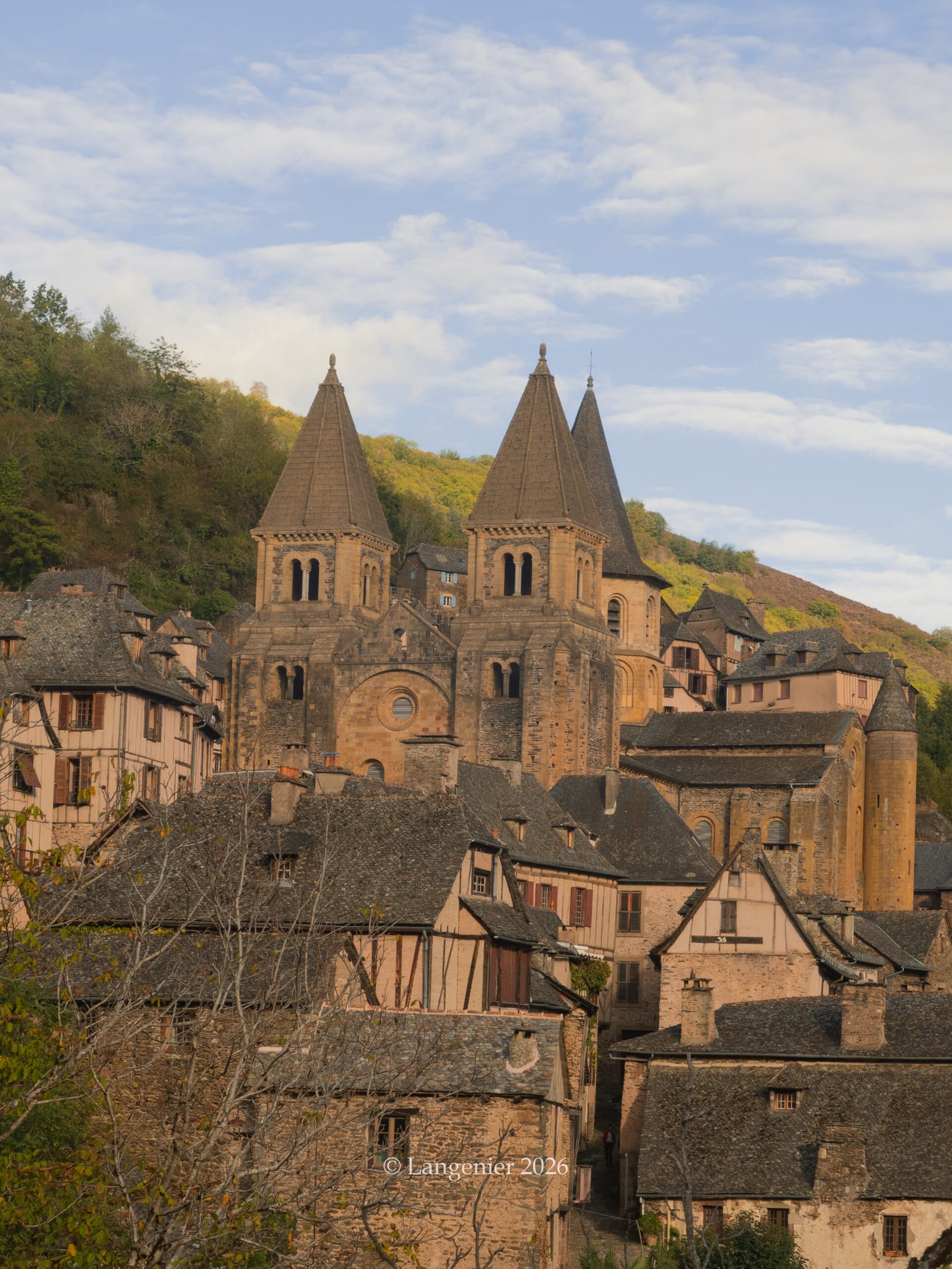
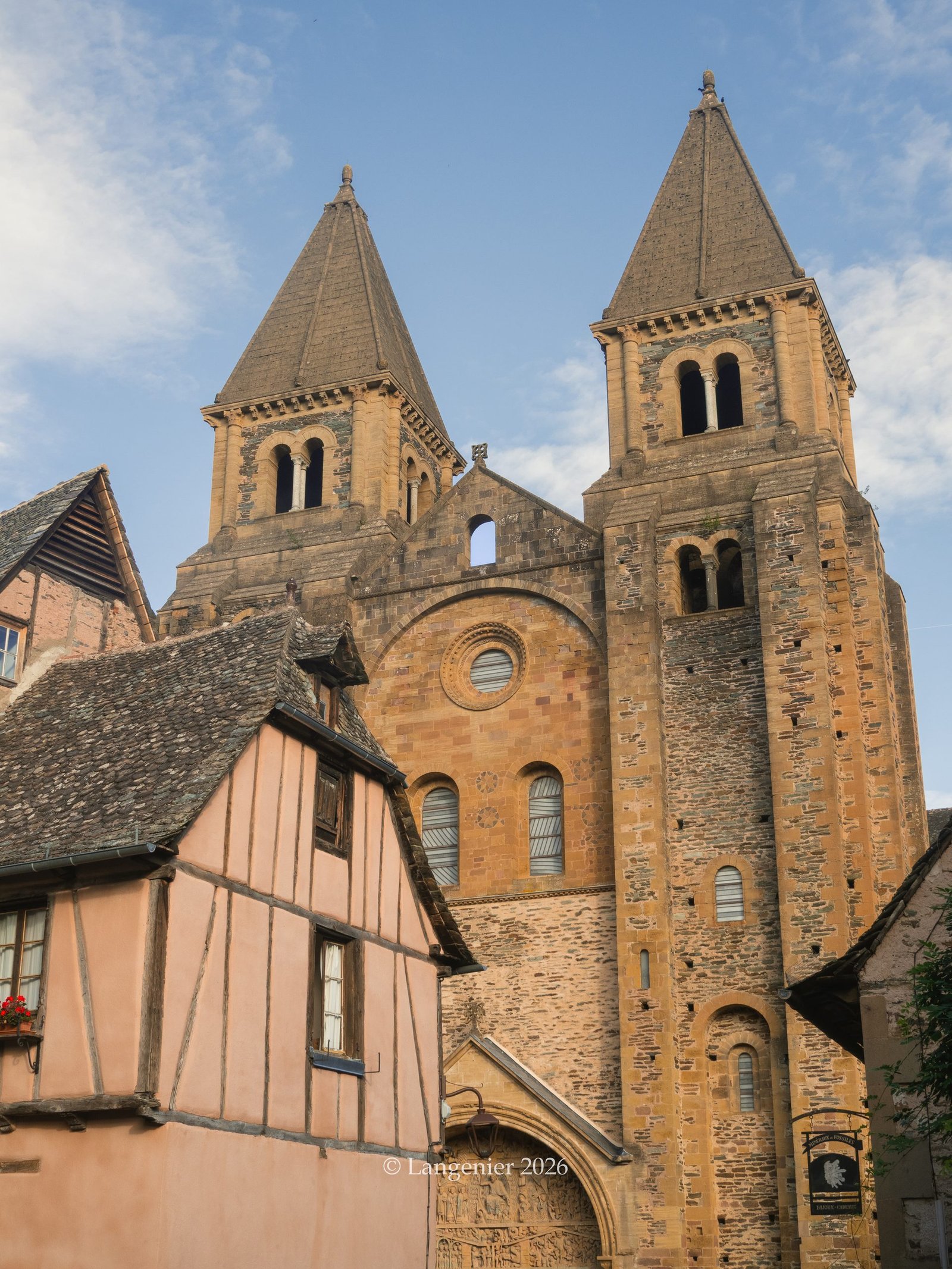
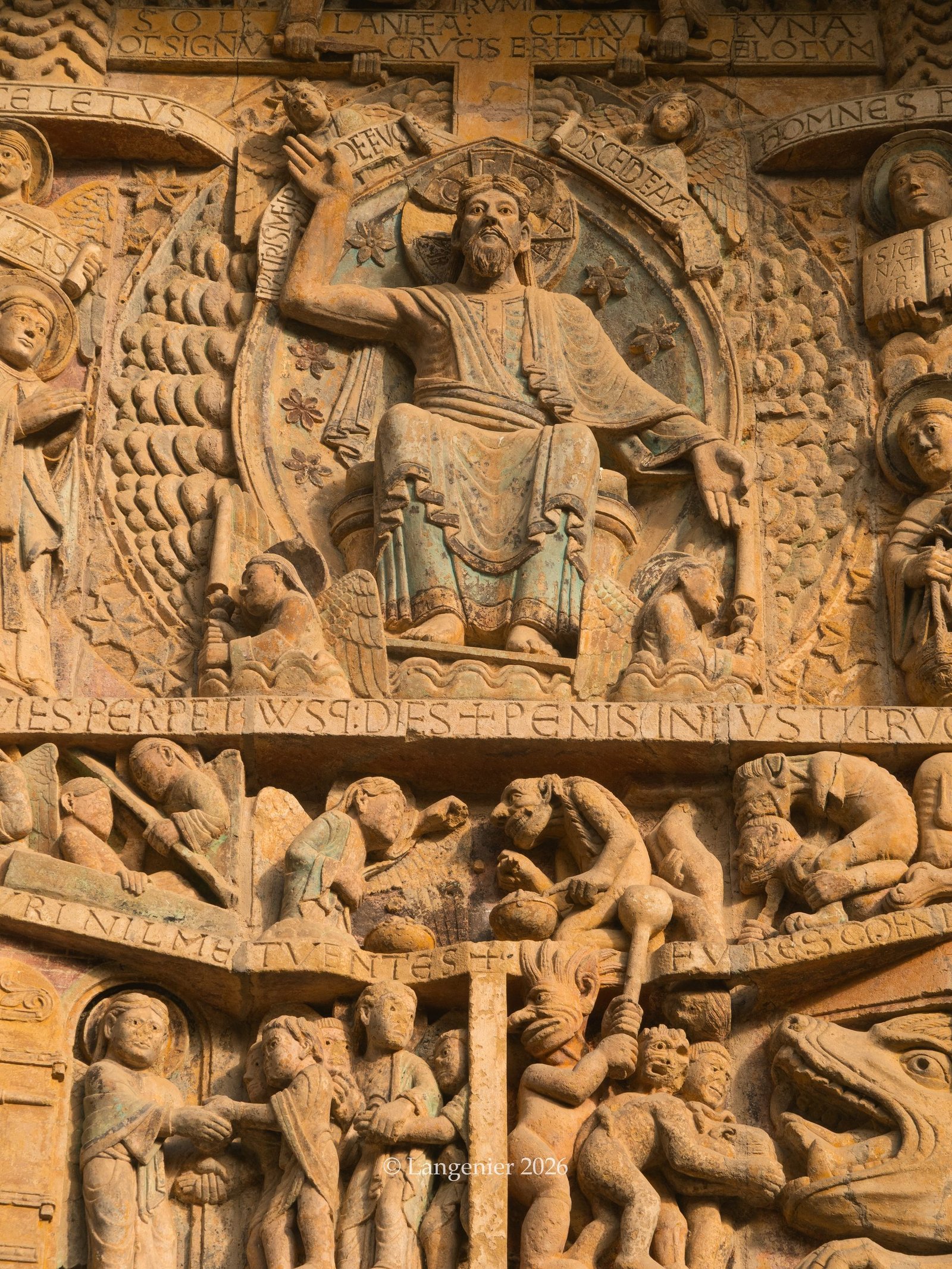
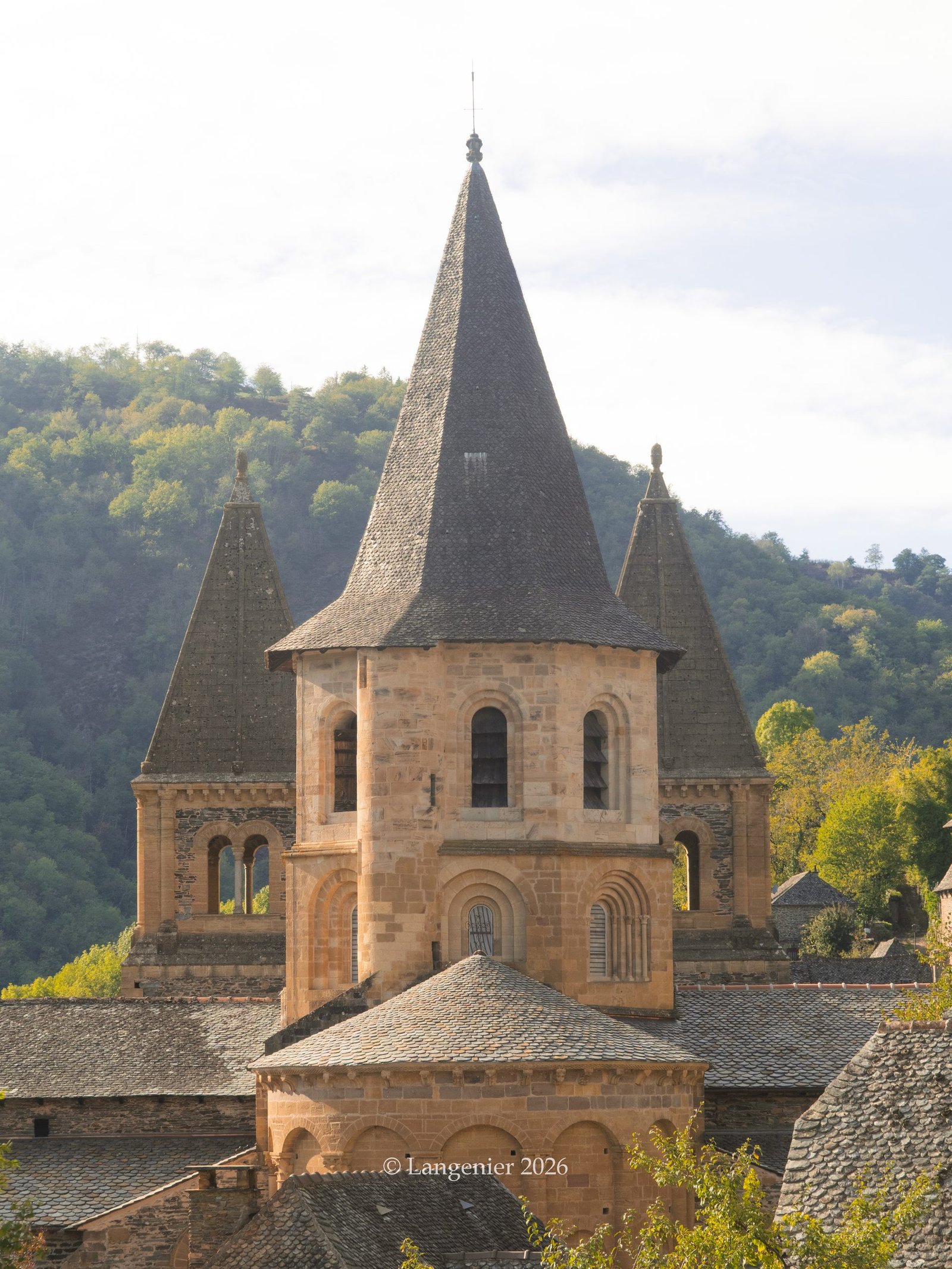
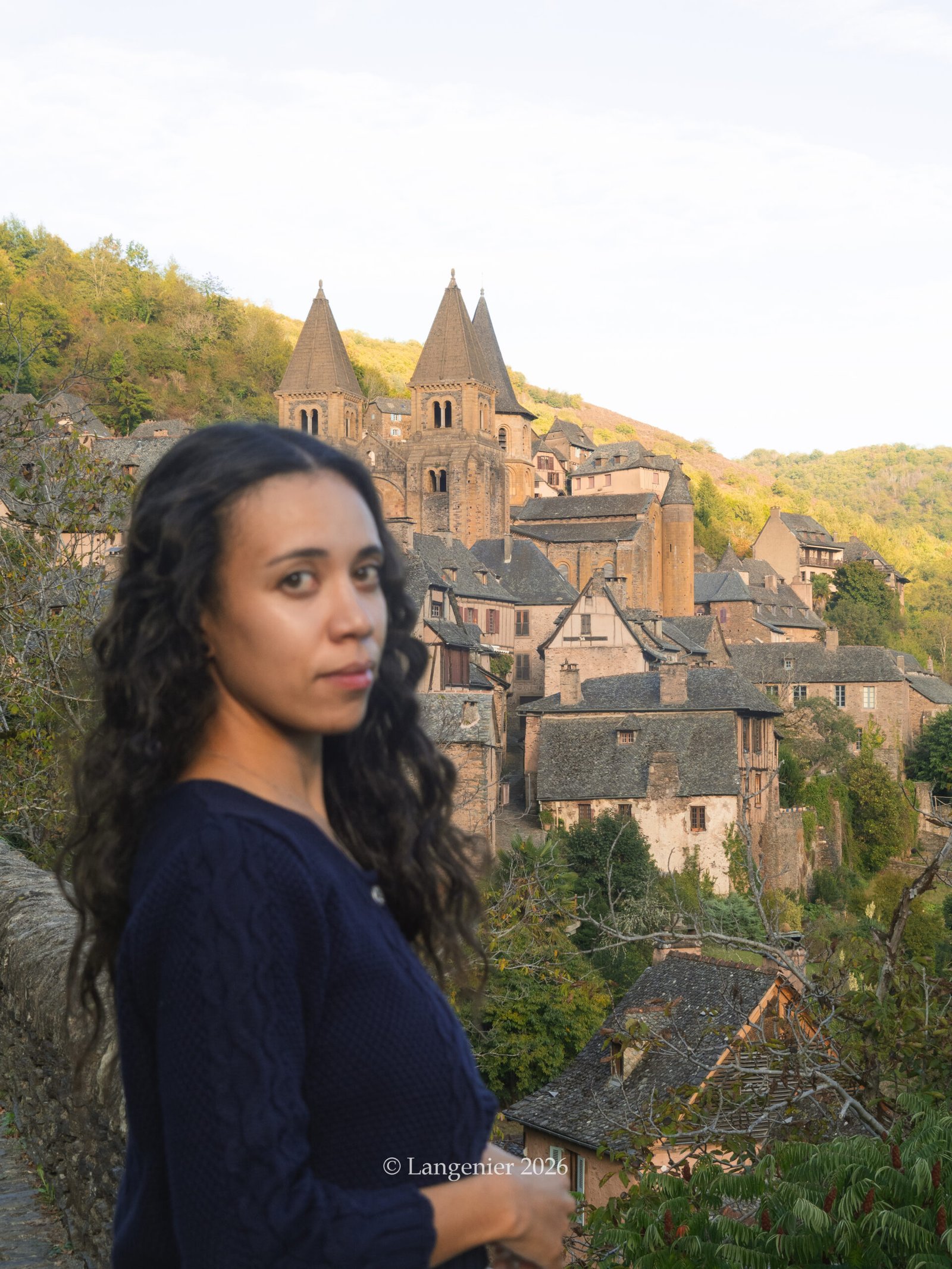
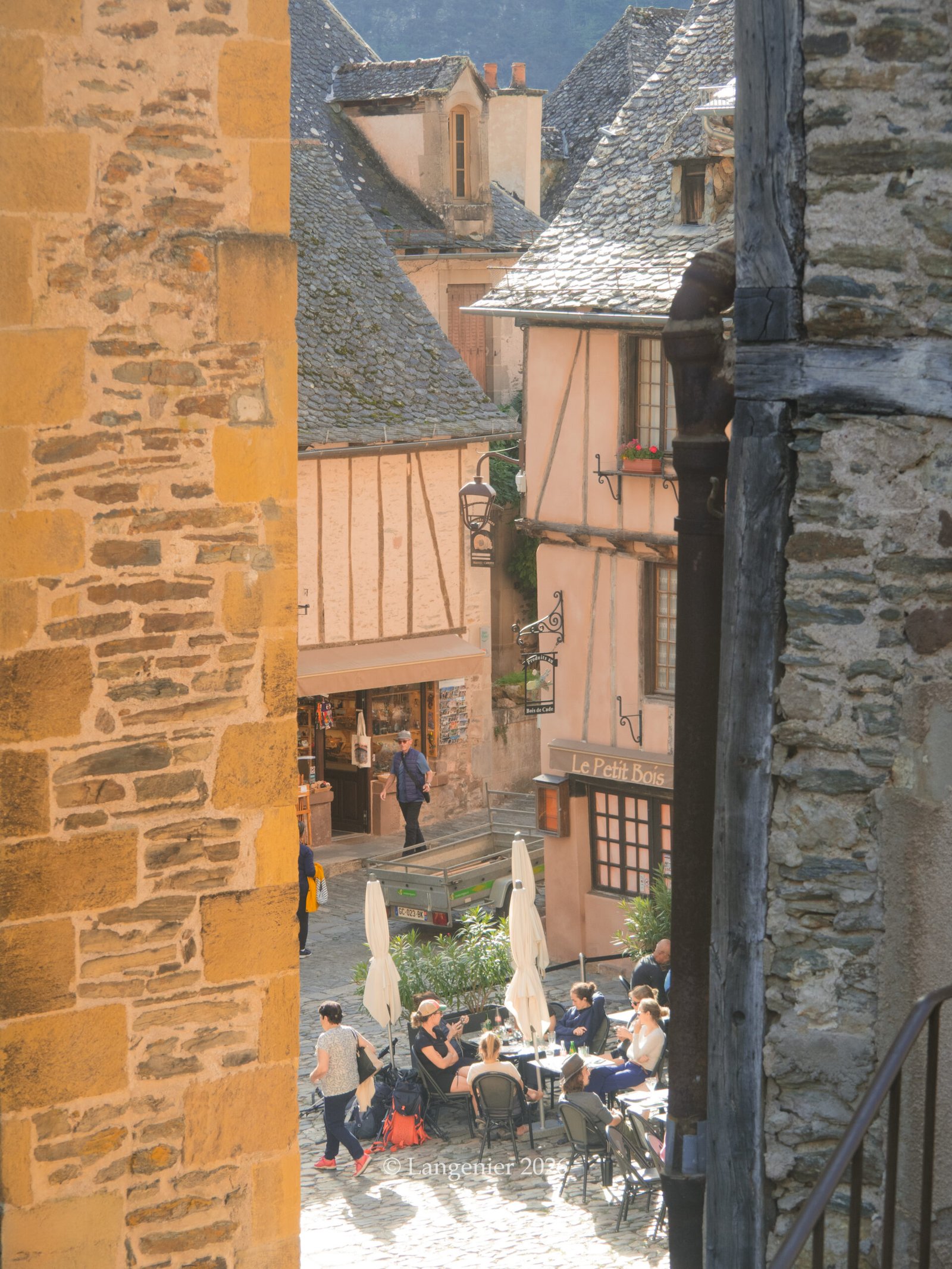
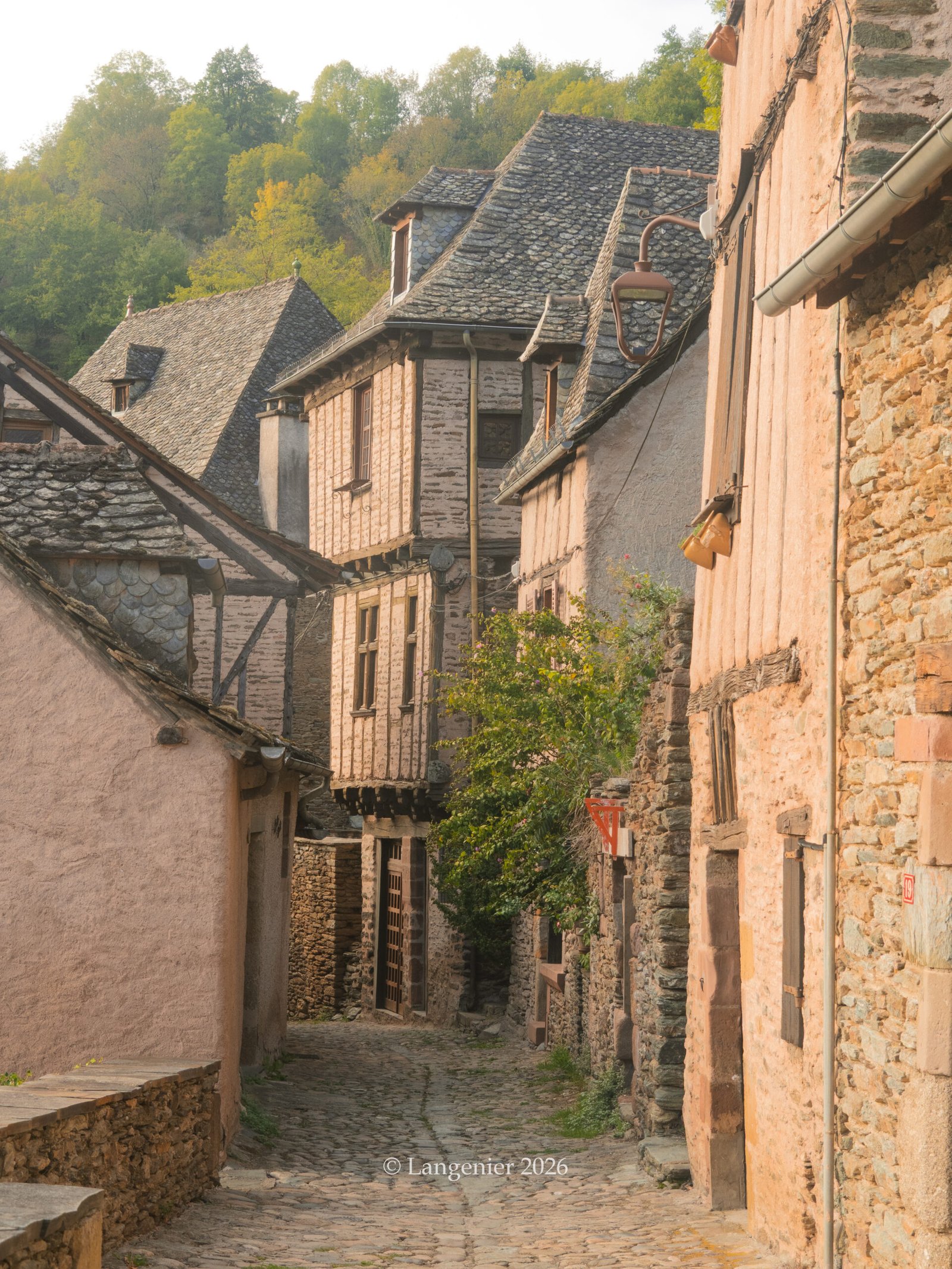
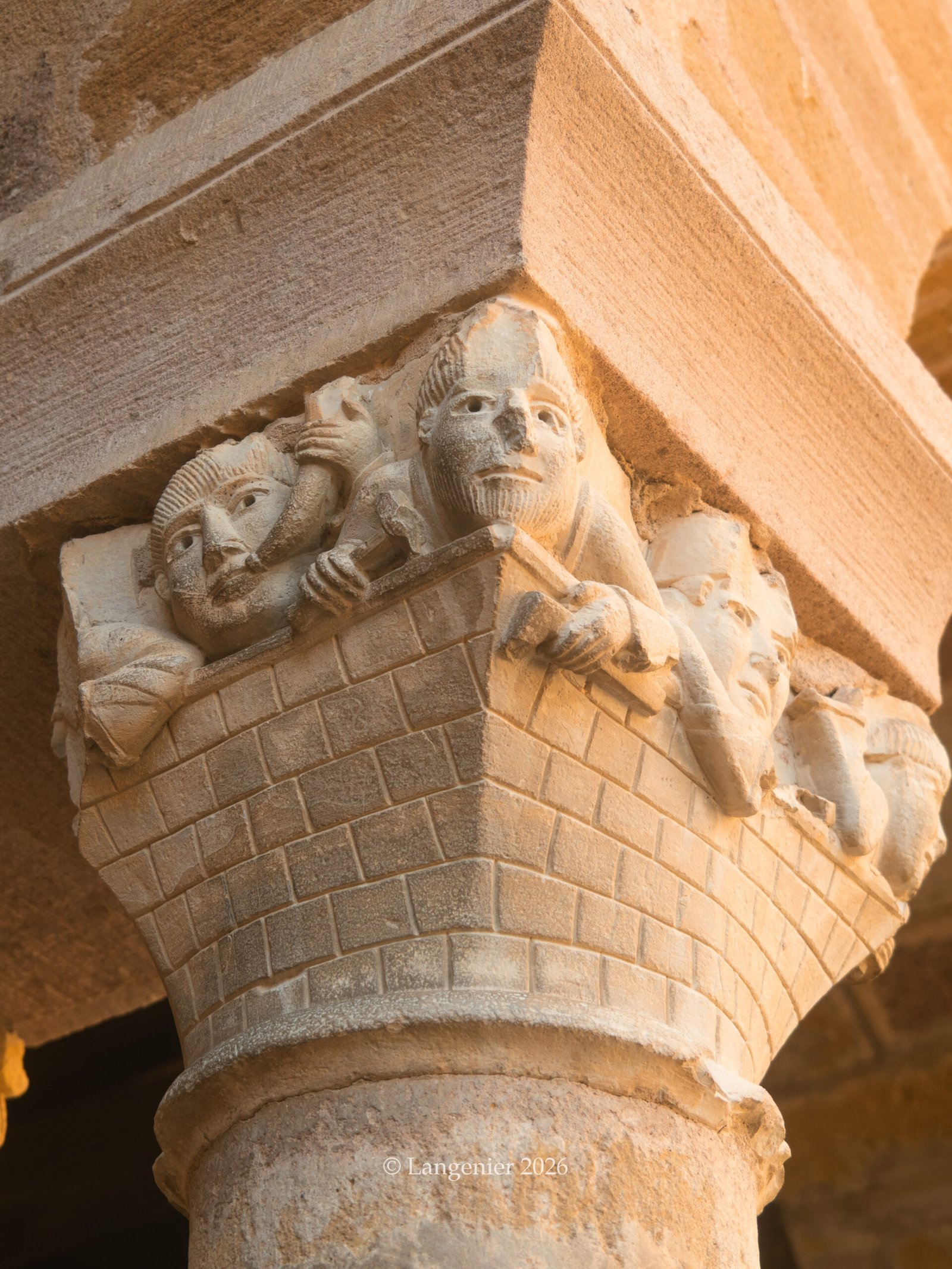
It’s not just me saying it. The Guide du Routard, a travel reference for decades, gave Conques this title in 2025. Maybe they’re being a little biased? Or maybe not. Because Conques is something you won’t find anywhere else. A medieval village that feels like it came straight out of a Disney film. Pretty half-timbered houses line the streets, and at the centre stands the magnificent Abbey of Conques, with what is considered the best-preserved and most beautiful tympanum in France, depicting the Last Judgement.
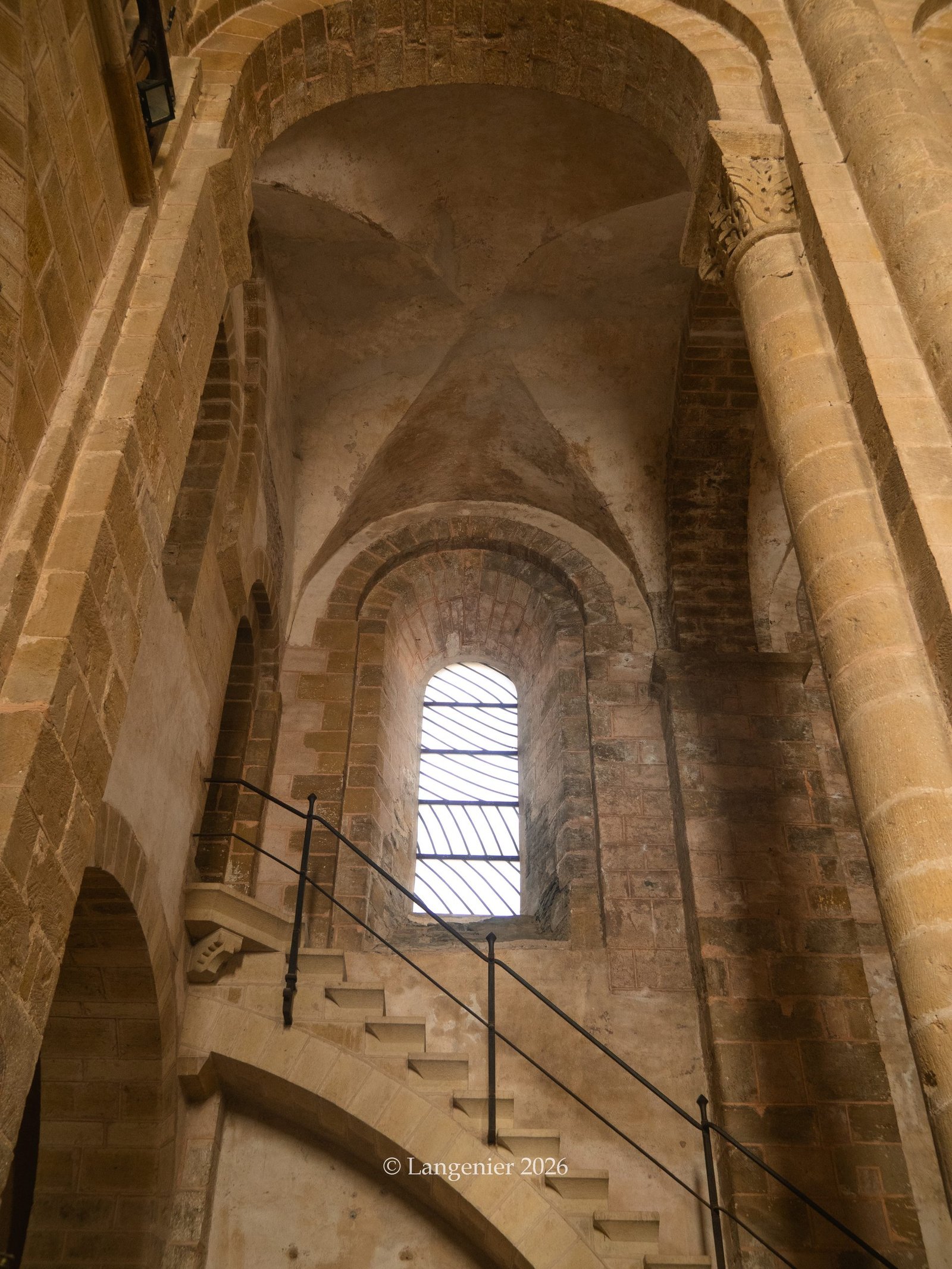
Another curiosity of Conques Abbey is its stained-glass windows. If you’ve ever stepped inside a few Romanesque churches in France or elsewhere in Europe, you probably remember their multicoloured windows, filled with saints and scenes from the Gospels. Not here. At Conques, the stained glass is plain and light, with no figures or bright colours. This bold choice, made in the 1990s, bears the signature of Pierre Soulages, a son of Aveyron born in Rodez and celebrated well beyond his home region – I’ve even come across his work in the halls of the Pinakothek der Moderne in Munich. All of his work is about light, and you can feel that here. Originally, the abbey’s windows let in too little daylight. So it was decided to replace them with a resolutely contemporary creation, designed to welcome as much light as possible. Their distinctive texture makes the light shift over the course of the day: bright and radiant in the afternoon, softening in the early evening.
The abbey is also home to the Treasury of Conques, one of the richest medieval goldsmith’s treasuries in France. Its star piece is the golden statue of Sainte Foy, a reliquary made in the 10th century and covered in gems, enamel and ancient cameos. According to legend, a monk from Conques stole the saint’s relics from the town of Agen in the 9th century and brought them back to the abbey, which then became a major stop for pilgrims on the Camino de Santiago. The treasury also holds other rare pieces. Many of them were saved from being melted down during the French Revolution, when metal was needed to fund the war effort, thanks to villagers who had hidden them in a clever network of places.
Unfortunately, the treasury is closed until further notice, following the security breaches that have hit several museums (#rendezlesbijouxdelacouronne), so it’s currently impossible to visit. Some of the pieces, however, still appear during processions, like the statue of Sainte Foy, carried through the village in October during the Sainte Foy festival, which brings the whole village to life for a weekend.
WHY VISIT CONQUES THIS AUTUMN?
- For its walks. Conques is surrounded by forest, which turns orange as autumn settles in, and it’s simply magical. The village sits on the Camino de Santiago, so even a short stretch of the trail through the autumn woods is a great way to see the valley.
- For its light. The soft golden light of autumn brings out the old stone houses and the abbey at the end of the day, which is perfect for photography. Inside, the abbey’s Soulages stained-glass windows glow at dusk, which comes early at this time of year.
- For its Sainte-Foy festival. With a lantern-lit procession and celebrations all around its pretty streets.
HOW TO GET TO CONQUES FROM RODEZ?
Conques is about 40 km from Rodez by road, and there’s a car park at the entrance to the village. You can also get there by public transport: bus line 223 runs daily from Rodez to the village, except on Sundays. Timetables change with the season, school terms and holidays, so check the latest times before you go. If you have time, the pretty village of Salles-la-Source, on the road from Rodez to Conques, is well worth a short stop and a stroll.
AUBRAC AND ESTAING: HIGHLANDS OF AVEYRON’ REGION
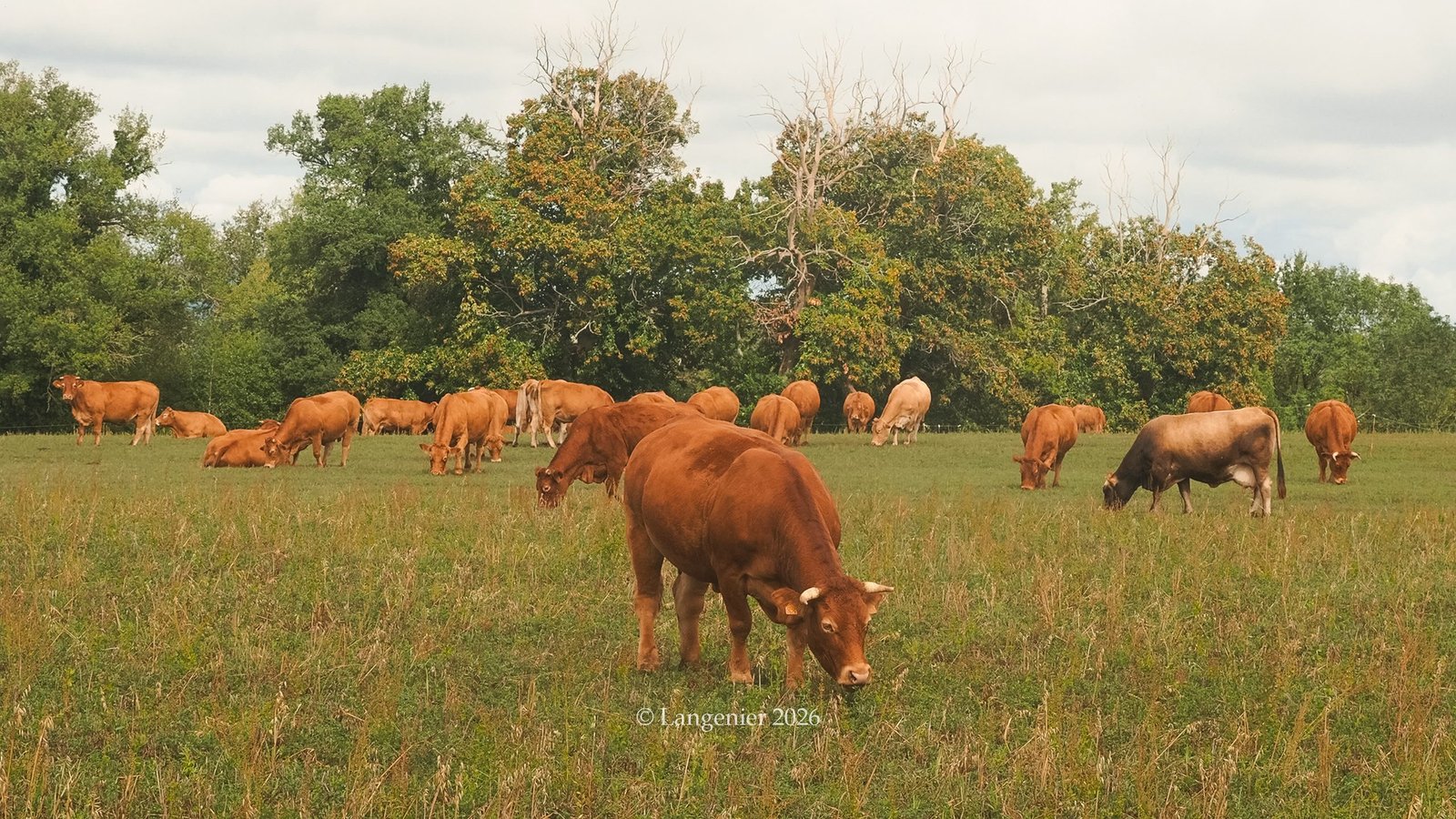
The Aubrac is a high plateau of volcanic and granite rock that stretches across several regions, including Aveyron. It’s a landscape you won’t find anywhere else in the area: wide open grasslands, scattered stone farms and the famous Aubrac cows grazing in the fields. In autumn, it’s a great place for a walk. The Camino de Santiago crosses the plateau on its way from Le Puy-en-Velay, and you can follow a short stretch of the trail on a clear day. Along the way, you’ll come across burons, the traditional stone huts once used by shepherds, as well as pretty hamlets. And don’t leave without trying the local specialities: aligot, truffade and Aubrac beef.
The beautiful village of Estaing sits at the edge of the Aubrac plateau, on a bend of the river Lot, with hills all around. A romantic castle stands on a rocky hill above the village, and its old streets are a pleasure to walk, lined with stone houses. We passed through on a sunny day in late October, a few years back. The soft light on the stone and the orange leaves are still clear in my mind. It was the first time I really saw what makes Aveyron so special, and why this village is probably one of the prettiest at this time of year.
WHY VISIT THE AUBRAC THIS AUTUMN?
- For the colours. The plateau’s beech woods turn gold and orange, and the wide grasslands take on warm tones, which makes the landscape feel very different from summer.
- For the wildlife. With a bit of luck, you may hear a stag bellowing at dusk, as the autumn rutting season is in full swing.
- For the food. Autumn is the ideal season for the plateau’s hearty local dishes: aligot, truffade, Aubrac beef and local cheeses.
- For the night sky. Long autumn evenings and little light pollution make for beautiful stargazing on clear nights.
HOW TO REACH THE AUBRAC PLATEAU AND ESTAING FROM RODEZ?
Unfortunately, getting to Estaing by public transport isn’t really possible. The closest you can get is Espalion, a pretty little town reached by bus line 201, which runs between Rodez and Laguiole. From Espalion, it’s about a 2-hour walk to Estaing. If you’d rather stay on the plateau, Laguiole, in the heart of the Aubrac, is a great starting point for hikes.
BELCASTEL: A CASTLE, A BRIDGE AND A RIVER
Belcastel is one of the Most Beautiful Villages of France, tucked into a natural canyon carved by the river Aveyron, which gives its name to the département. The old stone bridge, built in the 15th century at the initiative of the local lord, links the two banks of the village and is said to have put an end to the rivalry between the people living on the east and west sides of the river.Here you’ll find a few craft shops, a restaurant or two, a café and pretty lanes to stroll. The village is quick to explore, but on a sunny day it’s worth stopping to relax on one of the many benches.
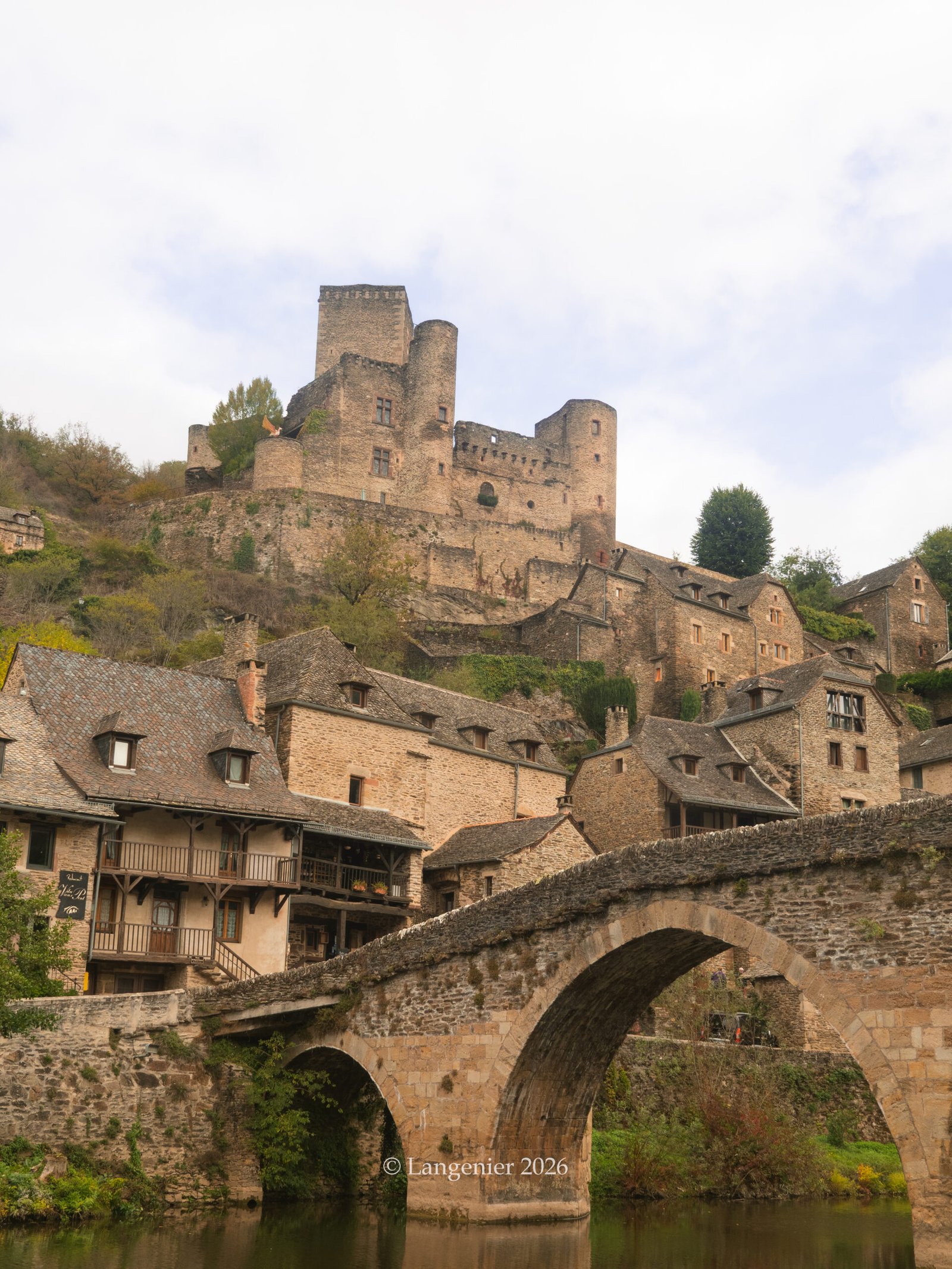
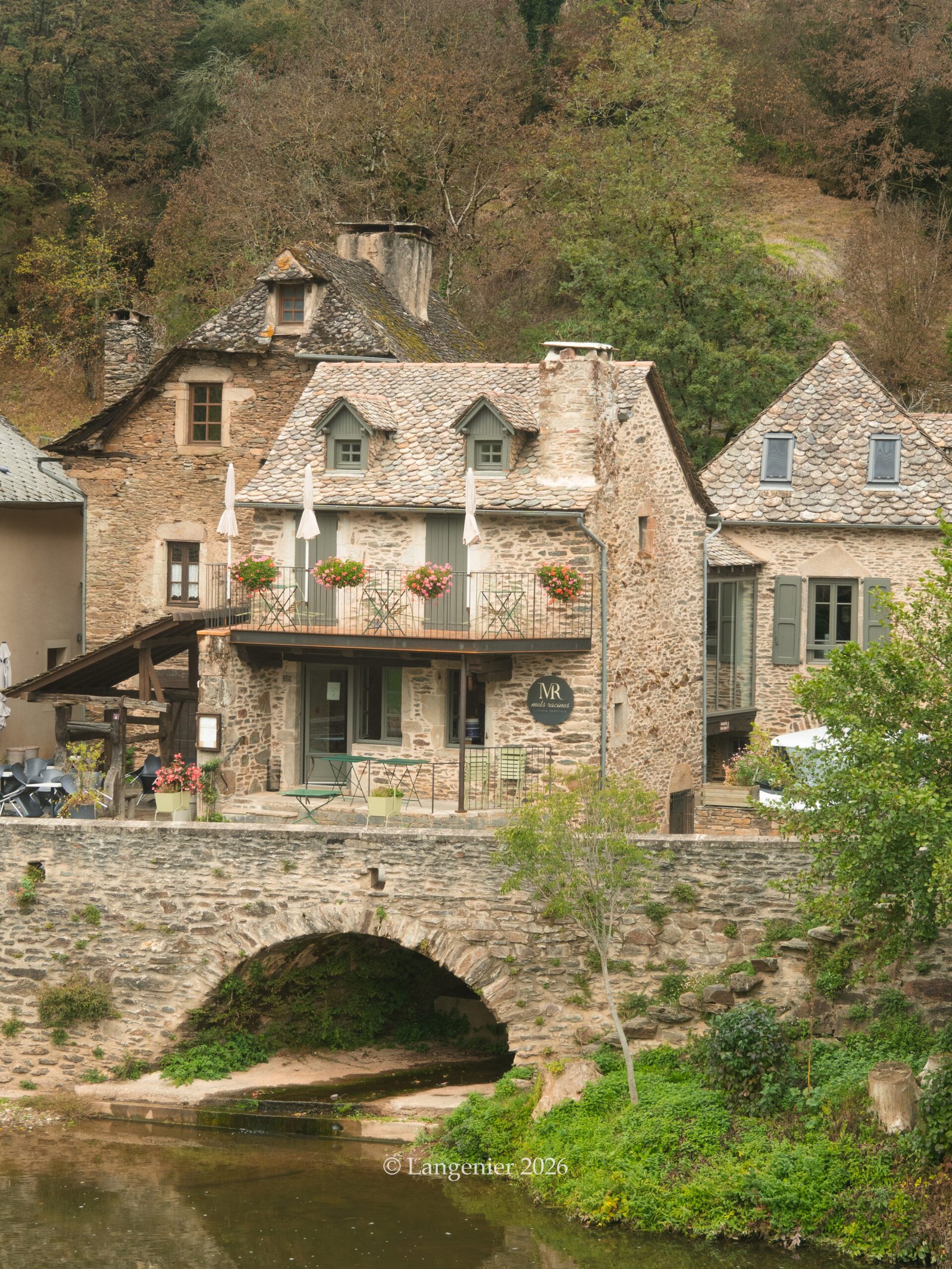
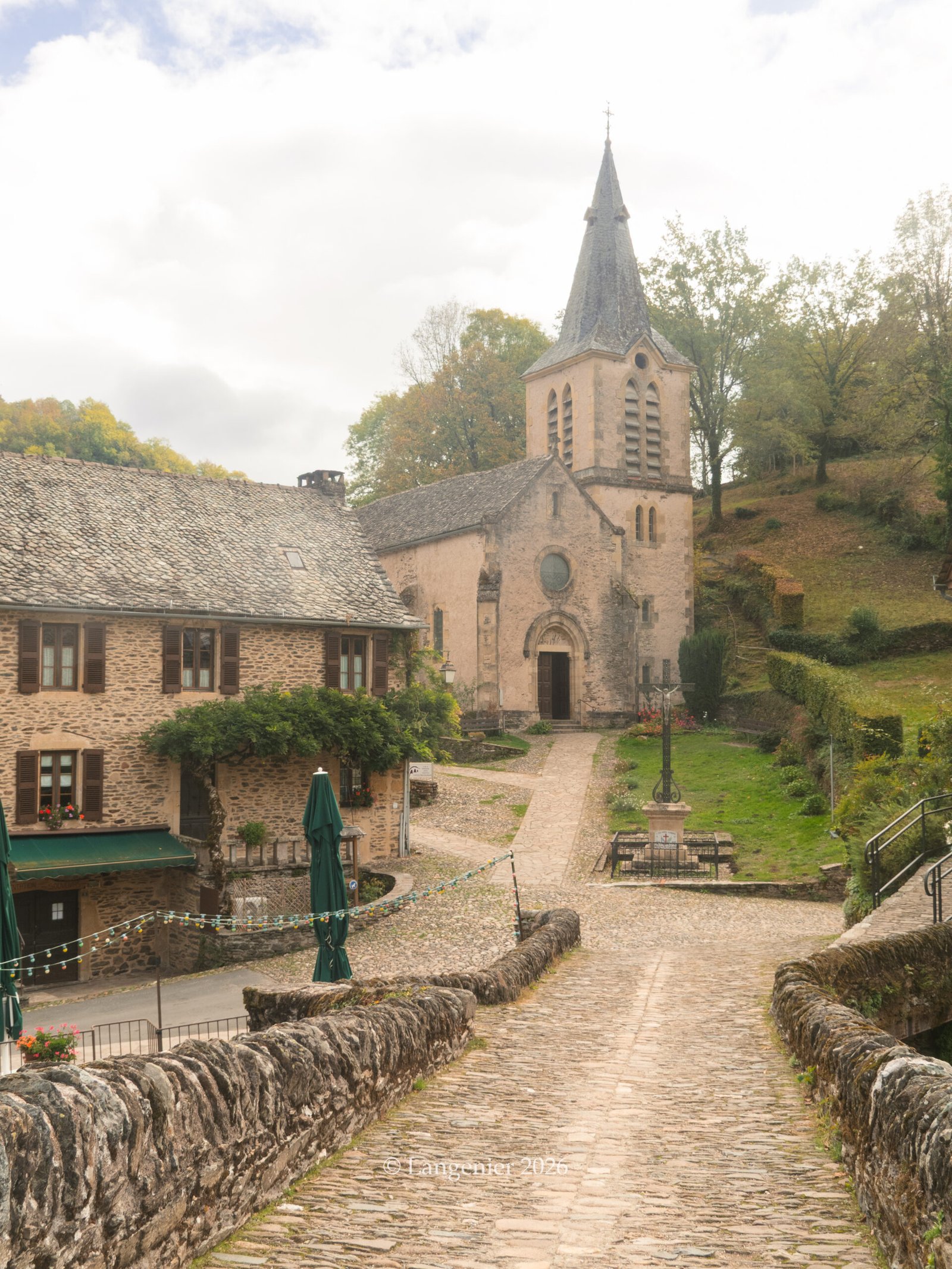
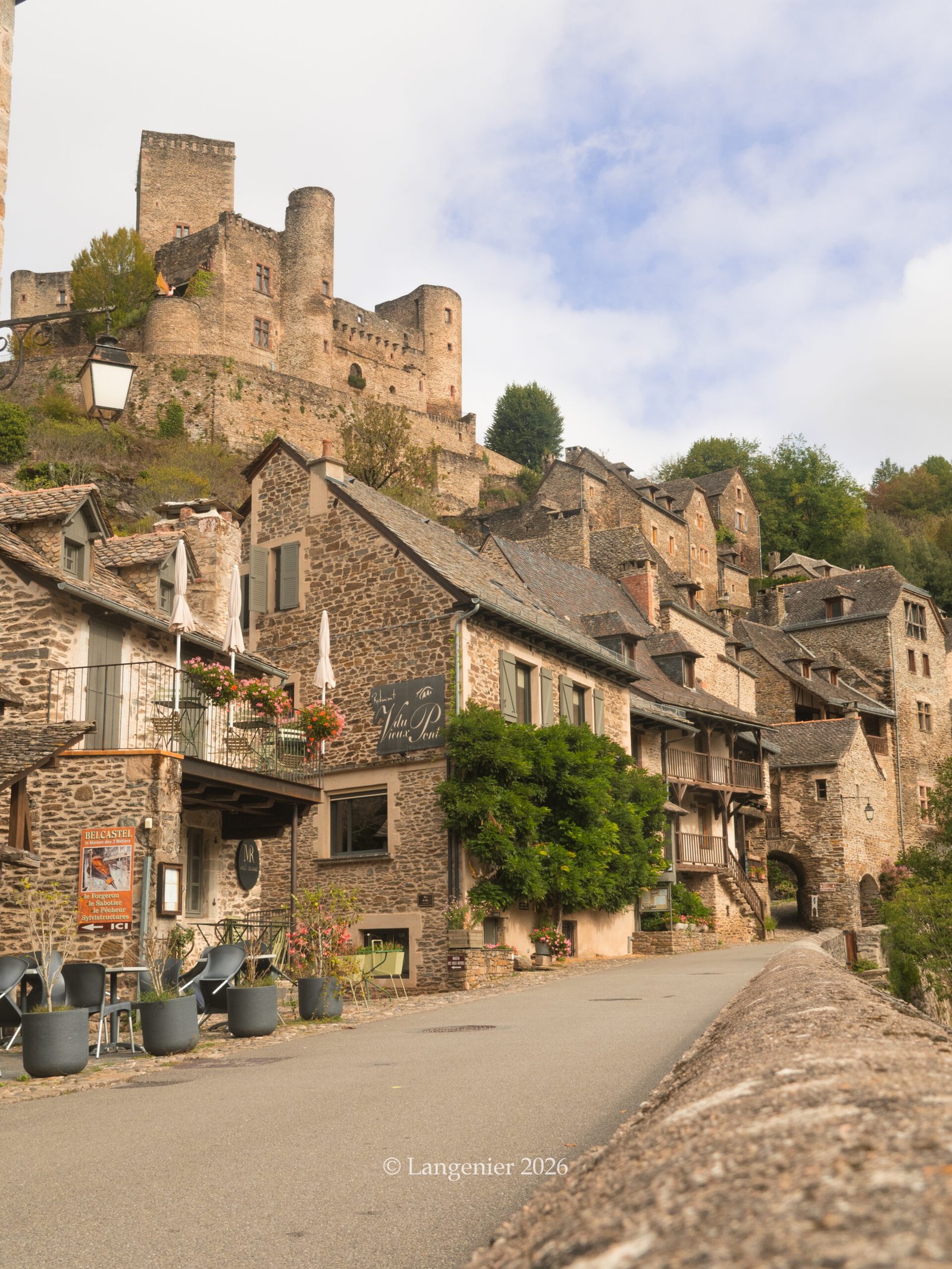
If you’d like to dig a little deeper into local history, the Maison de la Forge looks back at the old trades of the area: blacksmith, clog maker and fisherman. And of course there is the Château de Belcastel, a fortress founded in the 11th century and completed in the 15th by the Saunhac family. It was rescued and restored in the 1970s, and today it hosts art exhibitions, a collection of medieval armour and cultural events.
October is the perfect time to visit the château, because every year it hosts evening torch-lit tours that bring its history to life. If you’re in Belcastel on the right weekend, don’t miss the Nuit des Châteaux: with guided tour through the medieval fortress by torchlight & homemade appetisers served in the different rooms along the way.
WHY VISIT BELCASTEL THIS AUTUMN?
- For the Nuit des Châteaux. Every year in mid-October, the château hosts torch-lit evening tours, and it also puts on special events for Halloween.
- For a village-hopping day. Belcastel is close to other beautiful places, such as Najac (less than an hour by car), so it’s easy to combine two or three stops in one trip.
HOW TO GET TO BELCASTEL FROM RODEZ?
It’s less than an hour from Rodez by car. By public transport, take bus line 203 from Rodez towards Villefranche-de-Rouergue and get off at Mayran. From there, it’s about a 1 hour 30 minute walk to Belcastel, through hamlets and hiking paths. For the return, you can either retrace your steps or head to the small town of Rignac to catch the bus back to Rodez.