THE PERFECT 1-WEEK ITINERARY IN THE BAY OF KOTOR, MONTENEGRO
Montenegro’s Bay of Kotor — or Boka Bay, as the locals call it — is still one of the Adriatic’s best-kept secrets : staggeringly beautiful, and somehow still under most people’s radar. By day, Kotor fills up with cruise passengers spilling out of the old town gates, but head just a little further into the bay and you’ll find it moves at an entirely different pace — mountains dropping straight into glassy water, stone villages turning honey-gold as the sun goes down. The bay stretches 28 kilometres inland, and you’ll often hear it called Europe’s southernmost fjord. Carved by glacial rivers long before the sea moved in, it has a scale that feels almost Nordic — but don’t be fooled, the light and the rhythm of life here are unmistakably Mediterranean.
If you’ve found yourself frustrated by how crowded Croatia’s coast has become, this is your antidote. But I’ll warn you now: don’t rush it. You could see the highlights in a weekend — tick off the viewpoints, wander a medieval square, call it a trip — but you’d miss everything that actually makes this place special. Give yourself time to linger in baroque Perast over a slow coffee, to climb above Kotor for one of the best panoramas you’ll ever see, to swim in coves so quiet you’ll have them to yourself. Rent a car if you can, and just follow the coastline — you’ll find your own favourite corner of the bay long before you reach the end of it.
In this guide, you’ll find the perfect seven-day road trip itinerary to explore the Bay of Kotor and its surrounding landscapes.
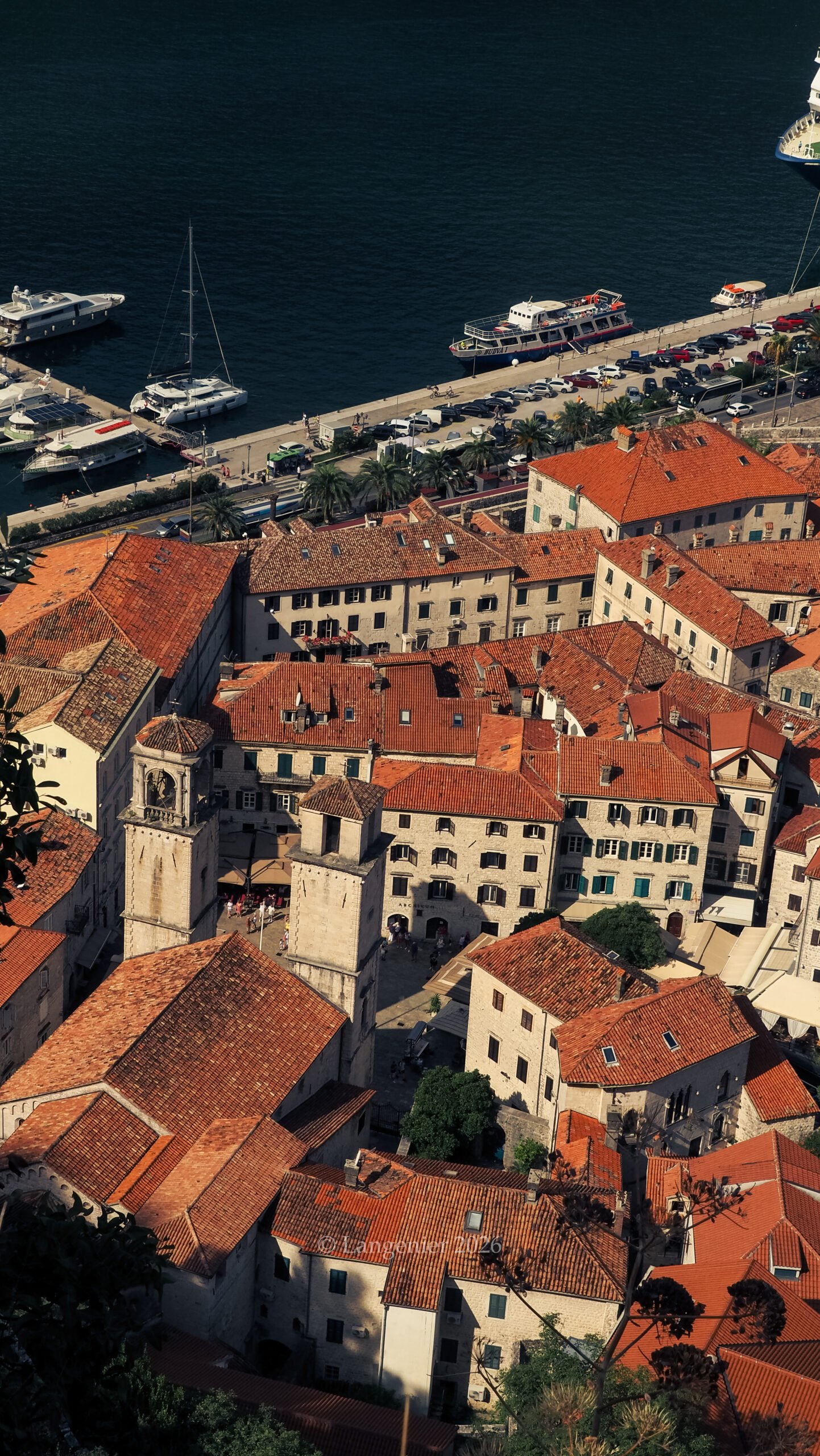
BOKA BAY MONTENEGRO OVERVIEW
WHERE | Montenegro
GETTING THERE | International airport of Tivat, Podgorica & Dubrovnik, International bus lines
GETTING AROUND | Walk, Bus, Car rental, bike
TOP THINGS TO SEE | Kotor, Perast, Herceg Novi, Lustica peninsula, Cetijne, Lovcen National Park, Budva
WHAT TO EAT | Oysters (best during early spring), Školjke (mussels), grilled fish (sea bass & sea bream), Njeguški pršut (dry-cured ham), Crni rižoto (black squid ink risotto), Rožata (a creamy caramel dessert).
BEST TIME TO VISIT | March to late October.
CURRENCY | Euros €
DAY 1 | Herceg Novi
If you arrive by Dubrovnik airort in Croatia, Herceg Novi will be a a sunny and historical introduction to the Bay of Kotor. Located just a few kilometers from the border, it’s worth a day of exploration. Founded in the 14th century and named later after Duke Herceg (“Novi” meaning new), the town has passed through Ottoman, Venetian, French and Austro-Hungarian hands — each leaving architectural traces in the Stari Grad (Old town). The most striking reminders are its fortresses: Kanli Kula, the “Bloody Tower” now an open-air amphitheatre with stunning sea views, Forte Mare, restored by the Austrians in the 19th century, and Španjola Fortress, originally built by the Spanish in the 16th century before Ottoman renovations. Best walking trips include Savina Monastery, founded in 1030 and surrounded by cypress trees & Mount Orjen, at 1,893 meters, offers excellent hiking and mountain biking in the summer.
If you want to stay at the coast, beaches in the Bay of Kotor are mostly pebbled, given the mountainous fjord landscape. Meljine Beach, Savina Beach, and Bla Bla Beach are great spots for a swim, but bring water shoes.
DAY 2 | Perast
The drive to Perast is easily one of Europe’s most cinematic coastal routes. For nearly an hour, turquoise water stretches to your left while forested mountains rise dramatically to your right, dotted with monasteries clinging to the heights. It’s a slow reveal — and a spectacular one.
Before reaching Perast, one place deserves a stop. Just after quitting Bijela town, keep your eyes open along the Jadranska magistrala, and you’ll spot a little oyster stand right by the water. Nothing fancy, nothing signposted. But the oysters there are among the best you’ll find in the country. As for the exact address — I couldn’t tell you. You won’t need one. Just slow down as you leave Bijela, after the Carine Hotel Park Bijela, scan the shoreline, and look for the cat. That’s how you’ll know you’ve found it.
Tiny yet aristocratic, Perast wears its Venetian past proudly. Within its single waterfront street stand 17 palazzi and 16 churches — quiet testaments to the town’s former maritime wealth. Some, like the Bujović Palace, now house museums; others remain romantic ruins. The unfinished St. Nicholas’ Church, begun in the 17th century, dominates the skyline with its bell tower — the unmistakable silhouette you’ll recognise in every photograph of the bay. Perast itself is small, an hour is enough to wander its length. Yet it invites you to try a scoop of gelato (Moritz Eis is popular), or a glass at Red & White Wine Bar.
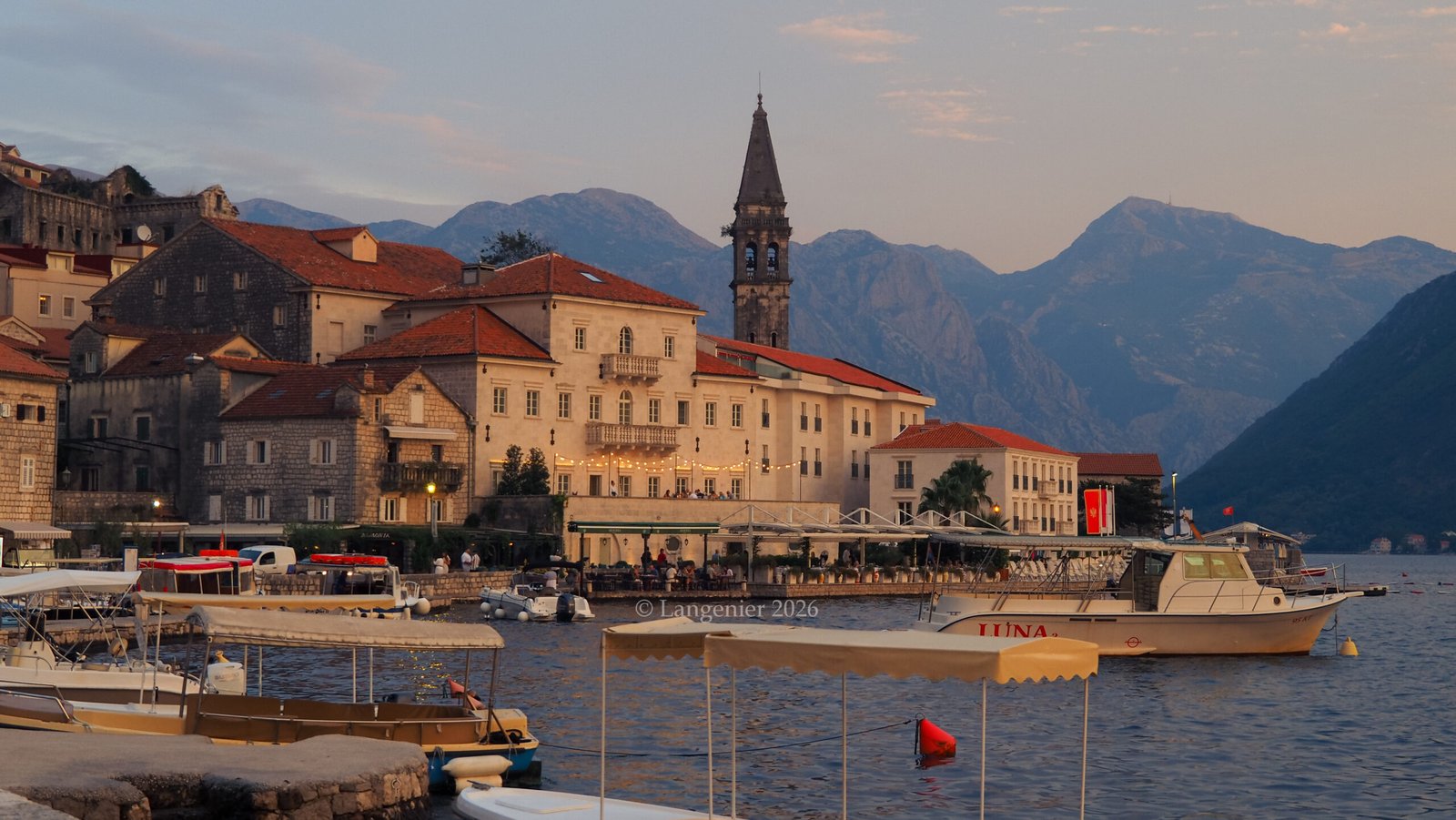
Regular shuttle boats (around €5 return) ferry you to Our Lady of the Rocks, the bay’s most curious landmark. According to legend, on 22 July 1452, sailors discovered an icon of the Virgin and Child on a reef. After each safe voyage, they laid a rock in the water in gratitude. Over centuries, the islet slowly rose from the sea. The tradition continues today: every 22 July, locals take to their boats and throw stones into the water, widening the island’s edges in a ritual known as Fašinada. A church was erected here in 1630, its pale blue dome now an emblem of the bay, accompanied by a small museum worth a brief visit.
DAY 3 & 4 | Kotor
If you only have one day in Boka Bay, spend it in Kotor.
Enclosed within medieval walls, the stari grad is a maze of Venetian palaces, churches and café-filled squares where cats stretch lazily in patches of sun. By day, the limestone facades glow against the mountains; by night, once the peaks lose their golden sheen and the sky deepens to inky blue, the city feels almost theatrical — lantern-lit and quietly magnetic.
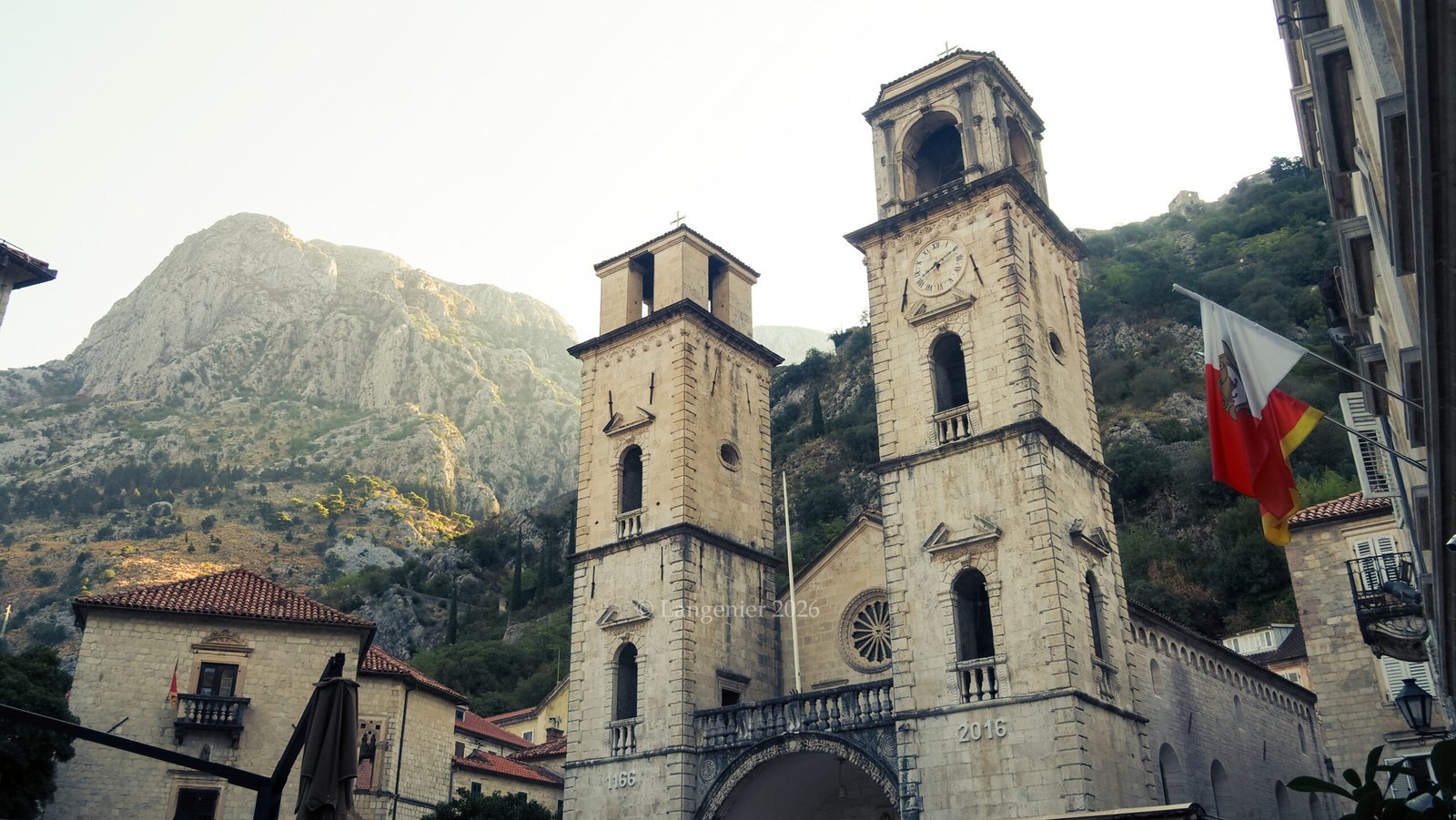
But the true highlight rises above it all: St. John’s Fortress. Built in the 15th century, the defensive walls climb 260 metres up the mountainside — a staggering feat of engineering that defines Kotor’s skyline. The official entrance (around €8) follows a steep but well-maintained staircase. There is also an unofficial, free route via the start of the Škurda Canyon. You can also wander sections of the lower city walls for free, offering beautiful angles over terracotta rooftops and the cathedral square below.
Arrive at sunrise — 6 am in summer — when café chairs are just being set out, and the marble streets are freshly washed, blissfully empty before cruise passengers flood in from the ships docked nearby. Evening is equally atmospheric: the crowds thin, restaurants hum softly, and shops stay open late enough for an unhurried wander. On one afternoon step away from the coast and head up to the Kotor Cable Car. Opened in 2023, the 11-minute ride climbs from Kotor to the Lovćen massif, offering panoramic views over the bay, Tivat, and surrounding peaks. At the top, enjoy lunch at Forza Kuk, a coffee at Monte 1350 Bar, souvenir shopping, bike rentals, or a family-friendly Alpine Coaster. For dinner, head beyond the old town walls for smoky Montenegrin barbecue at BBQ Tanjga. For something more intimate, Konoba Scala Santa offers a romantic, stone-walled setting, while seafood lovers consistently recommend Galion, set right on the water’s edge.
DAY 5 | Cetinje & Lovcen National Park
Cetinje served as Montenegro’s capital until the country joined Yugoslavia in 1918. Founded in the late 15th century and later reshaped under King Nikola, the town became home to numerous 19th-century embassies, many of which were repurposed during the Yugoslav era into museums, conservatories, and private residences.
At the heart of the town stands the Cetinje Monastery. Founded in the 15th century and completely rebuilt after multiple Ottoman attacks in the late 18th century, it’s a striking example of Serbian Orthodox architecture with stunning frescoes.
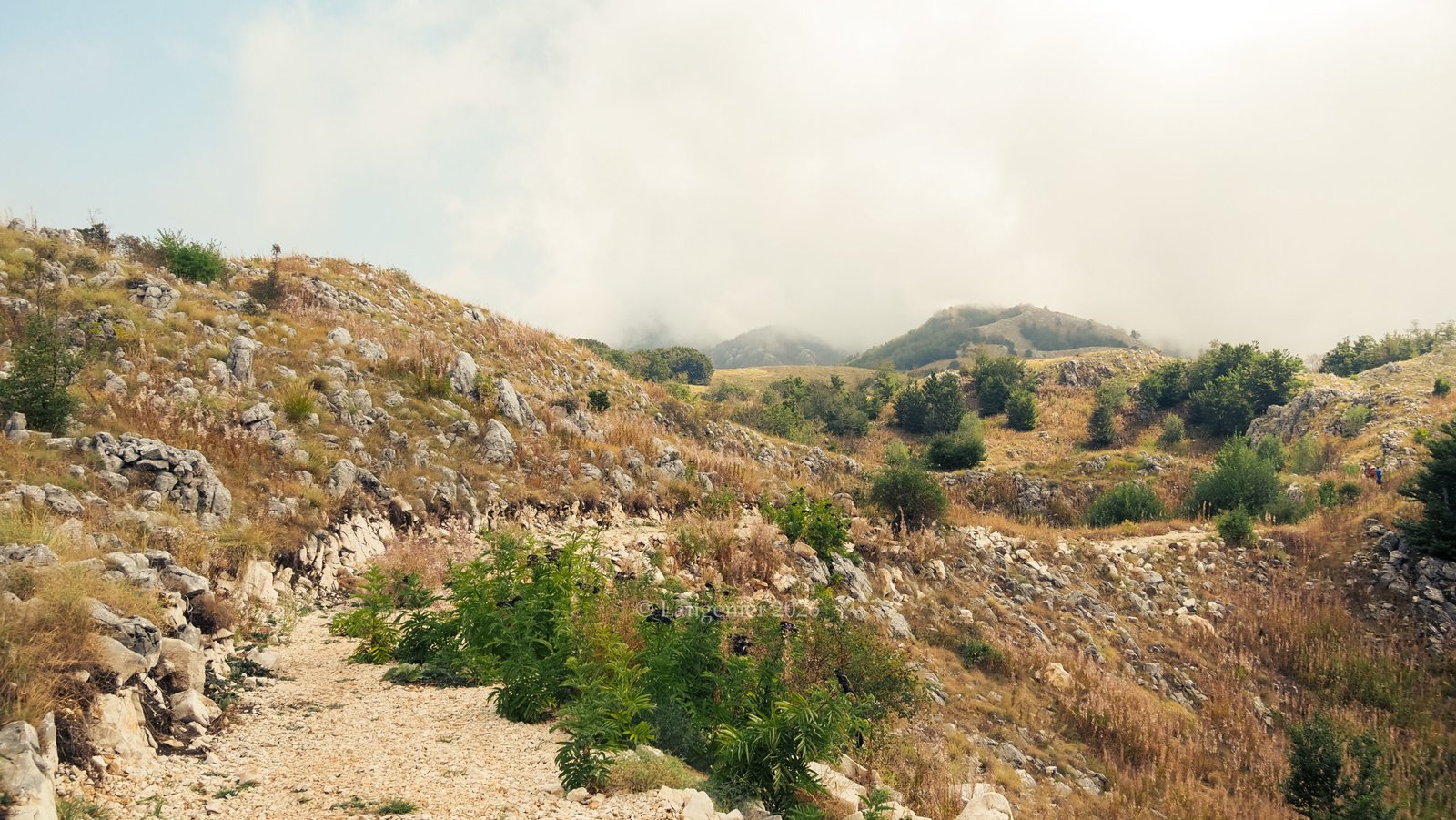
Just a 10-minute drive (or a short taxi ride for €40–50 return) from Cetinje brings you to the entrance of Lovćen National Park. With a small admission fee (€3), you’ll find a network of hiking trails winding through forests and peaks that are home to brown bears, wolves, eagles, falcons, and a variety of reptiles. In winter, the park even offers skiing. A must-visit is the Njegoš Mausoleum. As prince-bishop (vladika), poet, and philosopher, Njegoš modernized Montenegro, strengthened ties with Russia, and played a key role in unifying the country’s tribes.
Just 20 minutes from Cetinje, the village of Njeguši offers a glimpse of authentic rural life. This tiny mountain settlement is famed for its culinary traditions, from smoky prsut (cured ham) to rich local cheeses and golden honey — a delicious taste of Montenegro’s heritage.
DAY 6 | Budva
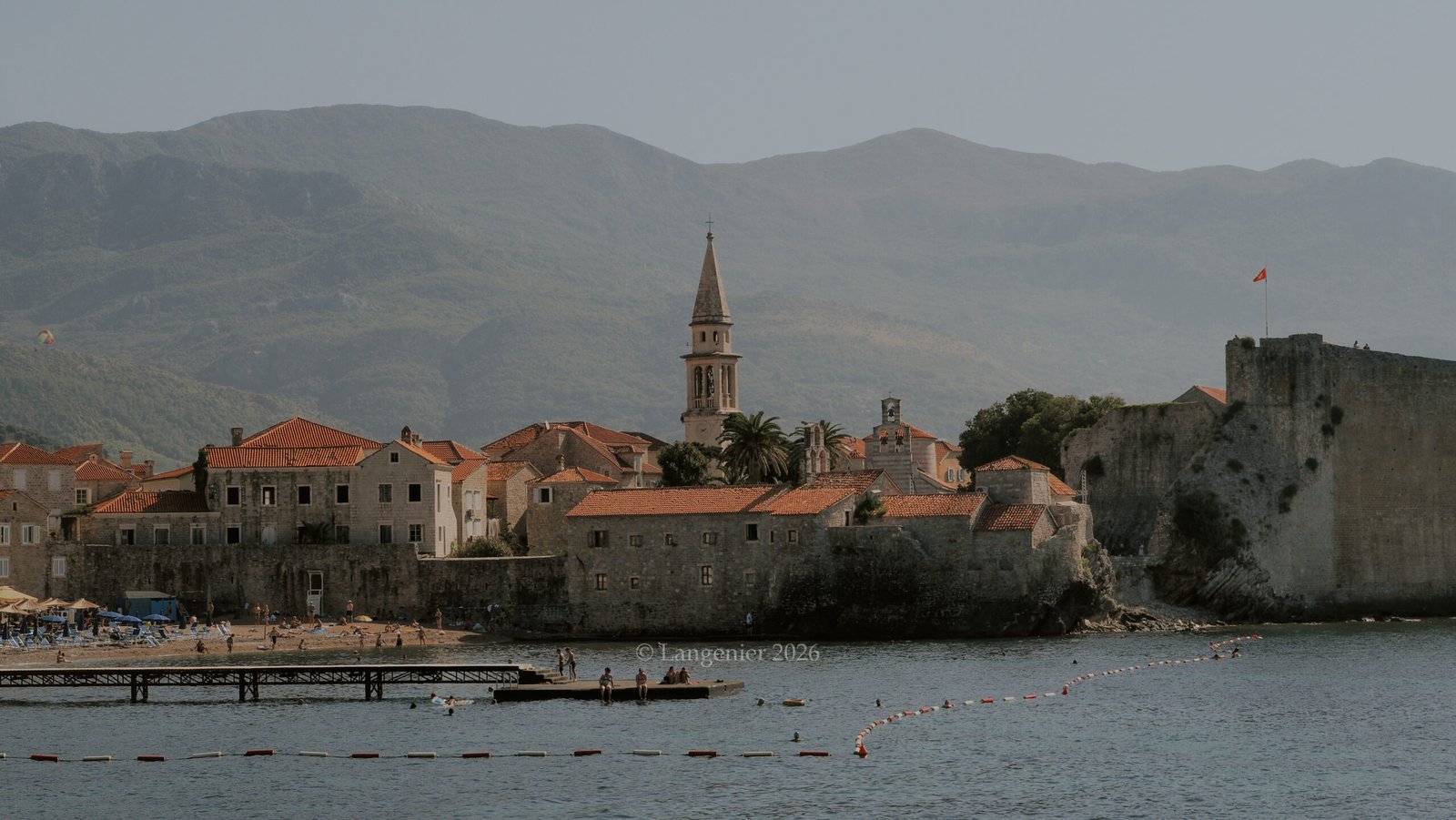
Think of Budva as the Saint-Tropez of Montenegro. In summer it’s impossible to resist to its energy : rooftop bars, beach clubs, casinos, late nights that stretch into dawn. But beneath the glitter lies something far older and more layered – — a beautifully preserved old town shaped by centuries of conquest and shifting rule, making it one of the true gems of the Adriatic. I’ve put together a complete guide to Budva so you can make the most of your time here, whether you’re passing through for the day or staying the weekend. Find it right here.
DAY 7 | Lustica Peninsula
Your last stop is less a place than a glimpse into what’s coming. Luštica Bay is Montenegro’s most ambitious bet on the future — a long-term development project reshaping this wild peninsula into something closer to a new Riviera – a new Monte Carlo. The Chedi hotel is already here, a golf course is on its way, and a completely new city is expanding.
But if that’s not quite your thing, head to the northern tip of the peninsula. Rose is everything Luštica Bay is not — a small fishing hamlet that time seems to have simply forgotten. Stone houses stacked along the waterfront & a harbour barely wide enough for a few boats.
And for those who want to linger, there is one more option, and it’s unlike anything else on this coast. Mamula Island sits just offshore, a 19th-century Austro-Hungarian fortress that has been converted into a five-star hotel. The bones of the place are still very much there: thick stone walls, a circular layout, the sense of something that was built to last. What surrounds it is pure Adriatic — open water on all sides, no cars, no noise. Staying here is about the feeling of being somewhere completely apart from the rest of the world, if only for a night or two.
One Comment