EXPLORING BUDVA : A GEM ON THE ADRIATIC COAST
Perched on the Montenegrin Riviera, Budva is one of those places that seduce you at first glance -a town where old fortress walls spill straight down into beach-club terraces. Step through the gates of Stari Grad and everything quiets down. The Old Town was almost entirely rebuilt after the 1979 earthquake flattened much of the region — reconstructed stone by stone, alley by alley — but somehow its Venetian character never really left. Give yourself time to get a little lost here: the honey-colored lanes lead into quiet courtyards, the Church of the Holy Trinity glows in the late-afternoon sun, and the old Citadel still watches over the sea like it always has. One of the oldest seaside resorts in Europe, Budva has always known how to reinvent itself. From May to September, beach clubs fill the shoreline and the Adriatic does the rest.
For first-timers, Budva slots in perfectly as a day trip from Kotor, just 25 kilometers up the coast. But it fits just as easily into a route heading south — toward the old town of Bar, the sweeping sands of Ulcinj, and eventually the rougher edges of northern Albania.
So wherever you’re coming from or headed next, here’s everything worth doing once you’re in Budva.
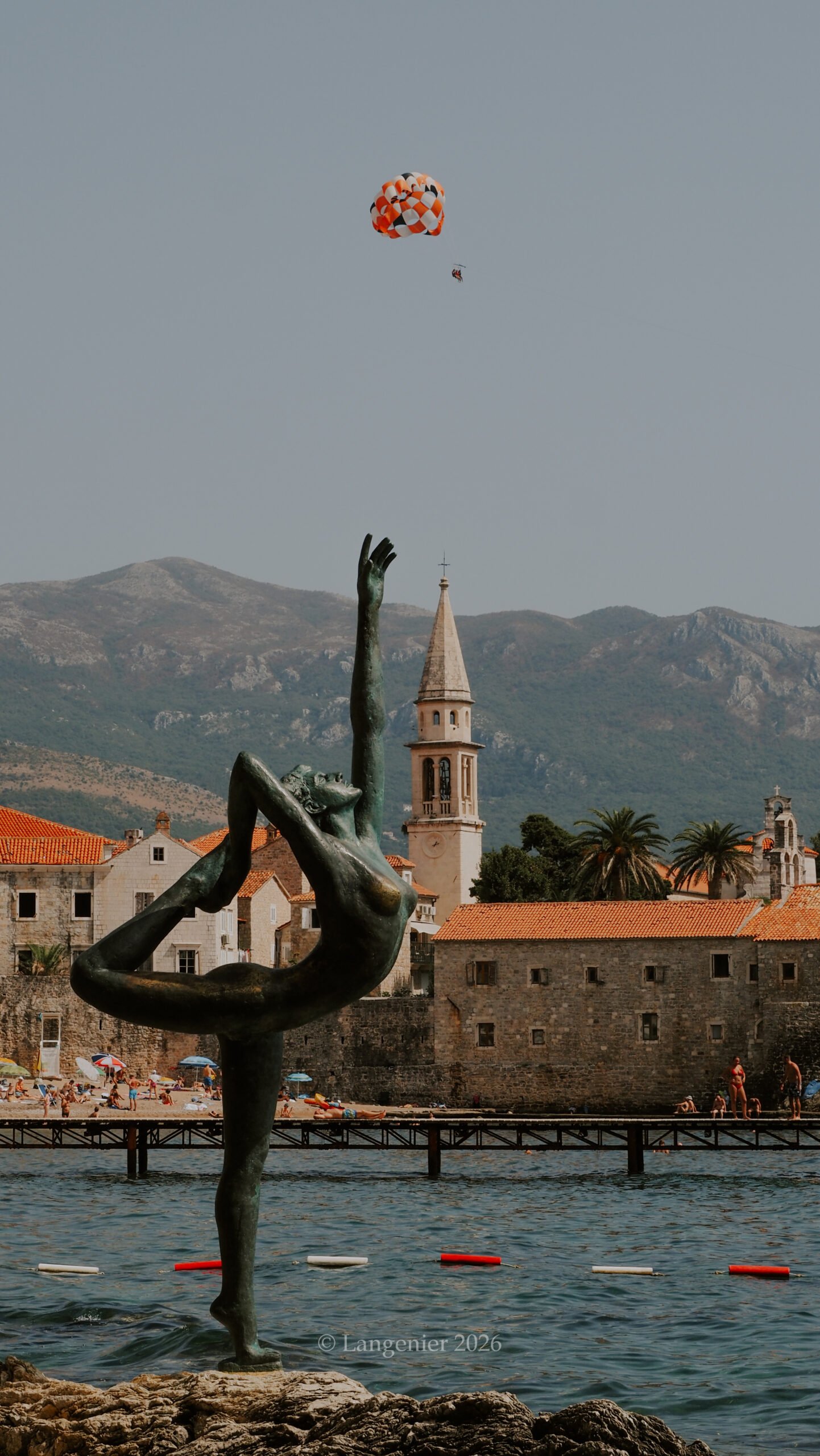
BUDVA OVERVIEW
WHERE | Budva, Montenegro
GETTING THERE | Bus, International airport of Tivat
GETTING AROUND | Walk, Bus, Bike rental
WHAT TO SEE | The Citadel, Mogren Beach,Ballerina statue, Church of the Holy Trinity,
WHAT TO EAT | Buzara (shellfish in white wine), Njeguški pršut (dry-cured ham), kajmak cheese, grilled fish, priganice (fried sweet dough balls)
BEST TIME TO VISIT | Late April to September. July and August are peak summer
CURRENCY | Euros €
PRACTICAL INFORMATION FOR BUDVA
Before heading to Budva, a few practical tips are worth keeping in mind.
- Since Montenegro sits outside both the EU and the Schengen Area, a valid passport is required to enter the country — and depending on your nationality, a visa may also be necessary.
- Once there, you’ll be paying in euros, Montenegro’s official currency. That said, it’s wise to always carry cash, as many local shops, restaurants, and accommodation providers do not accept card payments.
- Don’t underestimate the sun. The old town’s narrow, winding streets offer welcome shade, but step outside its walls — particularly in summer — and the heat can be fierce. Make sure to pack water, sunscreen, sunglasses and a hat before you set out to explore.
GETTING TO BUDVA
- Buses from Kotor run every hour and take approximately one hour to reach Budva. A one-way ticket costs around 6/5€. From Podgorica, the journey takes around 1h30 and tickets are priced at €7. For full schedule and fare information, the website Busticket4.me is your best resource.
- By car, Budva is roughly three hours from Dubrovnik — though bear in mind that crossing the border between an EU and non-EU country can potentially double that journey time – . From Kotor, the drive ranges anywhere from 40 minutes to 1h30 depending on traffic, which can be particularly heavy during the summer months. From Podgorica, Budva is a straightforward one-hour drive under good traffic conditions.
A BIT OF HISTORY ABOUT BUDVA
Few towns along the Adriatic can claim a story as rich and turbulent as Budva’s. Greek settlers first established roots here as far back as 500 BC, and what followed was centuries of conquest, collapse, and reinvention. Battered by the fall of the Roman Empire and the chaos that ensued, the town somehow endured — eventually flourishing in the 12th century as a prosperous, semi-autonomous city-state within the Serbian Empire.
By 1443, Budva had found a new protector in Venice. For four centuries, Venetian rule brought the town a rare gift: stability. While Turkish raids terrorized much of the surrounding coastline, Budva largely weathered the storm behind its Venetian walls. Austrian occupation followed, lasting until the guns of World War I fell silent and Budva, like its coastal neighbours, was folded into Montenegro.
The post-WWII decades saw the town becoming one of Yugoslavia‘s most coveted seaside destinations, after the devastating wars of the 1990s, Budva was shattered and survived on domestic tourism. Well into the 2000s, international visitors began returning in numbers not seen since the golden days of the late 1980s — and today, Budva is firmly reclaiming its place on the map.
WHAT TO SEE, DO & EXPERIENCE IN BUDVA
Beach Hopping
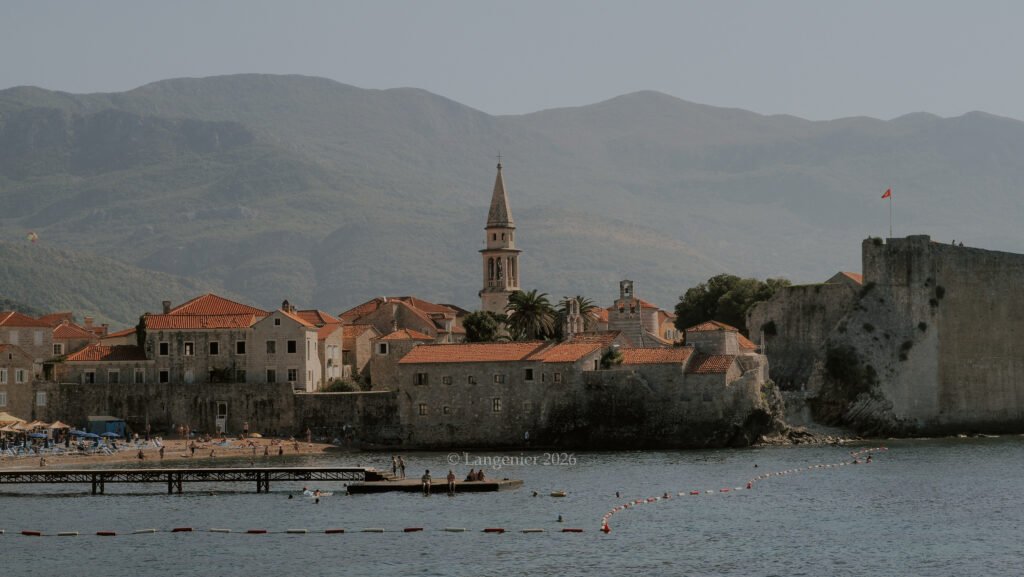
Budva ranks among the finest beach destinations on the Montenegrin coast.
The main stretch, Slovenska Plaža, is the liveliest — lined with street food vendors and easy to reach from the center. For something quieter, Pizana Beach offers a lovely elevated setting, but there’s only a small free section, as it is reserved for the hotel behind. Your best option will then be to head further along the coast. A short walk east of the Old Town leads to one of Budva’s most rewarding viewpoints: a sweeping panorama of the Stari Grad ramparts, best enjoyed alongside the city’s most photographed landmark, the Ballerina statue—a tribute to a local legend of lost love between a ballerina and a sailor who never returned from sea. She waited for him every day, watching the waves, until grief finally took her. Continue, and you’ll reach Mogren Beach—more spacious, with refreshment stands and a beautiful view across to the Old Town and Sveti Nikola Island, accessible by regular boat and well worth a lazy day on the sand.
Strolling through Stari Grad
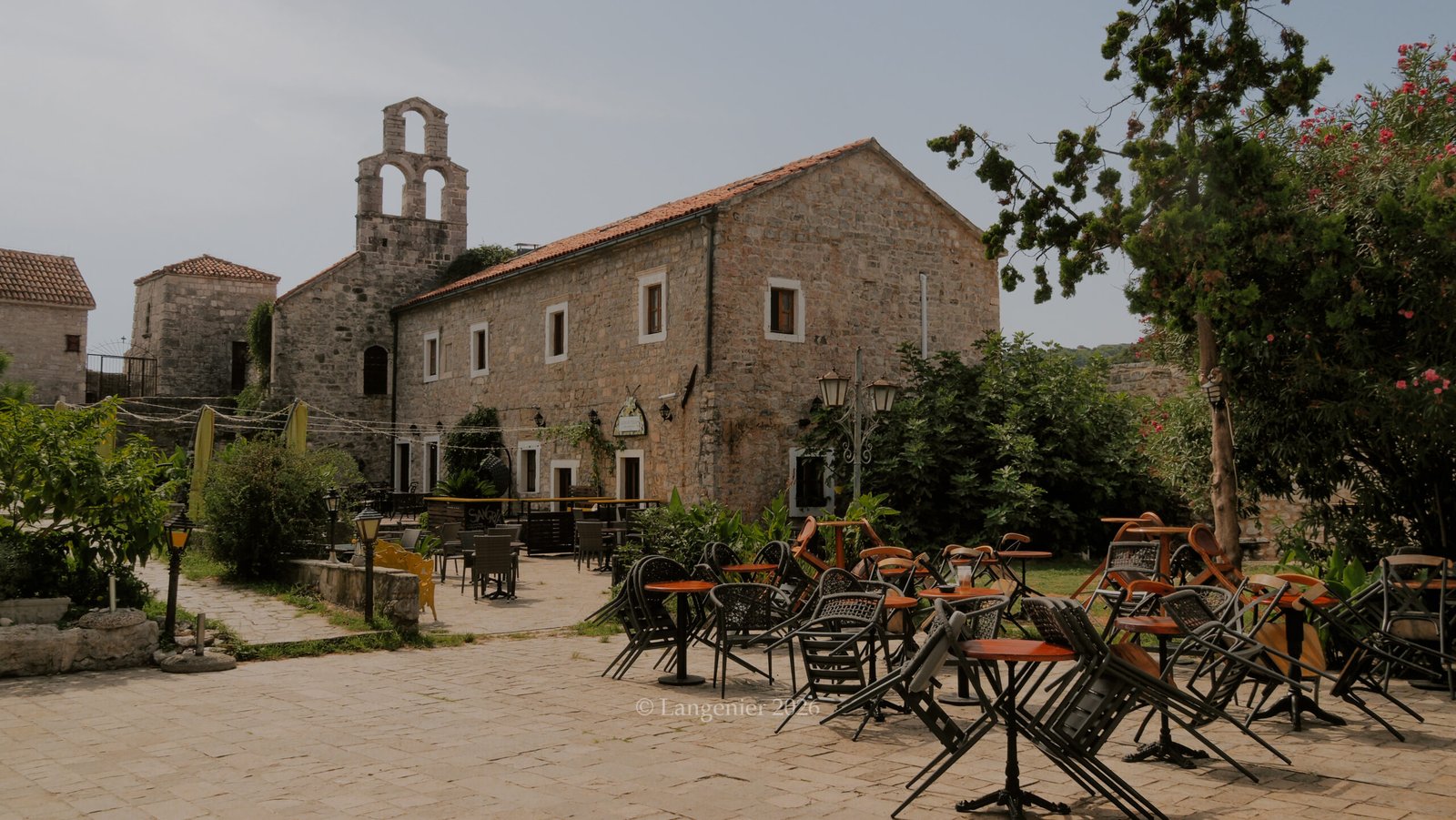
A few hours in Budva’s old town pairs perfectly with a morning or afternoon at the beach. Compact and walkable, it carries echoes of Kotor and Dubrovnik — Venetian stone, terracotta rooftops, and centuries of layered history. The old walls (entry €3) offer lovely views over the tiled rooftops and tucked-away gardens below, while the Citadel (entry €5), open daily from 9h to midnight, encircles a section of the city with commanding views over both sea and land — it was built to defend Budva on both fronts.
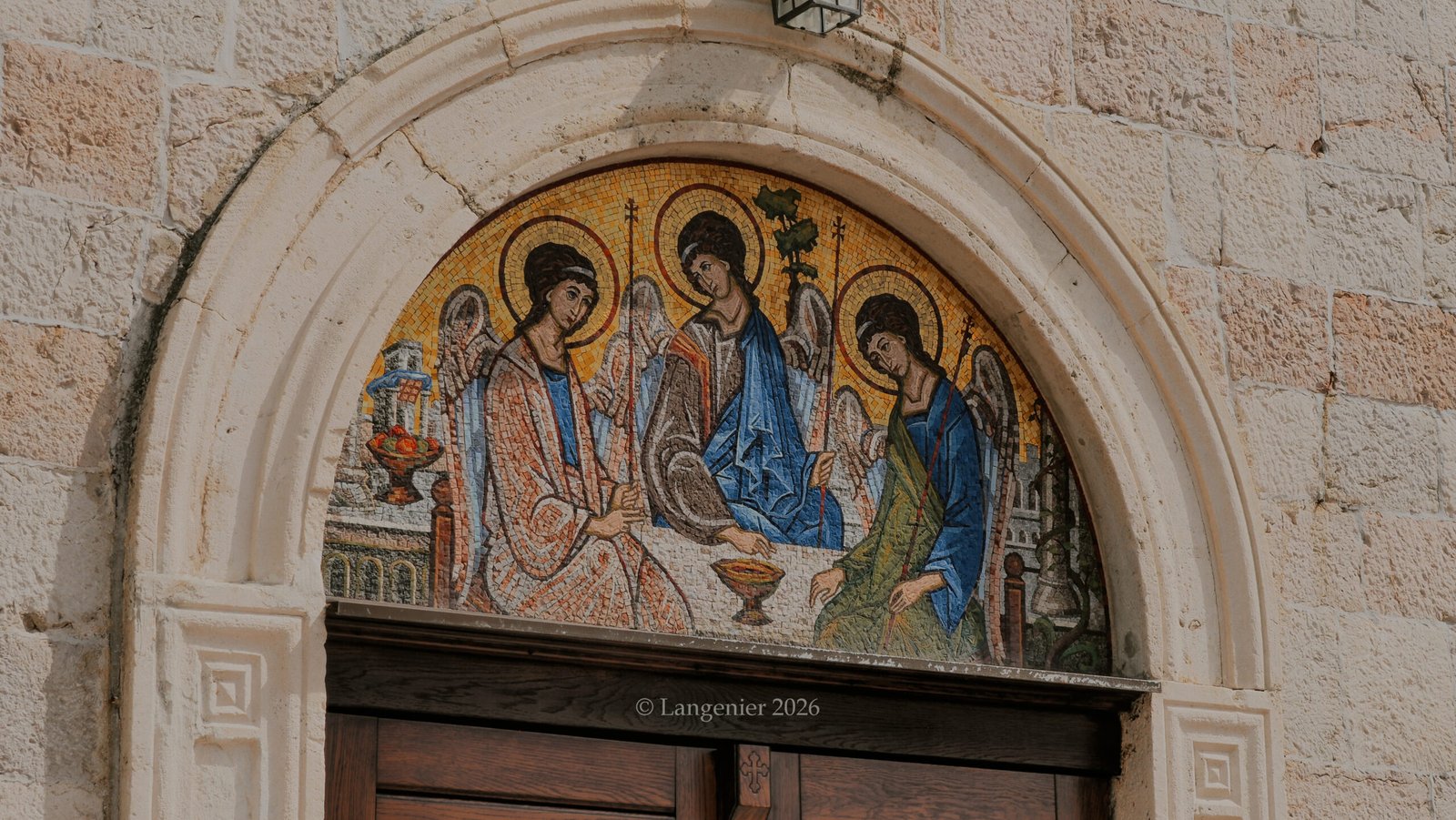
The Budva Museum condenses 2,500 years of local history into a single visit. Nearby, the Church of the Holy Trinity, dating from the 19th century, is worth stepping into for its richly painted Orthodox frescoes. On the main square, the Church of St John the Baptist represents the town’s Catholic heritage. Scattered throughout the old town, look out for remnants of Roman occupation: an ancient altar, thermal baths from the 3rd–4th century AD, and a Hellenistic-Roman necropolis.
Diving around Sveti Nikola
The waters surrounding Sveti Nikola Island are among the clearest on this stretch of coast and reward divers of all levels. Expect to encounter octopuses, eels, lobsters and sponges amid an underwater landscape of tunnels, caves and reefs. The highlight for many is a Second World War shipwreck, resting on the seabed and encrusted with marine life.
WHAT TO SEE AROUND BUDVA
Sveti Stefan, a sleeping island
Just minutes from Budva, Sveti Stefan is one of Montenegro’s most iconic sights. The entire fortified fishing village, was privatized and transformed into a luxury retreat on its own small island, connected to the mainland by a narrow causeway. Though the resort has yet to fully reopen since Covid, the sight of the islet alone is worth the detour. Just beside it, Kings and Queens Beach — a beautiful stretch of pebble shore — remains one of the finest beaches in the country.
Cetinje, the former capital city
From Budva, a one-hour bus or car ride takes you to Cetinje, the former royal capital. Here, 19th-century palaces—once home to embassies and royal residences—stand alongside historic churches, including a particularly beautiful monastery adorned with ancient paintings. I spent a day there myself and couldn’t recommend it more, so check out my Cetinje guide!
WHERE TO EAT AND DRINK IN BUDVA
For coffee, Casper Coffee Roastery is worth seeking out — I kept coming back throughout my stay. They take their beans seriously, offer an impressive range of specialty coffees, and come later to indulge into cocktails and regional wines. For something on the evening, Rakija & Wine Bar is a great spot to settle in over a glass of good wine or a well-made rakia — the Balkan fruit spirit, distilled from plums or grapes, that locals have been drinking for centuries.
For food, a few addresses stand out. Konoba Punta is a solid choice for seafood, while La Mia Pasta Budva makes for a great quick lunch — fresh pasta rolled and cut right in front of you. And one restaurant I’m already planning to go to: Restoran Mlin. We stumbled across it almost by accident, stopping for a swordfish burger at a small spot nearby whose owner mentioned they also ran a restaurant — and from the moment we stepped inside, it was clear this was something special. The interior is beautiful, the menu genuinely exciting, and a quick look at visitor reviews confirms I’m far from the only one who thinks so.
If you’re looking for more inspiration for your trip to Montenegro, I’m currently putting together a full one-week itinerary around the Kotor Bay — and I can’t wait to share it with you – really soon.
![PICK YOUR STAY IN MUNICH [2026]](https://langenier.com/wp-content/uploads/2025/10/Best-Hotel-in-Munich-Germany-langenier.com-travel-blog-Rosewood-Munich-3.jpg)
One Comment